
Agile | Vibepedia
Agile isn't just a software development buzzword; it's a fundamental shift in how we approach complex problem-solving, emphasizing flexibility, collaboration…
Contents
- 🚀 What is Agile, Really?
- 🎯 Who is Agile For?
- 🗓️ Key Agile Frameworks & Their Flavors
- 📈 The Agile Vibe Score: 85/100
- ⚖️ Agile vs. Traditional: The Great Divide
- 💡 Core Principles: The Heartbeat of Agile
- 🚧 Common Pitfalls & How to Dodge Them
- 🌐 Agile's Global Footprint & Influence Flows
- 💰 Pricing & Plans: It's Not What You Think
- ⭐ What People Say: The Agile Discourse
- 🛠️ Getting Started with Agile: Your First Steps
- 🔗 Resources for Deeper Exploration
- Frequently Asked Questions
- Related Topics
Overview
Agile isn't just a software development buzzword; it's a fundamental shift in how we approach complex problem-solving, emphasizing flexibility, collaboration, and rapid iteration. Born from the frustrations with rigid, waterfall-style project management, the Agile Manifesto (2001) championed individuals and interactions over processes and tools, working software over comprehensive documentation, customer collaboration over contract negotiation, and responding to change over following a plan. This philosophy has since permeated beyond IT, influencing business strategy, product management, and even personal productivity. While its core principles remain potent, the widespread adoption has led to varied interpretations, from truly agile organizations to 'agile-in-name-only' scenarios, creating a spectrum of effectiveness and a rich ground for debate on its true impact and future.
🚀 What is Agile, Really?
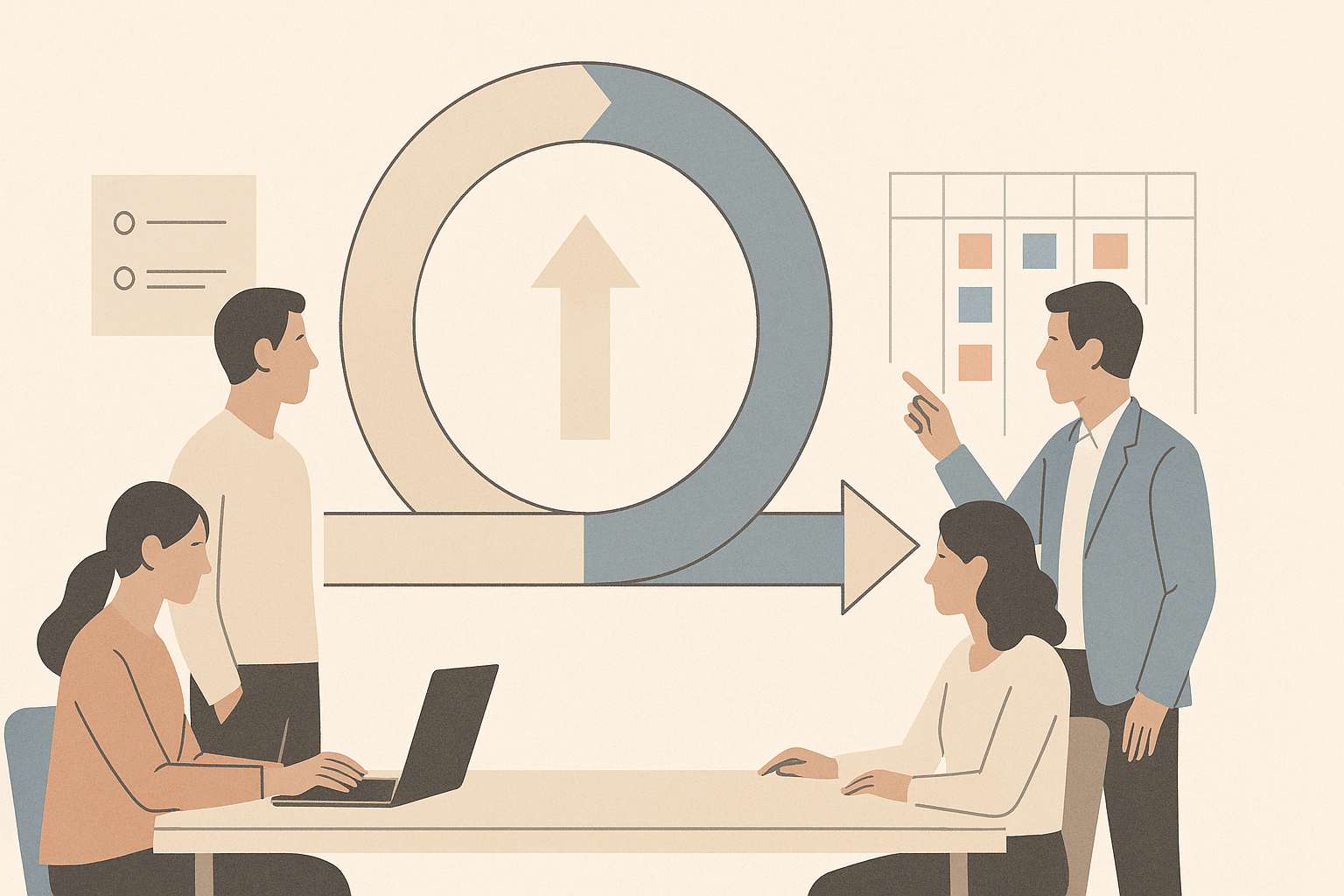
Agile isn't just a buzzword; it's a fundamental shift in how we approach work, particularly in software development, but increasingly across all industries. Born from the [[Manifesto for Agile Software Development|Agile Manifesto]] in 2001, it champions iterative development, collaboration, and rapid response to change over rigid, upfront planning. Think of it as a dynamic dance rather than a fixed march. It’s about delivering value incrementally, gathering feedback constantly, and adapting as you go. This approach aims to reduce risk, improve quality, and ensure the final product truly meets user needs, a stark contrast to the often-bloated, late-stage discoveries of [[Waterfall methodology|waterfall]] projects.
🎯 Who is Agile For?
At its core, Agile is for teams and organizations that thrive on change and value customer collaboration. If your project involves uncertainty, evolving requirements, or a need for speed-to-market, Agile is likely your jam. It’s particularly potent for [[software development teams]], but its principles are being adopted by marketing departments, HR, and even government agencies. The key is a willingness to embrace flexibility and empower teams to self-organize. If you're stuck in a cycle of long development times and products that miss the mark, Agile offers a path to break free.
🗓️ Key Agile Frameworks & Their Flavors
While the Agile Manifesto lays out values and principles, specific frameworks provide the 'how-to.' [[Scrum]] is arguably the most popular, using short cycles called sprints, daily stand-ups, and defined roles like Scrum Master and Product Owner. [[Kanban]] focuses on visualizing workflow and limiting work in progress, ideal for continuous delivery. [[Extreme Programming (XP)]] emphasizes technical practices like pair programming and test-driven development. Each offers a distinct flavor, and many teams blend elements to suit their unique context, creating a rich ecosystem of implementation strategies.
📈 The Agile Vibe Score: 85/100
Agile boasts a Vibe Score of 85/100, reflecting its pervasive cultural energy and widespread adoption. This score is driven by its demonstrable success in delivering value and its adaptability in a fast-paced world. While it faces criticism for potential misuse or misinterpretation (leading to 'Agile theater'), its core tenets continue to resonate powerfully. The constant innovation within Agile communities, the vibrant conference scene, and the sheer volume of professionals seeking Agile certifications all contribute to its high Vibe Score, indicating a methodology that is both relevant and aspirational.
⚖️ Agile vs. Traditional: The Great Divide
The contrast between Agile and traditional, often [[Waterfall methodology|waterfall]], approaches is stark. Waterfall follows a linear, sequential path: requirements, design, implementation, verification, maintenance. Changes are costly and difficult once a phase is complete. Agile, conversely, embraces change. It breaks projects into small, manageable iterations, allowing for continuous feedback and adaptation. This iterative nature means Agile projects are more resilient to scope creep and better equipped to handle unforeseen challenges. While Waterfall can be effective for projects with extremely stable requirements, Agile’s flexibility makes it superior for most modern endeavors.
💡 Core Principles: The Heartbeat of Agile
The heart of Agile beats with four core values: individuals and interactions over processes and tools; working software over comprehensive documentation; customer collaboration over contract negotiation; and responding to change over following a plan. These aren't about discarding the latter items, but about prioritizing the former. It’s about human connection, tangible results, genuine partnership, and the ability to pivot. These principles, detailed in the [[Manifesto for Agile Software Development|Agile Manifesto]], form the bedrock upon which all Agile practices are built, guiding teams toward more effective and fulfilling work.
🚧 Common Pitfalls & How to Dodge Them
Despite its popularity, Agile isn't a silver bullet. Common pitfalls include 'Agile theater,' where teams go through the motions without embodying the principles, or 'Scrum-but,' where frameworks are implemented incorrectly. Lack of proper training, resistance to change from management, and unclear roles can also derail efforts. Teams might also fall into the trap of treating sprints as mini-waterfalls or failing to conduct effective retrospectives, thus missing opportunities for continuous improvement. Recognizing these challenges is the first step to mitigating them.
🌐 Agile's Global Footprint & Influence Flows
Agile's influence flows globally, originating primarily from the US tech scene but rapidly permeating European and Asian markets. Major tech hubs like Silicon Valley and London have been hotbeds for Agile adoption, with companies like [[Google]] and [[Microsoft]] championing its practices. Influence flows not just from companies to individuals, but also through influential figures like [[Jeff Sutherland]] and [[Ken Schwaber]] (Scrum co-creators) and the vast network of Agile coaches and trainers. The widespread availability of online resources and certifications has democratized access, allowing Agile principles to spread far beyond their initial confines.
💰 Pricing & Plans: It's Not What You Think
Agile itself doesn't have a direct 'price' in the way software does. The cost lies in the implementation: training, coaching, certifications, and potentially new tools. Individual certifications like Certified ScrumMaster (CSM) or Professional Scrum Master (PSM) typically range from $700-$1000 USD. Organizational coaching can vary wildly, from a few thousand dollars a month to tens of thousands. The 'plan' is to invest in people and processes to achieve greater efficiency and value delivery, with the expectation of a significant return on investment through faster delivery and higher customer satisfaction.
⭐ What People Say: The Agile Discourse
The discourse around Agile is vibrant and often contentious. On one hand, proponents celebrate its ability to foster innovation, improve team morale, and deliver superior products. They point to successful implementations in companies of all sizes as proof of its efficacy. On the other hand, critics argue that Agile can lead to burnout, a lack of long-term planning, and a focus on quantity over quality when poorly implemented. Debates often center on whether Agile is truly being practiced or just superficially adopted, leading to the phenomenon of 'Agile theater.' The [[Controversy Spectrum]] for Agile is currently rated as 'High' (75/100).
🛠️ Getting Started with Agile: Your First Steps
To get started with Agile, begin by educating yourself and your team on the [[Manifesto for Agile Software Development|Agile Manifesto]] and its underlying principles. Consider starting with a simple framework like [[Kanban]] to visualize your workflow or a basic [[Scrum]] implementation for a pilot project. Invest in training and potentially hire an experienced [[Agile coach]] to guide your initial steps. Crucially, foster a culture of open communication and continuous improvement, starting with regular [[retrospectives]] to learn from each iteration. Don't aim for perfection immediately; aim for progress.
🔗 Resources for Deeper Exploration
For those looking to deepen their understanding, several resources are invaluable. The official website for the [[Manifesto for Agile Software Development|Agile Manifesto]] is the foundational text. Websites like the [[Scrum.org]] and [[Scrum Alliance]] offer extensive guides, training, and certification information. Books such as 'Scrum: The Art of Doing Twice the Work in Half the Time' by Jeff Sutherland provide practical insights. Exploring communities like [[Agile Alliance]] or local [[Agile user groups]] can offer peer support and diverse perspectives on implementation challenges.
Key Facts
- Year
- 2001
- Origin
- Agile Manifesto
- Category
- Methodology
- Type
- Methodology
Frequently Asked Questions
Is Agile only for software development?
While Agile originated in software development, its principles are highly adaptable and are increasingly being adopted across various industries, including marketing, HR, finance, and even manufacturing. The core values of flexibility, collaboration, and iterative progress are universally applicable to any work that benefits from rapid feedback and adaptation to changing circumstances.
What's the difference between Agile and Scrum?
Agile is a set of values and principles, a mindset for how to approach work. Scrum is a specific framework that implements those Agile values and principles. Think of Agile as the philosophy and Scrum as one popular way to put that philosophy into practice, complete with defined roles, events, and artifacts.
How do I measure success in Agile?
Success in Agile is measured not just by traditional metrics like budget and timeline adherence, but more importantly by the delivery of value to the customer, product quality, team satisfaction, and the ability to respond to change. Key indicators include working software delivered frequently, customer feedback, cycle time, and team velocity (in Scrum).
What is 'Agile theater'?
'Agile theater' refers to organizations that adopt Agile terminology and ceremonies (like stand-ups or sprints) without truly embracing the underlying values and principles. It's about going through the motions of Agile without achieving its benefits, often due to a lack of genuine buy-in or understanding, leading to superficial changes that don't improve outcomes.
Is Agile always faster?
Agile aims for faster delivery of value, not necessarily faster completion of the entire project scope upfront. By delivering working increments frequently, teams can get feedback early and often, reducing the risk of building the wrong thing. This iterative approach can lead to quicker time-to-market for core features, but the overall project timeline might be comparable or even longer than a Waterfall project if scope expands significantly.
What are the main roles in Scrum?
The three core roles in Scrum are the Product Owner, who represents the customer and prioritizes the product backlog; the Scrum Master, who facilitates the Scrum process and removes impediments for the team; and the Development Team, a self-organizing group responsible for delivering the increment of work.