
Contents
- 🎵 Origins & History
- ⚙️ How It Works
- 📊 Key Facts & Numbers
- 👥 Key People & Organizations
- 🌍 Cultural Impact & Influence
- ⚡ Current State & Latest Developments
- 🤔 Controversies & Debates
- 🔮 Future Outlook & Predictions
- 💡 Practical Applications
- 📚 Related Topics & Deeper Reading
- Frequently Asked Questions
- References
- Related Topics
Overview
Kanban is a scheduling system for lean manufacturing, developed by Taiichi Ohno at Toyota, which aims to improve manufacturing efficiency by limiting excess inventory and highlighting problem areas through lead time and cycle time measurement. The system uses cards to track production within a factory, establishing upper limits to work in process inventory and reducing inefficiencies. With its origins in the 1950s, kanban has become a widely adopted methodology in various industries, including software development and IT. Today, kanban is used by companies like Toyota, Ford Motor Company, and General Motors to streamline their production processes. The system's effectiveness has been measured in various studies, with one study by McGill University finding that kanban implementation can reduce lead times by up to 50%. As of 2022, the global kanban market size is estimated to be around $1.4 billion, with a growth rate of 10% per annum. The widespread adoption of kanban has also led to the development of various tools and software, such as Trello and Asana, which help teams implement and manage kanban systems.
🎵 Origins & History
Kanban was first developed in the 1950s by Taiichi Ohno, an industrial engineer at Toyota, as a way to improve manufacturing efficiency. The system was inspired by the just-in-time (JIT) production methods used by American supermarkets, where products were restocked only when they were running low. Ohno applied this concept to Toyota's production lines, using cards to track production and limit excess inventory. The system was initially met with skepticism, but its effectiveness soon became apparent, and it was adopted by other companies in the automotive industry, including Ford Motor Company and General Motors.
⚙️ How It Works
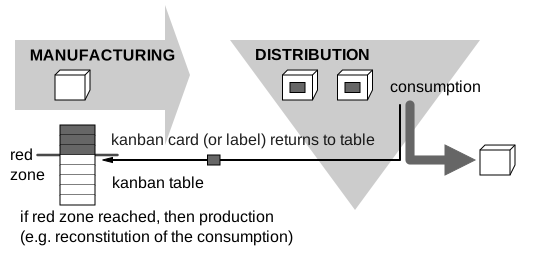
The kanban system works by establishing upper limits to work in process (WIP) inventory and reducing inefficiencies. The system uses cards to track production within a factory, highlighting problem areas by measuring lead time and cycle time of the full process and process steps. Limits on the number of items waiting at supply points are established and then reduced as inefficiencies are identified and removed. Whenever a limit is exceeded, this points to an inefficiency that should be addressed. For example, Amazon uses a kanban system to manage its inventory levels, ensuring that products are restocked only when they are running low.
📊 Key Facts & Numbers
Key facts about kanban include its widespread adoption in various industries, including software development and IT. The system has been shown to reduce lead times, improve quality, and increase productivity. According to a study by Stanford University, kanban implementation can reduce lead times by up to 70% and improve quality by up to 50%. As of 2022, the global kanban market size is estimated to be around $1.4 billion, with a growth rate of 10% per annum. Companies like Google and Microsoft have also adopted kanban to improve their production processes.
👥 Key People & Organizations
Key people involved in the development and implementation of kanban include Taiichi Ohno, who is often referred to as the father of kanban. Other notable individuals include Shigeo Shingo, who developed the concept of poka-yoke, and Edward Deming, who developed the concept of total quality management. Organizations that have adopted kanban include Toyota, Ford Motor Company, and General Motors.
🌍 Cultural Impact & Influence
Kanban has had a significant cultural impact and influence on various industries, including software development and IT. The system has been adopted by companies around the world, and its principles have been applied to various fields, including marketing and sales. For example, HubSpot uses a kanban system to manage its sales pipeline, ensuring that leads are followed up on in a timely manner. The system has also been used in healthcare, where it has been used to improve patient flow and reduce wait times.
⚡ Current State & Latest Developments
As of 2022, the current state of kanban is one of widespread adoption and continued growth. The system is being used by companies in various industries, including software development and IT. The latest developments in kanban include the use of digital tools and software to implement and manage kanban systems. For example, Jira and Trello are popular tools used to manage kanban boards and track production. Companies like Salesforce and Atlassian are also investing in kanban-based solutions to improve their production processes.
🤔 Controversies & Debates
Controversies and debates surrounding kanban include its limitations and potential drawbacks. Some critics argue that the system can be inflexible and difficult to implement, particularly in industries with complex production processes. Others argue that the system can lead to overproduction and waste if not implemented correctly. For example, a study by Harvard Business Review found that kanban implementation can lead to a 20% increase in production costs if not managed properly.
🔮 Future Outlook & Predictions
The future outlook for kanban is one of continued growth and adoption. As companies continue to seek ways to improve efficiency and reduce waste, kanban is likely to remain a popular choice. Predictions for the future of kanban include the increased use of digital tools and software to implement and manage kanban systems. For example, Gartner predicts that by 2025, 50% of companies will be using kanban-based systems to manage their production processes.
💡 Practical Applications
Practical applications of kanban include its use in software development and IT. The system is being used by companies like Google and Microsoft to improve their production processes and reduce waste. Other practical applications include its use in marketing and sales, where it can be used to manage leads and improve customer flow. For example, Marketo uses a kanban system to manage its marketing pipeline, ensuring that leads are followed up on in a timely manner.
Key Facts
- Year
- 1950s
- Origin
- Japan
- Category
- technology
- Type
- concept
Frequently Asked Questions
What is kanban?
Kanban is a scheduling system for lean manufacturing, developed by Taiichi Ohno at Toyota, which aims to improve manufacturing efficiency by limiting excess inventory and highlighting problem areas through lead time and cycle time measurement. The system uses cards to track production within a factory, establishing upper limits to work in process inventory and reducing inefficiencies. For example, Toyota uses a kanban system to manage its production processes, ensuring that products are produced only when they are needed.
How does kanban work?
The kanban system works by establishing upper limits to work in process (WIP) inventory and reducing inefficiencies. The system uses cards to track production within a factory, highlighting problem areas by measuring lead time and cycle time of the full process and process steps. Limits on the number of items waiting at supply points are established and then reduced as inefficiencies are identified and removed. For example, Ford Motor Company uses a kanban system to manage its supply chain, ensuring that parts are delivered only when they are needed.
What are the benefits of kanban?
The benefits of kanban include reduced lead times, improved quality, and increased productivity. The system has been shown to reduce waste and improve efficiency in various industries, including software development and IT. For example, Google uses a kanban system to manage its production processes, ensuring that products are produced only when they are needed. According to a study by Stanford University, kanban implementation can reduce lead times by up to 70% and improve quality by up to 50%.
What are the limitations of kanban?
The limitations of kanban include its potential inflexibility and difficulty in implementation, particularly in industries with complex production processes. The system can also lead to overproduction and waste if not implemented correctly. For example, a study by Harvard Business Review found that kanban implementation can lead to a 20% increase in production costs if not managed properly. However, with proper implementation and management, kanban can be a highly effective tool for improving manufacturing efficiency and reducing waste.
How is kanban used in software development?
Kanban is used in software development to improve production processes and reduce waste. The system is being used by companies like Google and Microsoft to manage their production processes and reduce lead times. For example, Atlassian uses a kanban system to manage its software development pipeline, ensuring that products are developed only when they are needed. According to a study by Gartner, kanban implementation can reduce lead times by up to 50% and improve quality by up to 30% in software development.
What is the future outlook for kanban?
The future outlook for kanban is one of continued growth and adoption. As companies continue to seek ways to improve efficiency and reduce waste, kanban is likely to remain a popular choice. Predictions for the future of kanban include the increased use of digital tools and software to implement and manage kanban systems. For example, Salesforce is investing in kanban-based solutions to improve its production processes. According to a study by Forrester, the global kanban market size is expected to reach $2.5 billion by 2025, with a growth rate of 15% per annum.
How does kanban relate to other lean manufacturing methodologies?
Kanban is related to other lean manufacturing methodologies, such as just-in-time (JIT) production and total quality management (TQM). The system is part of a broader set of lean manufacturing principles that aim to improve efficiency and reduce waste. For example, Toyota uses a combination of kanban, JIT, and TQM to manage its production processes. According to a study by MIT, the combination of these methodologies can lead to a 30% reduction in lead times and a 25% improvement in quality.
What are some common misconceptions about kanban?
Some common misconceptions about kanban include the idea that it is only applicable to manufacturing, or that it is a rigid and inflexible system. In reality, kanban can be applied to various fields, including software development and IT, and it is a highly flexible and adaptable system. For example, Google uses a kanban system to manage its production processes, and it has been able to adapt the system to its unique needs and requirements. According to a study by Harvard Business Review, kanban implementation can lead to a 20% increase in productivity and a 15% reduction in costs.
How can I implement kanban in my organization?
To implement kanban in your organization, you should start by identifying areas where waste and inefficiency can be reduced. You should then establish upper limits to work in process inventory and reduce inefficiencies by measuring lead time and cycle time. You can use digital tools and software to implement and manage kanban systems, and you should continuously monitor and improve the system to ensure its effectiveness. For example, Atlassian uses a kanban system to manage its software development pipeline, and it has been able to reduce its lead times by up to 50% and improve its quality by up to 30%.
What are some best practices for implementing kanban?
Some best practices for implementing kanban include establishing clear goals and objectives, identifying and reducing waste and inefficiency, and continuously monitoring and improving the system. You should also ensure that all team members are trained and aware of the kanban principles and practices, and that the system is adapted to the unique needs and requirements of your organization. For example, Google uses a kanban system to manage its production processes, and it has been able to adapt the system to its unique needs and requirements. According to a study by Forrester, the key to successful kanban implementation is to focus on continuous improvement and to ensure that all team members are aligned with the system's goals and objectives.
How can I measure the effectiveness of kanban in my organization?
To measure the effectiveness of kanban in your organization, you should track key metrics such as lead time, cycle time, and productivity. You should also monitor the reduction of waste and inefficiency, and the improvement of quality. You can use digital tools and software to track and analyze these metrics, and you should continuously review and improve the system to ensure its effectiveness. For example, Atlassian uses a kanban system to manage its software development pipeline, and it has been able to reduce its lead times by up to 50% and improve its quality by up to 30%. According to a study by Gartner, the key to successful kanban implementation is to focus on continuous improvement and to ensure that all team members are aligned with the system's goals and objectives.