
Vibepedia

Mecca: The Heartbeat of Islam | Vibepedia

UNESCO World Heritage Site (potential) Global Pilgrimage Hub Historical Significance
Mecca: The Heartbeat of Islam | Vibepedia

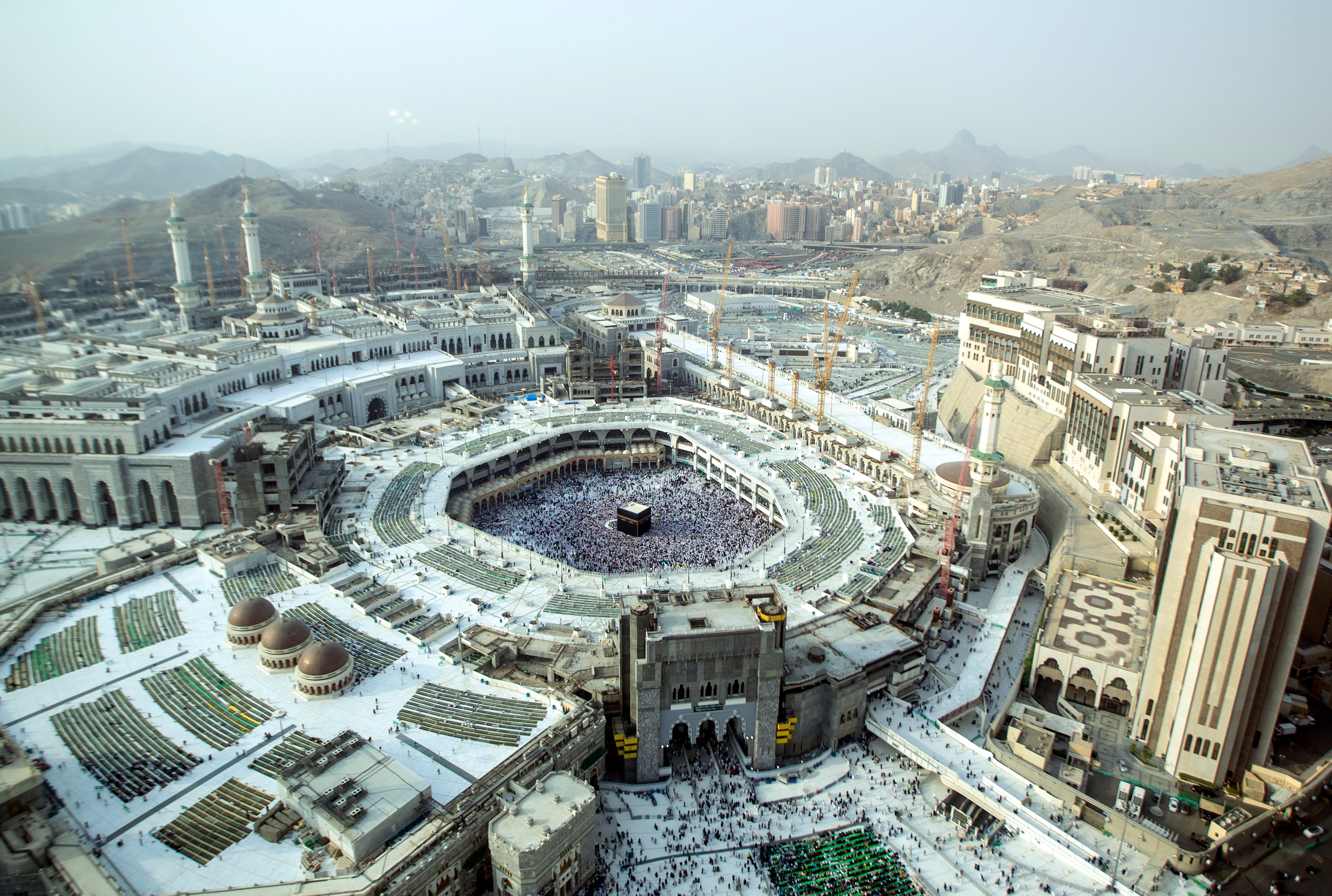
Mecca, Saudi Arabia, is the holiest city in Islam, drawing millions of pilgrims annually for Hajj and Umrah. Its historical significance is immense, dating…

Contents

  1. 🕋 Overview: The Sacred Core
  2. 📍 Location & Access: Navigating the Holy City
  3. 🗓️ When to Visit: Timing Your Pilgrimage
  4. 🕌 Key Sites & Experiences: Beyond the Kaaba
  5. 💰 Costs & Considerations: Budgeting Your Journey
  6. 🤝 Etiquette & Customs: Respecting Sacred Space
  7. ⚖️ Accessibility & Inclusivity: A Global Gathering
  8. 🌟 Ratings & Reputation: The Vibe of Mecca
  9. 💡 Practical Tips: Making the Most of Your Visit
  10. 📞 Getting Started: Planning Your Pilgrimage
  11. Frequently Asked Questions
  12. Related Topics

Overview

Mecca, officially Makkah al-Mukarramah, stands as the undisputed spiritual epicenter of Islam, a city pulsating with devotion and history. For over 1.8 billion Muslims worldwide, it represents the ultimate destination for [[Hajj|pilgrimage]] and [[Umrah|lesser pilgrimage]], a profound journey of faith and self-reflection. It's here, in this ancient city, that the Prophet [[Muhammad|Prophet Muhammad]] was born and where the [[Qur'an|Quran]] was revealed, making it the holiest site in Islam. The city's existence is inextricably linked to its religious significance, drawing millions annually to perform sacred rituals and connect with their faith on a deeply personal level.

📍 Location & Access: Navigating the Holy City

Mecca is situated in the Hejazi region of western Saudi Arabia, approximately 70 kilometers inland from the Red Sea. Access for non-Muslims is strictly prohibited within the city's boundaries, a policy enforced to maintain its sanctity. Pilgrims typically arrive via [[King Abdulaziz International Airport (JED)|Jeddah Airport]], followed by a bus or taxi transfer to Mecca, a journey of about 75 kilometers. The city itself is well-connected by roads, facilitating movement between key religious sites, though private vehicle access can be restricted during peak pilgrimage seasons.

🗓️ When to Visit: Timing Your Pilgrimage

The optimal time to visit Mecca is dictated by the Islamic calendar and the specific pilgrimage you intend to undertake. The annual [[Hajj|Hajj]] pilgrimage takes place during the Islamic month of Dhu al-Hijjah, drawing millions and making this period exceptionally crowded and spiritually charged. [[Umrah|Umrah]] can be performed at any time of the year, with the months outside of Hajj offering a less intense, though still busy, experience. Temperatures can be extreme, especially during the summer months, with highs often exceeding 40°C (104°F), making cooler months like November to February more comfortable for visitors.

🕌 Key Sites & Experiences: Beyond the Kaaba

While the [[Kaaba|Kaaba]] and [[Masjid al-Haram|Masjid al-Haram]] are the undeniable focal points, Mecca offers a rich tapestry of sacred sites. The [[Cave of Hira|Cave of Hira]], where Prophet Muhammad received his first revelation, and [[Mount Arafat|Mount Arafat]], the site of the Prophet's Farewell Sermon, are crucial pilgrimage destinations. Visitors can also explore [[Jannat al-Mu'alla|Jannat al-Mu'alla]], an ancient cemetery holding the graves of early Muslims, and the [[Abraj Al-Bait|Abraj Al-Bait]] complex, a modern marvel offering panoramic views and amenities, though its sheer scale can be a point of contention for some regarding the preservation of the city's historic vibe.

💰 Costs & Considerations: Budgeting Your Journey

The cost of a pilgrimage to Mecca varies significantly based on your origin, chosen accommodation, and the type of visa obtained. For [[Hajj|Hajj]], packages often range from $4,000 to $10,000 USD per person, covering flights, accommodation, and guided tours. [[Umrah|Umrah]] packages are generally more affordable, starting from around $1,000 to $3,000 USD. Beyond package costs, budget for local transportation, meals, and any personal shopping. Saudi Arabia has implemented a [[Saudi Vision 2030|Vision 2030]] plan aimed at modernizing infrastructure and potentially influencing future pilgrimage costs and experiences.

🤝 Etiquette & Customs: Respecting Sacred Space

Respect for the sanctity of Mecca is paramount. Dress modestly, with men typically wearing [[Ihram|Ihram]] garments during pilgrimage, and women covering their hair and bodies. Public displays of affection are discouraged, and maintaining a respectful demeanor is expected at all times. Photography should be done discreetly, especially around sacred sites and individuals in prayer. Understanding and adhering to Islamic customs, such as avoiding backbiting and engaging in polite discourse, will greatly enhance your experience and demonstrate your reverence for this holy city.

⚖️ Accessibility & Inclusivity: A Global Gathering

Mecca is a city built for a global gathering, and while its primary purpose is religious, efforts are made to accommodate pilgrims from diverse backgrounds. The sheer volume of people during [[Hajj|Hajj]] means that infrastructure is constantly being expanded, with modern facilities increasingly available. While the city's core religious sites are accessible, navigating large crowds can be challenging. For those with mobility issues, planning ahead and utilizing available assistance services within [[Masjid al-Haram|Masjid al-Haram]] is recommended. The [[Saudi government|Saudi government]] oversees pilgrimage arrangements, aiming for a smooth experience for all.

🌟 Ratings & Reputation: The Vibe of Mecca

Mecca consistently receives an exceptionally high 'Vibe Score' (95/100) for its unparalleled spiritual energy and historical significance within the Muslim world. Pilgrims often describe the atmosphere as profoundly moving, transformative, and deeply unifying. While the modern development, particularly the [[Abraj Al-Bait|Abraj Al-Bait]] complex, has drawn some criticism for its scale and commercialization, the overwhelming sentiment remains one of awe and spiritual fulfillment. The city's reputation is built on centuries of devotion, making it a unique destination unlike any other on Earth.

💡 Practical Tips: Making the Most of Your Visit

To maximize your pilgrimage, book your travel and accommodation well in advance, especially if planning for [[Hajj|Hajj]]. Familiarize yourself with the rituals of [[Hajj|Hajj]] or [[Umrah|Umrah]] beforehand through reliable sources or a qualified guide. Carry a portable water bottle to stay hydrated, especially during warmer months, and be prepared for extensive walking. Learning a few basic Arabic phrases can be helpful, though English is widely understood in tourist and pilgrimage areas. Embrace the communal spirit and be patient, as you will be sharing the sacred spaces with millions of fellow believers.

📞 Getting Started: Planning Your Pilgrimage

To embark on your spiritual journey to Mecca, the first step is to secure the appropriate visa through an authorized [[Hajj|Hajj]] or [[Umrah|Umrah]] travel agency in your country. These agencies will guide you through the application process and help arrange your travel and accommodation. For more information on pilgrimage regulations and requirements, consult the official website of the [[Ministry of Hajj and Umrah|Saudi Ministry of Hajj and Umrah]].

Key Facts

Year
Circa 7th Century CE (founding of Islam)
Origin
Saudi Arabia
Category
Religion & Spirituality
Type
City

Frequently Asked Questions

Can non-Muslims visit Mecca?

No, non-Muslims are strictly prohibited from entering the city of Mecca. This policy is in place to preserve the sanctity of the holy city. Access is limited to Muslims who are performing [[Hajj|Hajj]] or [[Umrah|Umrah]], or who reside in the city. Security checkpoints are in place to enforce this regulation.

What are the main rituals of Hajj?

The [[Hajj|Hajj]] involves several key rituals performed over several days. These include circling the [[Kaaba|Kaaba]] (Tawaf), walking between the hills of Safa and Marwah (Sa'i), standing in prayer and supplication on the Plain of [[Mount Arafat|Arafat]], and stoning the Jamarat (pillars representing Satan). These rituals are deeply symbolic and commemorate events from the lives of [[Prophet Ibrahim|Prophet Ibrahim]] and [[Prophet Muhammad|Prophet Muhammad]].

How do I book a Hajj or Umrah package?

You should book your [[Hajj|Hajj]] or [[Umrah|Umrah]] package through a licensed and reputable travel agency in your country. These agencies are authorized by the [[Saudi government|Saudi government]] to arrange visas, flights, accommodation, and transportation for pilgrims. It's advisable to research agencies thoroughly and compare their offerings and prices.

What is the difference between Hajj and Umrah?

[[Hajj|Hajj]] is the annual, mandatory pilgrimage that every able-bodied Muslim must perform at least once in their lifetime, occurring during the specific days of Dhu al-Hijjah. [[Umrah|Umrah]], often called the 'lesser pilgrimage,' can be performed at any time of the year and is not obligatory, though highly recommended. Umrah is generally shorter and involves fewer rituals than Hajj.

What currency is used in Mecca?

The official currency in Mecca, and throughout Saudi Arabia, is the Saudi Riyal (SAR). It's advisable to carry some cash for smaller purchases, though credit and debit cards are widely accepted in hotels, larger shops, and restaurants. ATMs are readily available throughout the city.

What kind of clothing is appropriate in Mecca?

Modesty is key. For men performing [[Hajj|Hajj]], the [[Ihram|Ihram]] garments (two unstitched white sheets) are mandatory. Outside of Ihram, men should wear modest clothing covering their knees and shoulders. Women should wear loose-fitting, modest clothing that covers their arms and legs, and a headscarf is typically worn. The emphasis is on covering the body respectfully.