
Contents
Overview
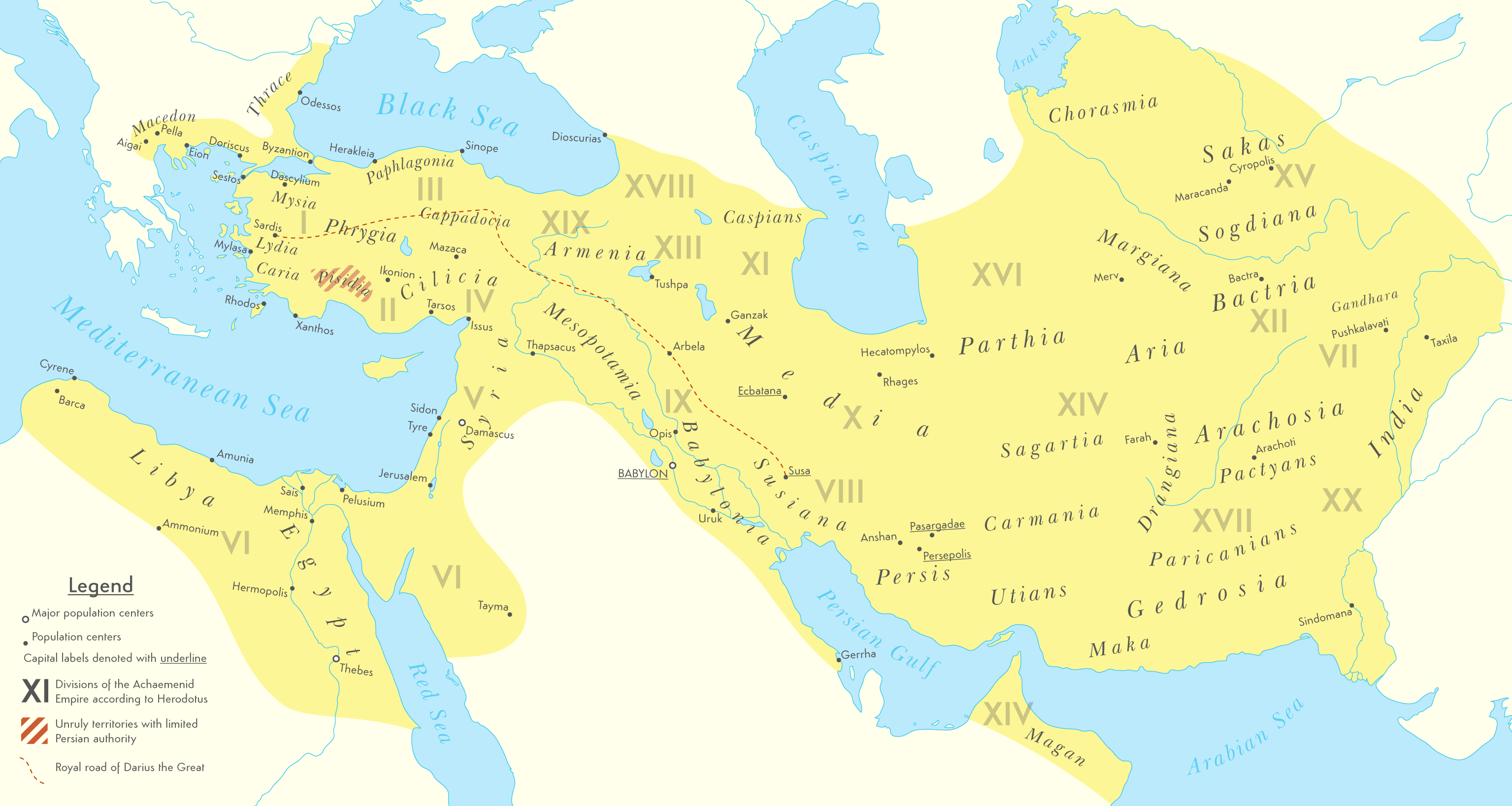
The Achaemenid Empire, established by Cyrus the Great, was a monumental ancient Iranian polity that, at its zenith, spanned an astonishing 5.5 million square kilometers. This vast dominion stretched from the Balkans and Cyrenaica in the west to the Indus Valley in the east, encompassing diverse regions like Anatolia, Mesopotamia, and Central Asia. Its administrative genius, exemplified by the satrapy system and the Royal Road, facilitated unprecedented control and communication across its territories. The empire's legacy is etched in its monumental architecture, its religious tolerance, and its profound influence on subsequent empires, including the Hellenistic kingdoms and the Roman Empire. Despite its eventual conquest by Alexander the Great, the Achaemenid model of imperial organization and cultural synthesis left an indelible mark on world history.
🎵 Origins & History
The Achaemenid dynasty traces its lineage back to Achaemenes, a legendary ancestor from whom the empire derives its name. The true architect of the empire, however, was Cyrus II, who united the Persian tribes and overthrew the Median Empire. His subsequent conquests cemented the Achaemenid dominion, creating a vast multi-ethnic state that dwarfed its predecessors. Subsequent rulers like Cambyses II expanded the empire into Egypt, while Darius I further consolidated its administration and extended its borders to the Indus Valley, transforming it into the largest empire the world had yet seen. This period of rapid expansion and consolidation laid the groundwork for over two centuries of Persian dominance in the ancient Near East.
⚙️ How It Works
The Achaemenid Empire operated through a sophisticated administrative structure designed to manage its immense diversity. The empire was divided into provinces, each governed by a satrap appointed by the king, who was responsible for taxation, justice, and maintaining order. A network of roads, most famously the Royal Road, facilitated rapid communication through a relay system of messengers and horsemen, enabling swift dissemination of decrees and intelligence. The empire also maintained a standing army and a professional bureaucracy, with officials like the royal scribes playing a crucial role in record-keeping and administration. This decentralized yet centrally controlled system allowed for a remarkable degree of stability and governance across vast distances, a model that would influence subsequent empires like the Seleucid Empire and the Sasanian Empire.
📊 Key Facts & Numbers
At its peak, the Achaemenid Empire's territorial extent reached approximately 5.5 million square kilometers (2.1 million square miles), stretching from the Balkans and Cyrenaica in the west to the Indus River in the east. The empire maintained a standardized coinage system, with the gold daric and silver sigloi becoming widely accepted currencies across its vast domain. The construction of monumental cities like Persepolis and Susa involved tens of thousands of laborers and artisans, showcasing the empire's immense economic and organizational capacity.
👥 Key People & Organizations
The Achaemenid Empire was shaped by a succession of powerful rulers and influential figures. Cyrus II is revered as the founder, celebrated for his military genius and benevolent policies, including the famous Cyrus Cylinder decree permitting the return of exiled peoples. His son, Cambyses II, notably conquered Egypt. Darius I is credited with organizing the empire into satrapies, building the Royal Road, and initiating major construction projects at Persepolis. Xerxes I led campaigns against the Greek city-states, famously detailed in Herodotus's Histories. The administrative structure was supported by a class of skilled bureaucrats and engineers, while religious figures and priests played significant roles in maintaining cultural and spiritual cohesion across the empire.
🌍 Cultural Impact & Influence
The Achaemenid Empire exerted a profound influence on subsequent civilizations, shaping administrative, architectural, and cultural practices for centuries. Its policy of religious tolerance, particularly under Cyrus the Great, allowed diverse populations to maintain their customs and beliefs, a stark contrast to many contemporary empires. The empire's monumental architecture, exemplified by the palaces at Persepolis and Pasargadae, with their blend of architectural styles from across the empire, inspired later imperial building projects. The Achaemenid administrative model, with its satrapies and efficient communication networks, provided a blueprint for empires such as the Hellenistic kingdoms established after Alexander's conquests and even influenced aspects of Roman imperial governance. Furthermore, Achaemenid art and iconography, such as the winged sun disk motif, resonated through various cultures, demonstrating the empire's far-reaching aesthetic impact.
⚡ Current State & Latest Developments
While the Achaemenid Empire ceased to exist as a political entity with its conquest by Alexander the Great, its legacy continues to be unearthed and reinterpreted. Archaeological excavations at sites like Persepolis, Susa, and Babylon continue to reveal new insights into Achaemenid daily life, administration, and art. Modern Iran, as the historical heartland of the empire, often draws upon Achaemenid heritage for national identity and pride, though this connection is sometimes debated. Contemporary scholarship focuses on understanding the empire's complex social structures, its economic systems, and its interactions with neighboring cultures, particularly the Greek city-states during the Greco-Persian Wars. The ongoing study of Achaemenid cuneiform inscriptions and reliefs provides a continuous stream of new data for historians and archaeologists.
🤔 Controversies & Debates
One of the most persistent debates surrounding the Achaemenid Empire concerns its true nature and the extent of its cultural assimilation versus mere domination. While rulers like Cyrus the Great are lauded for their tolerance, the empire also engaged in brutal military campaigns and suppression of revolts, particularly during the reigns of Darius I and Xerxes I. The relationship between the Achaemenid rulers and the diverse religious and ethnic groups within the empire remains a complex topic, with scholars debating the degree of genuine integration versus pragmatic coexistence. Furthermore, the historical accounts, particularly those from Greek sources like Herodotus, are often viewed with skepticism due to potential bias, leading to ongoing efforts to reconstruct a more balanced narrative based on archaeological evidence and Persian-language inscriptions. The extent to which Achaemenid policies truly fostered unity or merely maintained order through force is a central point of contention.
🔮 Future Outlook & Predictions
The future study of the Achaemenid Empire promises further revelations through advanced archaeological techniques and interdisciplinary approaches. Digital humanities projects are increasingly being employed to analyze vast datasets of inscriptions, artifacts, and textual sources, potentially uncovering new patterns in trade, administration, and social organization. Comparative studies with other ancient empires, such as the Roman Empire and the Han Dynasty, will likely illuminate broader trends in imperial governance and cultural exchange. As new archaeological sites are discovered and existing ones are re-excavated with modern technology, our understanding of Achaemenid daily life, religious practices, and economic networks is expected to deepen significantly. The ongoing debate about the empire's legacy and its influence on subsequent world history will undoubtedly continue to evolve with each new discovery.
💡 Practical Applications
The Achaemenid Empire's innovations in governance and infrastructure have had lasting practical applications, even if indirectly. The concept of a well-maintained road network for rapid communication and troop movement, epitomized by the Royal Road, influenced military and logistical planning for centuries, a principle still relevant in modern transportation and communication systems. The satrapal system, with its delegation of authority and standardized taxation, provided a model for managing large, diverse territories, elements of which can be seen in the administrative structures of later empires and even modern nation-states. The empire's
Key Facts
- Category
- history
- Type
- topic