
Contents
- 🎵 Origins & History
- ⚙️ How It Works
- 📊 Key Facts & Numbers
- 👥 Key People & Organizations
- 🌍 Cultural Impact & Influence
- ⚡ Current State & Latest Developments
- 🤔 Controversies & Debates
- 🔮 Future Outlook & Predictions
- 💡 Practical Applications
- 📚 Related Topics & Deeper Reading
- Frequently Asked Questions
- References
- Related Topics
Overview
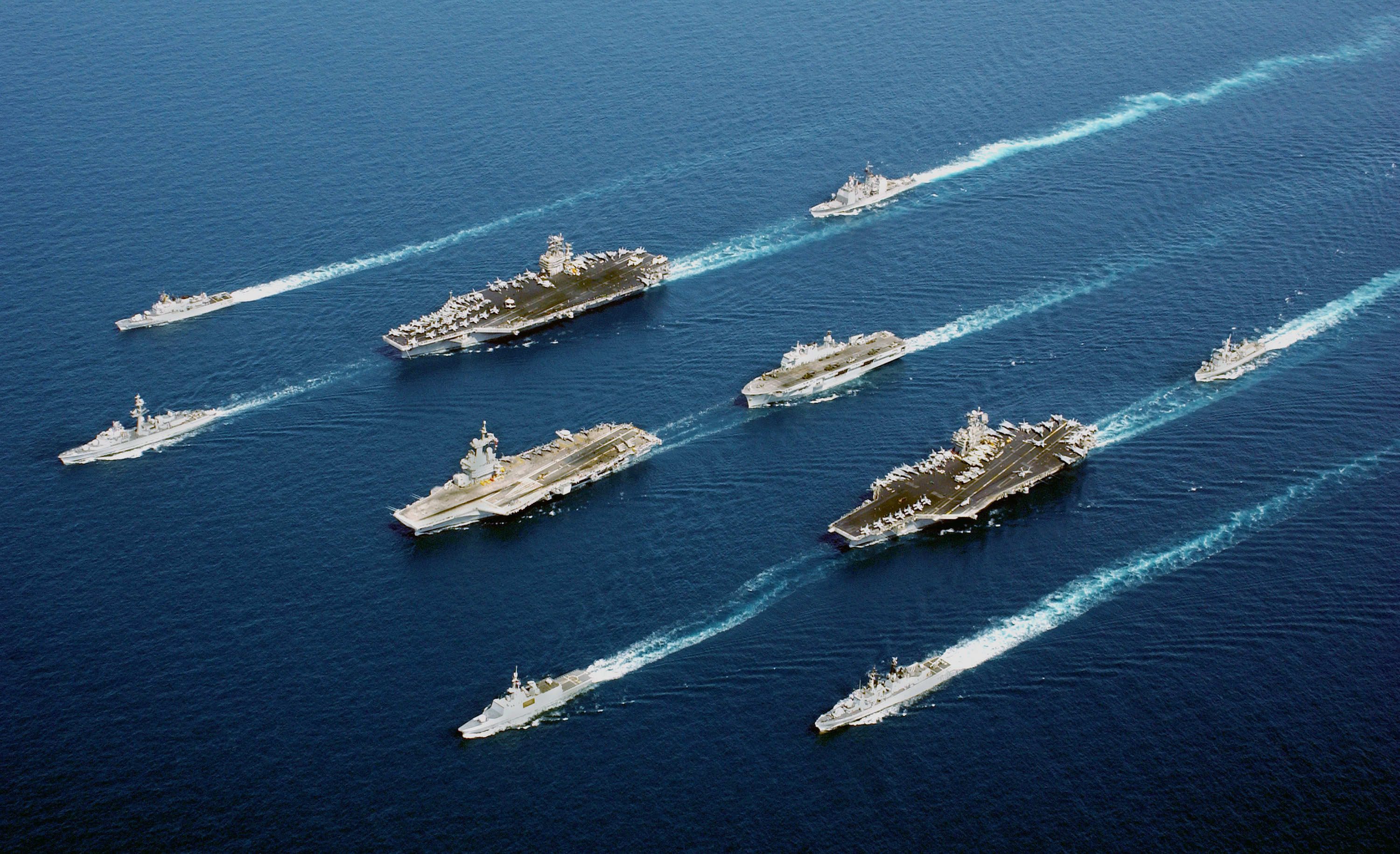
Aircraft carriers are warships that serve as mobile airbases, equipped with flight decks and hangar facilities to support various aircraft operations. Since their introduction in the early 20th century, aircraft carriers have undergone significant transformations, from wooden vessels carrying tethered balloons to nuclear-powered supercarriers hosting dozens of advanced aircraft. These capital ships enable naval forces to project air power globally, independent of local airfields. With a history spanning over a century, aircraft carriers have played a crucial role in modern naval warfare, with notable examples including the USS Nimitz and the HMS Queen Elizabeth. The development of aircraft carriers has been shaped by the contributions of pioneers like Clement Attlee and Hyman Rickover, who oversaw the construction of the first nuclear-powered aircraft carriers. Today, aircraft carriers continue to evolve, with countries like the United States, China, and Russia investing heavily in their development. As technology advances, the role of aircraft carriers in modern warfare is likely to remain significant, with potential applications in areas like artificial intelligence and cyber warfare.
🎵 Origins & History
The concept of aircraft carriers dates back to the early 20th century, when the first experiments with shipborne aircraft were conducted by the Royal Navy and the United States Navy. The first aircraft carrier, the HMS Argus, was converted from an ocean liner in 1918. Since then, aircraft carriers have evolved significantly, with the introduction of new technologies and designs, such as the angled flight deck and the steam catapult. The development of aircraft carriers has been influenced by the work of pioneers like William Moffett and John Curtiss, who played a crucial role in the establishment of the United States Navy's aircraft carrier program.
⚙️ How It Works
Aircraft carriers are complex systems that require careful planning and execution to operate effectively. The flight deck, hangar, and aircraft elevators are all critical components of an aircraft carrier, and must be designed and maintained to ensure safe and efficient aircraft operations. The USS Gerald Ford, for example, features a advanced flight deck design and a highly automated aircraft handling system. The Lockheed Martin F-35C Lightning II is one of the most advanced aircraft currently in service on aircraft carriers, with capabilities like stealth technology and advanced avionics.
📊 Key Facts & Numbers
Aircraft carriers are among the most expensive and complex warships in the world, with prices ranging from $5 billion to over $13 billion per ship. The United States has the largest fleet of aircraft carriers, with 12 ships in service, including the USS Nimitz and the USS Gerald Ford. The People's Liberation Army Navy of China is rapidly expanding its aircraft carrier fleet, with two ships currently in service and several more under construction. The Russian Navy also operates a single aircraft carrier, the Admiral Kuznetsov.
👥 Key People & Organizations
Key people involved in the development and operation of aircraft carriers include Admiral Hyman Rickover, who oversaw the development of the first nuclear-powered aircraft carriers, and General Dwight Eisenhower, who played a crucial role in the establishment of the United States Navy's aircraft carrier program. Organizations like the Naval Air Warfare Center and the Lockheed Martin corporation are also critical to the development and maintenance of aircraft carriers.
🌍 Cultural Impact & Influence
Aircraft carriers have had a significant cultural impact, with numerous films, books, and video games featuring these warships as central plot elements. The Top Gun film franchise, for example, features aircraft carriers prominently, and has helped to popularize the concept of naval aviation. The Call of Duty video game series also features aircraft carriers as playable maps and game modes. The influence of aircraft carriers can also be seen in the design of other warships, such as the destroyer and the cruiser.
⚡ Current State & Latest Developments
The current state of aircraft carriers is one of rapid evolution, with new technologies and designs being introduced regularly. The United States is currently developing a new class of aircraft carriers, the Ford-class, which features advanced technologies like electromagnetic catapults and advanced arresting gear. The People's Liberation Army Navy of China is also rapidly expanding its aircraft carrier fleet, with several new ships under construction. The Russian Navy is planning to upgrade its sole aircraft carrier, the Admiral Kuznetsov, with new aircraft and advanced systems.
🤔 Controversies & Debates
The development and operation of aircraft carriers are not without controversy, with concerns over cost, effectiveness, and environmental impact. The United States has faced criticism for the high cost of its aircraft carrier program, with some estimates suggesting that the total cost of the Ford-class program could exceed $100 billion. The People's Liberation Army Navy of China has also faced criticism for its rapid expansion of its aircraft carrier fleet, with some analysts suggesting that the move could destabilize the region. The Greenpeace organization has also criticized the environmental impact of aircraft carriers, citing concerns over noise pollution and the potential for oil spills.
🔮 Future Outlook & Predictions
The future of aircraft carriers is likely to be shaped by advances in technology, including the development of unmanned aerial vehicles (UAVs) and hypersonic weapons. The United States is currently developing a new class of aircraft carriers, the Ford-class, which features advanced technologies like electromagnetic catapults and advanced arresting gear. The People's Liberation Army Navy of China is also rapidly expanding its aircraft carrier fleet, with several new ships under construction. The Russian Navy is planning to upgrade its sole aircraft carrier, the Admiral Kuznetsov, with new aircraft and advanced systems.
💡 Practical Applications
Aircraft carriers have numerous practical applications, including the provision of air power in support of ground operations, the protection of sea lanes, and the deterrence of enemy forces. The United States Navy operates a fleet of aircraft carriers that are capable of deploying to any region of the world, providing a flexible and responsive air power capability. The Royal Navy and the French Navy also operate aircraft carriers, which play a critical role in their respective naval strategies. The Lockheed Martin F-35C Lightning II is one of the most advanced aircraft currently in service on aircraft carriers, with capabilities like stealth technology and advanced avionics.
Key Facts
- Year
- 1918
- Origin
- United Kingdom
- Category
- technology
- Type
- technology
Frequently Asked Questions
What is the purpose of an aircraft carrier?
An aircraft carrier is a warship that serves as a mobile airbase, providing a flexible and responsive air power capability. The United States Navy operates a fleet of aircraft carriers that are capable of deploying to any region of the world, providing air power in support of ground operations, protecting sea lanes, and deterring enemy forces. The Lockheed Martin F-35C Lightning II is one of the most advanced aircraft currently in service on aircraft carriers, with capabilities like stealth technology and advanced avionics.
How many aircraft carriers are in service today?
There are currently over 20 aircraft carriers in service around the world, with the United States operating the largest fleet. The People's Liberation Army Navy of China is rapidly expanding its aircraft carrier fleet, with several new ships under construction. The Russian Navy operates a single aircraft carrier, the Admiral Kuznetsov.
What is the most advanced aircraft carrier in service today?
The most advanced aircraft carrier in service today is the USS Gerald Ford, which features advanced technologies like electromagnetic catapults and advanced arresting gear. The United States Navy is currently developing a new class of aircraft carriers, the Ford-class, which will feature even more advanced technologies. The Lockheed Martin F-35C Lightning II is one of the most advanced aircraft currently in service on aircraft carriers, with capabilities like stealth technology and advanced avionics.
What is the future of aircraft carriers?
The future of aircraft carriers is likely to be shaped by advances in technology, including the development of unmanned aerial vehicles (UAVs) and hypersonic weapons. The United States is currently developing a new class of aircraft carriers, the Ford-class, which will feature advanced technologies like electromagnetic catapults and advanced arresting gear. The People's Liberation Army Navy of China is also rapidly expanding its aircraft carrier fleet, with several new ships under construction.
What are the advantages and disadvantages of aircraft carriers?
The advantages of aircraft carriers include their ability to provide air power in support of ground operations, protect sea lanes, and deter enemy forces. However, aircraft carriers are also expensive to build and maintain, and their large size makes them vulnerable to attack. The United States Navy operates a fleet of aircraft carriers that are capable of deploying to any region of the world, providing a flexible and responsive air power capability. The Lockheed Martin F-35C Lightning II is one of the most advanced aircraft currently in service on aircraft carriers, with capabilities like stealth technology and advanced avionics.
How do aircraft carriers contribute to national security?
Aircraft carriers play a critical role in national security by providing a flexible and responsive air power capability. The United States Navy operates a fleet of aircraft carriers that are capable of deploying to any region of the world, providing air power in support of ground operations, protecting sea lanes, and deterring enemy forces. The People's Liberation Army Navy of China is also rapidly expanding its aircraft carrier fleet, with several new ships under construction. The Russian Navy operates a single aircraft carrier, the Admiral Kuznetsov.
What are the potential risks and challenges associated with aircraft carriers?
The potential risks and challenges associated with aircraft carriers include the high cost of building and maintaining them, their vulnerability to attack, and the potential for environmental damage. The United States Navy operates a fleet of aircraft carriers that are capable of deploying to any region of the world, providing a flexible and responsive air power capability. The Lockheed Martin F-35C Lightning II is one of the most advanced aircraft currently in service on aircraft carriers, with capabilities like stealth technology and advanced avionics.
How are aircraft carriers used in modern warfare?
Aircraft carriers are used in modern warfare to provide air power in support of ground operations, protect sea lanes, and deter enemy forces. The United States Navy operates a fleet of aircraft carriers that are capable of deploying to any region of the world, providing a flexible and responsive air power capability. The People's Liberation Army Navy of China is also rapidly expanding its aircraft carrier fleet, with several new ships under construction. The Russian Navy operates a single aircraft carrier, the Admiral Kuznetsov.