
Contents
Overview
The dream of flight predates recorded history, but the practical realization of the airplane began in earnest in the late 19th century. Visionaries like Sir George Cayley in the 1790s laid the theoretical groundwork, defining the principles of lift, drag, and thrust. However, it was the persistent efforts of Orville Wright and Wilbur Wright that culminated in the first successful sustained, controlled, powered heavier-than-air flight on December 17, 1903, at Kitty Hawk, North Carolina. Their Wright Flyer was a testament to iterative design and meticulous experimentation, building upon the gliders of Otto Lilienthal and the theoretical work of others. This pivotal moment marked the dawn of the aviation age, forever altering humanity's relationship with distance and geography.
⚙️ How It Works
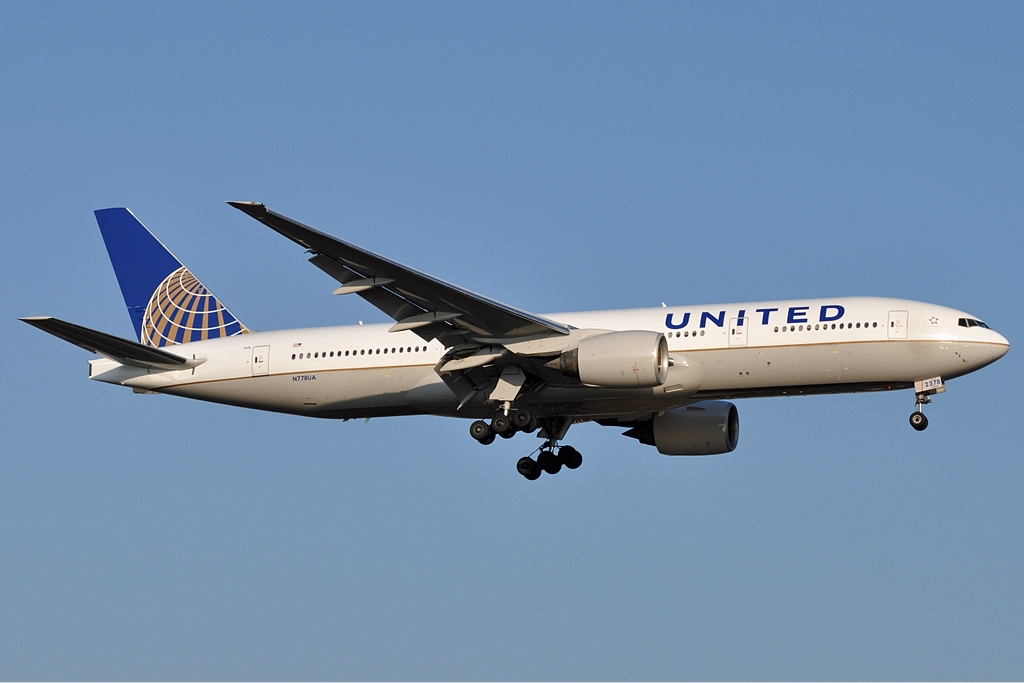
At its core, an airplane operates on fundamental aerodynamic principles. Wings are shaped as airfoils, designed so that air flowing over the curved upper surface travels faster than air flowing beneath the flatter lower surface. This velocity difference creates lower pressure above the wing and higher pressure below, generating an upward force known as lift. This lift must overcome the aircraft's weight. Engines, whether jet engines or propellers, provide thrust, pushing the aircraft forward through the air. This forward motion is crucial for generating the airflow over the wings necessary for lift. Control surfaces like ailerons, elevators, and rudders, manipulated by the pilot, allow for precise control over the aircraft's pitch, roll, and yaw, enabling navigation and maneuvering through the three-dimensional space of the atmosphere.
📊 Key Facts & Numbers
The scale of modern aviation is staggering. Globally, commercial airlines transport over 4 billion passengers annually, a figure that plummeted during the COVID-19 pandemic but has since rebounded significantly. Air cargo operations move a substantial amount of freight each year. The global aerospace market is a significant industry. A single Boeing 747 typically carries around 467 passengers. The average commercial jetliner travels at speeds around 880 km/h (550 mph). Some commercial jetliners can cover distances approaching 15,000 km on a single tank of fuel, which can exceed 20,000 gallons.
👥 Key People & Organizations
Beyond the Wright brothers, countless individuals and organizations have shaped aviation. Igor Sikorsky, a pioneer of helicopters, also made significant contributions to fixed-wing aircraft design. Clarence 'Kelly' Johnson led the Skunk Works division at Lockheed, responsible for groundbreaking aircraft like the SR-71 Blackbird. Major manufacturers like Boeing and Airbus dominate the commercial airliner market, each producing thousands of aircraft annually. Regulatory bodies such as the Federal Aviation Administration (FAA) in the U.S. and the European Union Aviation Safety Agency (EASA) set stringent safety standards. The International Air Transport Association (IATA) represents and advocates for airlines worldwide.
🌍 Cultural Impact & Influence
Airplanes have profoundly impacted global culture and society. They shrunk the world, enabling unprecedented levels of tourism, international business, and cultural exchange. The romance of flight, once a symbol of human ingenuity and daring, has permeated literature, film, and art, from Charles Lindbergh's solo transatlantic flight to the cinematic portrayals of aerial combat in Top Gun. The ability to travel across continents in hours, rather than weeks or months, has fostered a sense of global interconnectedness, though it has also raised concerns about cultural homogenization and the environmental footprint of travel. The very concept of 'distance' has been redefined by the airplane's capabilities.
⚡ Current State & Latest Developments
The aviation industry is in constant flux, driven by demands for greater efficiency, sustainability, and passenger experience. Manufacturers like Boeing and Airbus are developing next-generation aircraft, such as the Boeing 787 Dreamliner and the Airbus A350 XWB, which incorporate advanced composite materials and more fuel-efficient engines. The push for Sustainable Aviation Fuels (SAFs) is gaining momentum, with airlines and manufacturers investing heavily in alternatives to traditional jet fuel. Furthermore, the development of electric and hybrid-electric aircraft is progressing, promising quieter and potentially zero-emission flights for shorter routes. The increasing sophistication of unmanned aerial vehicles (UAVs), or drones, is also blurring the lines between traditional aviation and new forms of aerial mobility.
🤔 Controversies & Debates
The environmental impact of aviation is a significant and ongoing controversy. Airplanes are a notable source of greenhouse gas emissions, contributing to climate change. While advancements in engine technology and the adoption of Sustainable Aviation Fuels (SAFs) aim to mitigate this, the sheer volume of air travel means the sector's carbon footprint remains substantial. Debates rage over the feasibility and scalability of SAFs, the potential of hydrogen-powered flight, and the necessity of carbon offsetting schemes. Furthermore, concerns about noise pollution around airports and the economic disparities in access to air travel also fuel public discourse.
🔮 Future Outlook & Predictions
The future of aviation is likely to be defined by a pursuit of sustainability and autonomy. We can expect to see a significant increase in the use of Sustainable Aviation Fuels (SAFs) and potentially hydrogen-powered aircraft for longer-haul flights by the 2040s. The integration of artificial intelligence and advanced automation will likely lead to more autonomous flight operations, potentially reducing pilot workload and enhancing safety, though public acceptance of fully autonomous passenger flights remains a hurdle. The emergence of Urban Air Mobility (UAM) concepts, including electric vertical takeoff and landing (eVTOL) aircraft, promises to revolutionize short-distance urban transport, though regulatory and infrastructure challenges are substantial. The race is on to develop aircraft that are not only faster and more efficient but also environmentally responsible.
💡 Practical Applications
Airplanes are indispensable tools across numerous sectors. In commercial aviation, they are the backbone of global travel and cargo transport, connecting cities and continents. The military relies on a vast array of aircraft for reconnaissance, transport, and combat. General aviation encompasses private planes used for recreation, business travel, and personal transport. Agricultural aircraft are vital for crop dusting and pest control. Search and rescue operations often depend on aircraft for rapid deployment and aerial surveillance. Furthermore, airplanes are crucial for scientific research, atmospheric monitoring, and even firefighting, demonstrating their versatility beyond mere transportation.
Key Facts
- Category
- technology
- Type
- topic