
Contents
Overview
The story of alanine's discovery is intertwined with the broader unraveling of protein composition in the late 19th century. While amino acids were being identified, the specific isolation and characterization of alanine occurred in the 1880s, notably by German chemists like Emil Fischer, who was instrumental in elucidating the structure of amino acids and their role in forming proteins. Fischer's groundbreaking work laid the foundation for understanding alanine as a fundamental building block of life. Its presence in various proteins, including fibroin (the primary protein in silk) and gelatin, was recognized early on, highlighting its structural importance even before the full genetic code was understood. The distinction between L-alanine and D-alanine, crucial for biological function, would become clearer with later advancements in stereochemistry and molecular biology.
⚙️ How It Works
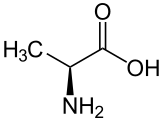
Alanine functions as a proteinogenic amino acid. Its simple methyl side chain (-CH3) is non-polar and hydrophobic, influencing protein folding by tending to cluster away from water. This property is critical for the formation of stable protein tertiary structures. Alanine is encoded by four codons: GCU, GCC, GCA, and GCG. The enzyme alanine transaminase (ALT) plays a key role in alanine metabolism, catalyzing the transfer of an amino group from alanine to alpha-ketoglutarate, forming pyruvate and glutamate. This reaction is vital for both amino acid and carbohydrate metabolism, particularly in the liver.
📊 Key Facts & Numbers
In silk fibroin, alanine can constitute up to 30% of the amino acid composition. Alanine is a major component of creatine phosphate in muscle tissue. The D-isomer of alanine makes up about 10-20% of the amino acids in the peptidoglycan layer of bacterial cell walls, contributing to their structural integrity.
👥 Key People & Organizations
Key figures in understanding alanine include Emil Fischer, whose 19th-century work on amino acid structures was foundational. Linus Pauling's theoretical work on protein structures in the mid-20th century also contributed to understanding how amino acids like alanine arrange themselves. The discovery and characterization of enzymes involved in alanine metabolism, such as alanine transaminase (ALT), were advanced by numerous biochemists, with Charles Yanofsky's studies on gene-enzyme relationships in the 1960s providing crucial insights into protein synthesis. Organizations like the American Society for Biochemistry and Molecular Biology and the International Union of Biochemistry and Molecular Biology (IUBMB) play roles in standardizing nomenclature and advancing research related to amino acids like alanine.
🌍 Cultural Impact & Influence
Alanine's influence is profound, though often invisible. As a fundamental protein building block, it underpins the structure and function of virtually all biological systems, from muscle tissue to enzymes. Its presence in silk, a material prized for millennia, links it to human history and industry. The enzyme alanine transaminase (ALT) is a critical biomarker in clinical diagnostics; elevated ALT levels in blood serum, often measured in clinical laboratory tests, are a primary indicator of liver damage, a fact widely recognized in medicine. The simple methyl group of alanine also serves as a model for studying hydrophobic interactions in protein folding, a concept central to structural biology and drug design.
⚡ Current State & Latest Developments
Current research continues to explore alanine's roles beyond basic protein synthesis. Advances in synthetic biology are exploring the engineered production of alanine and its derivatives for industrial applications, such as biodegradable polymers. The development of more sensitive assays for ALT in clinical settings remains an active area, aiming for earlier and more accurate diagnosis of liver conditions. Furthermore, research into the specific functions of D-alanine in microbial communities and its potential as an antibiotic target is ongoing.
🤔 Controversies & Debates
A subtle debate surrounds the precise role of alanine in certain metabolic disorders. While elevated ALT is a clear indicator of liver damage, the interpretation of mildly elevated levels, particularly in the absence of other symptoms, can be contentious among clinicians. Another area of discussion involves the significance of D-alanine in human health; while its presence in bacterial cell walls is well-established, its endogenous roles and potential therapeutic applications are still being elucidated, leading to differing opinions on its importance beyond microbial contexts. The relative abundance of alanine in proteins, while generally accepted, can vary significantly between protein types, leading to discussions about its specific contributions to the overall properties of different biomolecules.
🔮 Future Outlook & Predictions
The future of alanine research likely lies in its metabolic signaling capabilities and its potential in bio-based materials. Scientists are exploring alanine's role in the glucose-alanine cycle, a pathway that transports nitrogen from muscles to the liver, and its implications for energy homeostasis. The development of alanine-based biodegradable plastics and polymers, potentially offering sustainable alternatives to petroleum-based plastics, is a significant area of future industrial interest. Furthermore, continued investigation into D-alanine could unlock new avenues for antibiotic discovery and treatments for bacterial infections, especially in light of rising antibiotic resistance. The precise control of alanine levels through nutritional science and targeted therapies may also become more sophisticated.
💡 Practical Applications
Alanine finds practical application in several fields. In the food industry, it's used as a flavor enhancer and a nutritional supplement, particularly in sports nutrition products due to its role in energy metabolism. Its presence in collagen and gelatin makes it valuable in the pharmaceutical and cosmetic industries for products like capsules and skincare formulations. As mentioned, alanine transaminase (ALT) assays are indispensable in clinical diagnostics for monitoring liver health. In research laboratories, alanine is a standard reagent for biochemical experiments, protein analysis, and the synthesis of peptides. The D-isomer is also used in the synthesis of specific peptide drugs and as a component in some bacterial vaccines.
Key Facts
- Category
- science
- Type
- topic