
Contents
Overview
The seeds of algebraic topology were sown in the late 19th and early 20th centuries, blossoming from the fertile ground of differential geometry and abstract algebra. Early pioneers like Henri Poincaré, grappling with the classification of manifolds, introduced the concept of the fundamental group in his 1895 paper 'Analysis Situs'. This groundbreaking work, which sought to understand the 'shape' of spaces by studying loops within them, laid the foundation for using algebraic structures to capture topological features. Oswald Veblen further solidified the field with his 1922 book 'Analysis Situs', coining the term 'topology'. The subsequent development of homology and cohomology theories by mathematicians such as W. W. R. Householder, Albert Chase Rufus, and Emmy Noether in the 1920s and 30s provided more robust algebraic invariants, transforming topology into a rigorous discipline. The abstract algebra of rings and modules became indispensable tools, particularly through the work of Samuel Eilenberg and Samuel Steinberg in developing category theory and homological algebra in the 1940s, which unified many of these algebraic invariants.
⚙️ How It Works
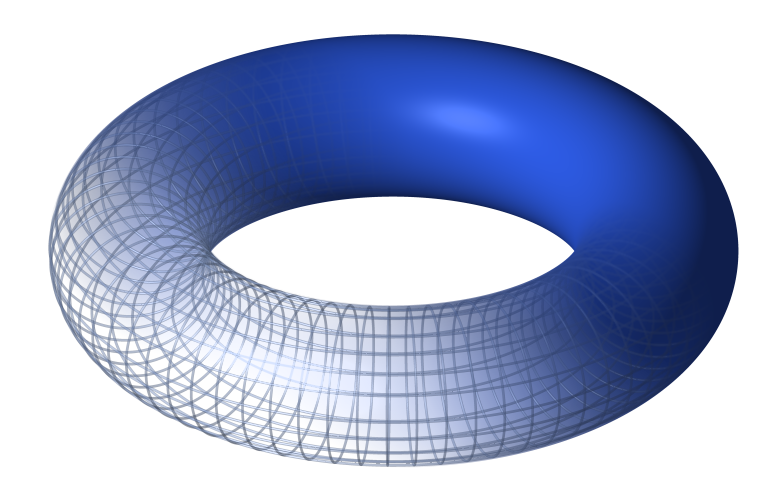
At its heart, algebraic topology translates topological problems into algebraic ones by associating algebraic objects—like groups, rings, or modules—to topological spaces. The most fundamental of these is the fundamental group, denoted $\pi_1(X, x_0)$, which captures information about the loops in a space $X$ based at a point $x_0$. More sophisticated invariants include homology groups ($H_n(X)$) and cohomology groups ($H^n(X)$), which are built using chain complexes and provide information about the 'holes' of various dimensions in a space. For instance, a torus has a first homology group isomorphic to $\mathbb{Z} \oplus \mathbb{Z}$, reflecting its two fundamental 'handles'. Characteristic classes are another powerful tool, assigning algebraic invariants to vector bundles over topological spaces, which are crucial in differential geometry and physics. The classification of spaces often relies on the Hurewicz theorem, which relates homotopy groups to homology groups.
📊 Key Facts & Numbers
The classification of topological spaces is a central, albeit often intractable, goal. For example, the classification of compact, connected, simply connected 4-manifolds is still an open problem, highlighting the complexity. The Poincaré Conjecture, famously proven by Grigori Perelman in 2002-2003, stated that any simply connected, closed 3-manifold is homeomorphic to the 3-sphere; its proof utilized Ricci flow, a technique from differential geometry, showcasing the interdisciplinary nature of topology. The development of stable homotopy theory in the mid-20th century, spearheaded by figures like Frank Adams, introduced a rich algebraic structure with over 100,000 distinct elements in its stable homotopy groups of spheres, demonstrating the immense complexity that can arise from simple topological objects.
👥 Key People & Organizations
Key figures in algebraic topology include Henri Poincaré, the 'father of topology', who introduced the fundamental group; W. W. R. Householder and Albert Chase Rufus, who developed early homology theories; Emmy Noether, whose abstract algebraic framework was foundational; Samuel Eilenberg and Samuel Steinberg, who pioneered category theory and homological algebra; and Grigori Perelman, who solved the Poincaré Conjecture. Major research institutions like the Institute for Advanced Study in Princeton, the Clay Mathematics Institute, and numerous university mathematics departments worldwide, such as Harvard University and the University of Cambridge, are hubs for this research. Organizations like the American Mathematical Society (AMS) and the London Mathematical Society (LMS) host conferences and publish journals dedicated to topology and its subfields.
🌍 Cultural Impact & Influence
Algebraic topology's influence extends far beyond pure mathematics. In theoretical physics, it is crucial for understanding quantum field theories, string theory, and condensed matter physics, particularly in the study of topological insulators and topological quantum computing. The concept of Chern-Simons theory, for instance, is deeply rooted in algebraic topology. Algebraic topology provides tools for computational topology, used in areas like shape analysis, data mining, and robotics for understanding complex datasets and environments. The visual representations of topological spaces, often generated through computational methods informed by algebraic invariants, have also found their way into data visualization and even abstract art, influencing aesthetic sensibilities by revealing hidden structures in complex forms.
⚡ Current State & Latest Developments
Current research in algebraic topology is vibrant and expanding. A major focus remains on the homotopy theory of spheres, a notoriously difficult area that continues to yield surprising results, such as the recent progress on the Adams-Novikov spectral sequence. Topological Data Analysis (TDA), a rapidly growing subfield, leverages algebraic topology tools like persistent homology to extract meaningful information from large, noisy datasets. Developments in higher category theory are providing new frameworks for understanding more complex topological structures. Furthermore, the interplay with algebraic geometry is yielding new insights, particularly in the study of schemes and algebraic varieties. The ongoing quest to understand the Poincaré Conjecture and the smooth Poincaré conjecture in higher dimensions continues to drive theoretical advancements.
🤔 Controversies & Debates
One of the most persistent debates in algebraic topology revolves around the 'classification problem': can we find a complete set of algebraic invariants that uniquely determine a topological space up to a specified equivalence (like homeomorphism or homotopy equivalence)? While significant progress has been made for certain classes of spaces (e.g., manifolds of low dimension), a general, complete classification remains elusive, leading to ongoing discussions about the feasibility and desirability of such a comprehensive program. Another area of contention, though more historical, was the initial resistance to abstract methods; some mathematicians initially viewed the algebraic machinery as overly complex and detached from geometric intuition. The sheer abstractness of some modern developments, like spectral sequences and motivic cohomology, can also be a point of debate regarding accessibility and practical utility for those outside highly specialized subfields.
🔮 Future Outlook & Predictions
The future of algebraic topology appears deeply intertwined with its applications and its internal theoretical developments. Topological Data Analysis is poised for significant growth, with potential applications in fields ranging from bioinformatics to f
Key Facts
- Category
- science
- Type
- topic