
Contents
- 🎵 Origins & History
- ⚙️ How It Works
- 📊 Key Facts & Numbers
- 👥 Key People & Organizations
- 🌍 Cultural Impact & Influence
- ⚡ Current State & Latest Developments
- 🤔 Controversies & Debates
- 🔮 Future Outlook & Predictions
- 💡 Practical Applications
- 📚 Related Topics & Deeper Reading
- Frequently Asked Questions
- References
- Related Topics
Overview
The genesis of ancient Egyptian art can be traced back to the Predynastic period, roughly from the 6th millennium BC onwards, with early examples found in pottery decoration and rock carvings. The unification of Upper and Lower Egypt around 3100 BC under the First Dynasty marked a significant consolidation of artistic conventions, laying the groundwork for the distinctive styles that would persist for over three millennia. The Old Kingdom (c. 2686–2181 BC) saw the construction of the iconic pyramids and the development of monumental sculpture, epitomized by the Great Sphinx of Giza. The Middle Kingdom (c. 2055–1650 BC) introduced more expressive and naturalistic portraiture, while the New Kingdom (c. 1550–1070 BC) witnessed an explosion of artistic production, including the elaborate tombs in the Valley of the Kings and the magnificent temples at Karnak and Luxor, showcasing the zenith of Egyptian artistic achievement before its gradual decline and absorption into Hellenistic and Roman artistic traditions.
⚙️ How It Works
Ancient Egyptian art operated under a strict set of conventions designed to convey order, permanence, and divine power. The principle of composite perspective was paramount, where figures were depicted with the head in profile, the eye and shoulders frontal, and the limbs in profile, ensuring that each part of the body was shown in its most recognizable and complete form. Hierarchical scale dictated that the most important figures, such as pharaohs and gods, were rendered larger than others. The use of color was symbolic, with specific hues representing different deities, concepts, or regions. The artistic canon, meticulously maintained by scribal artists and craftsmen, ensured continuity and adherence to established forms, prioritizing clarity and symbolic meaning over naturalistic representation or individual artistic innovation. This rigid adherence to form was crucial for the art's intended function: to maintain Ma'at and ensure the deceased's successful transition to the afterlife.
📊 Key Facts & Numbers
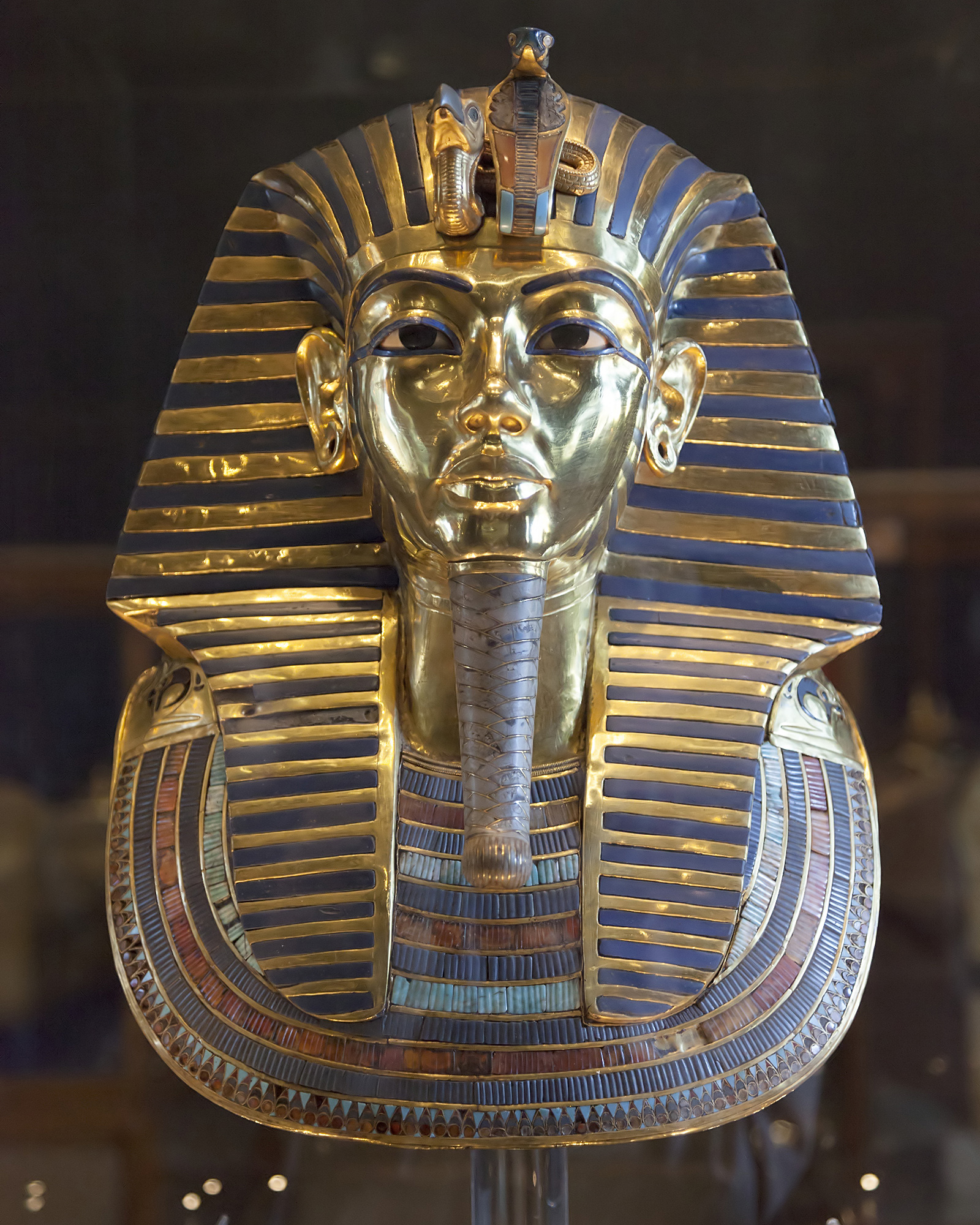
Spanning over 3,000 years, ancient Egyptian art represents one of the longest continuous artistic traditions in human history. Over 100,000 artifacts have been cataloged from the Nile Valley, with estimates suggesting that only a fraction of the original artistic output has survived. The Great Pyramid of Giza, completed around 2560 BC, contains an estimated 2.3 million stone blocks, each weighing an average of 2.5 tons. The tomb of Tutankhamun, discovered in 1922 by Howard Carter, yielded over 5,000 artifacts, including the iconic solid gold death mask weighing approximately 10.23 kilograms (22.5 lbs). The construction of the Karnak Temple complex, initiated in the Middle Kingdom, spanned over 2,000 years, with contributions from at least 30 pharaohs, resulting in a colossal structure covering over 247 acres.
👥 Key People & Organizations
While no single 'artist' achieved the fame of later periods, numerous individuals and groups were instrumental in creating these enduring works. The pharaohs themselves, such as Akhenaten (reigned c. 1353–1336 BC), who famously instigated a brief but radical artistic revolution with his Amarna style, were patrons and often depicted as divine rulers. Architects like Imhotep, vizier to Pharaoh Djoser around 2650 BC, are credited with designing the Step Pyramid at Saqqara, the earliest colossal stone building in Egypt. Guilds of craftsmen, including sculptors, painters, stonemasons, and jewelers, worked anonymously, often passing down their skills through generations within families or specialized workshops attached to temples and royal palaces. The discovery of the Rosetta Stone in 1799 by French soldiers was pivotal, enabling scholars like Jean-François Champollion to finally decipher hieroglyphs, unlocking the meaning behind much of the art and inscriptions.
🌍 Cultural Impact & Influence
The influence of ancient Egyptian art is profound and far-reaching, extending into Western art and architecture from antiquity to the present day. The monumental scale and symbolic motifs of Egyptian structures inspired Greek and Roman architects, and later, Neoclassical and Art Deco movements. The discovery of Egyptian tombs in the 19th and 20th centuries fueled a global fascination, leading to 'Egyptomania' in decorative arts, fashion, and popular culture, evident in everything from furniture design to jewelry. The stylized figures and narrative conventions of Egyptian reliefs and paintings have also been cited as precursors to later forms of sequential art, including comic strips and storyboards. Its enduring legacy lies in its ability to communicate complex ideas about divinity, kingship, and eternity through a visually distinct and powerful aesthetic language that continues to captivate.
⚡ Current State & Latest Developments
The study and preservation of ancient Egyptian art remain active fields in 2024. Ongoing archaeological excavations, particularly in regions like Saqqara and Abydos, continue to unearth new artifacts and structures, challenging previous understandings of chronology and artistic development. Museums worldwide, such as the British Museum in London and the Louvre in Paris, are constantly re-evaluating their collections, employing advanced imaging techniques and conservation methods to better understand and protect these ancient treasures. The digital humanities are also playing an increasing role, with initiatives to create 3D models of tombs and artifacts, making them accessible to a global audience and facilitating new avenues for research and virtual exploration. The repatriation of certain artifacts remains a point of discussion between Egypt and former colonial powers.
🤔 Controversies & Debates
Debates surrounding ancient Egyptian art often center on its perceived lack of originality versus its profound functional and symbolic depth. Skeptics point to the extreme stylistic continuity over millennia as evidence of artistic stagnation, arguing that the absence of individualistic expression limits its 'artistic' merit. Conversely, proponents emphasize that this continuity was a deliberate choice, essential for maintaining cosmic order (Ma'at) and ensuring the efficacy of religious and funerary rituals. The interpretation of iconography also sparks debate; for instance, the exact meaning of certain deities' attributes or the precise narrative depicted in tomb scenes can be subject to scholarly disagreement, particularly when hieroglyphic inscriptions are damaged or absent. The ethical implications of artifact acquisition and display by Western institutions also remain a contentious issue.
🔮 Future Outlook & Predictions
The future of ancient Egyptian art studies will likely be shaped by advancements in non-invasive archaeological techniques, such as ground-penetrating radar and satellite imagery, which promise to reveal hidden structures without excavation. AI-driven analysis may offer new insights into deciphering damaged inscriptions and understanding artistic patterns on an unprecedented scale. Furthermore, the growing global interest in cultural heritage preservation will undoubtedly lead to increased efforts to protect existing sites and artifacts from environmental degradation and illicit trafficking. We can anticipate further discoveries that may redefine periods or artistic styles, potentially revealing more about the lives of the artisans themselves and the societal context in which this art was created and consumed, pushing the boundaries of our understanding beyond the royal and religious spheres.
💡 Practical Applications
The most direct application of ancient Egyptian art is in the fields of archaeology, art history, and Egyptology, where its study provides crucial data for understanding ancient Egyptian civilization. Beyond academia, its aesthetic principles have been adopted in architecture, interior design, and graphic design, particularly during periods of revival like Art Deco and Neoclassicism. The iconic imagery, such as pyramids, sphinxes, hieroglyphs, and depictions of deities like Anubis and Isis, are frequently used in popular culture, films, literature, and video games to evoke a sense of mystery, antiquity, and exoticism. Museums worldwide utilize these artifacts for educational purposes, offering public exhibitions that translate complex historical narratives into visually engaging experiences for millions of visitors annually.
Key Facts
- Year
- c. 5000 BC - 400 AD
- Origin
- Egypt
- Category
- aesthetics
- Type
- concept
Frequently Asked Questions
What is the primary purpose of ancient Egyptian art?
Ancient Egyptian art was primarily functional, deeply intertwined with religion, ideology, and the concept of Ma'at (cosmic order). Its main purpose was to ensure permanence, maintain divine balance, and facilitate the deceased's journey to the afterlife. Artworks were not created for aesthetic appreciation in the modern sense but to serve a vital role in the cosmic and spiritual order, granting a form of eternal existence to the subjects depicted. This functional aspect dictated its conservative style and symbolic language, prioritizing clarity and efficacy over naturalism or individual expression.
Why does ancient Egyptian art look so repetitive and unchanging?
The remarkable stylistic continuity in ancient Egyptian art over millennia was a deliberate choice, not a lack of creativity. This conservatism was essential for maintaining Ma'at and ensuring the effectiveness of religious and funerary rituals. The established artistic canon provided a stable visual language that was believed to uphold cosmic order and guarantee the deceased's successful transition to the afterlife. Any deviation from these established forms was seen as potentially disruptive to this vital cosmic balance, thus reinforcing the adherence to tradition across dynasties and kingdoms.
What are the key characteristics of ancient Egyptian art?
Key characteristics include the use of composite perspective (combining profile and frontal views), hierarchical scale (larger figures for more important individuals), symbolic color usage, and a focus on idealized rather than realistic representation. Figures are often depicted in a rigid, formal manner, emphasizing permanence and divine order. The art served religious and funerary purposes, aiming to depict subjects in their most complete and recognizable form to ensure their eternal existence. The adherence to a strict canon of artistic conventions was paramount throughout its long history.
Where can I see examples of ancient Egyptian art?
Major collections of ancient Egyptian art can be found in prominent museums worldwide, including the British Museum in London, the Louvre in Paris, the Metropolitan Museum of Art in New York, and the Egyptian Museum in Cairo. These institutions house a vast array of artifacts, from monumental sculptures and sarcophagi to intricate jewelry, papyrus scrolls, and tomb reliefs, offering comprehensive insights into this ancient civilization's artistic achievements. Many of these artifacts are displayed within dedicated Egyptian galleries, often contextualized with information about their discovery and historical significance.
Was there individual artistic expression in ancient Egypt?
While the art served a collective and cosmic purpose, there is evidence of individual craftsmanship and subtle variations within the established canon. However, the concept of individual artistic expression as understood in modern Western art was largely absent. Artists and craftsmen operated within strict guidelines set by religious and royal authorities, and their work was valued for its adherence to tradition and its functional efficacy rather than for personal innovation. While some pharaohs, like Akhenaten, introduced stylistic changes, these were typically royal decrees rather than expressions of personal artistic vision in the modern sense. The anonymity of most ancient Egyptian artists underscores the art's communal and functional role.
How did ancient Egyptian art influence later cultures?
Ancient Egyptian art exerted a significant influence on subsequent civilizations, particularly through its monumental architecture, symbolic motifs, and decorative elements. Greek and Roman artists adopted Egyptian forms, which were later revived during periods like the Renaissance and Neoclassicism. The discovery of Egyptian artifacts in the 19th and 20th centuries sparked 'Egyptomania,' influencing Art Deco design, fashion, and popular culture. Its enduring visual language, characterized by bold forms and symbolic imagery, continues to inspire artists and designers across various media, from fine art to graphic design and film, demonstrating its lasting aesthetic power.
What does the discovery of Tutankhamun's tomb tell us about ancient Egyptian art?
The discovery of Tutankhamun's tomb in 1922 by Howard Carter provided an unparalleled glimpse into the wealth and artistry of the New Kingdom. The tomb contained over 5,000 artifacts, including the iconic solid gold death mask, gilded chariots, furniture, jewelry, and ritual objects, many of which are masterpieces of craftsmanship. These findings revealed the sophistication of Egyptian artisans, their mastery of materials like gold, lapis lazuli, and faience, and the elaborate preparations made for the pharaoh's afterlife. The sheer quantity and quality of the grave goods underscored the immense resources dedicated to royal burials and the profound importance of art in funerary rituals.