
Contents
- 🎵 Origins & History
- ⚙️ How It Works
- 📊 Key Facts & Numbers
- 👥 Key People & Organizations
- 🌍 Cultural Impact & Influence
- ⚡ Current State & Latest Developments
- 🤔 Controversies & Debates
- 🔮 Future Outlook & Predictions
- 💡 Practical Applications
- 📚 Related Topics & Deeper Reading
- Frequently Asked Questions
- References
- Related Topics
Overview
The story of ancient Egyptian begins around 4000 BC with Archaic Egyptian, the earliest recorded form, etched in hieroglyphs on artifacts like the Narmer Palette. This foundational stage laid the groundwork for Old Egyptian (c. 2686–2181 BC), the language of the Pyramid Texts, which solidified the hieroglyphic script's structure. Middle Egyptian (c. 2055–1650 BC), often considered the classical period, became the standard for literature and religious texts, exemplified by works like the Tale of Sinuhe. Late Egyptian (c. 1550–700 BC) saw significant grammatical shifts and the rise of the hieratic script for everyday use, appearing in documents like the Papyrus Westcar. By the Late Period, Demotic emerged as a cursive script and distinct dialect, reflecting increased foreign influence, particularly from Aramaic and Ancient Greek during the Persian and Ptolemaic eras. The final stage, Coptic, developed from Late Egyptian and was written using a Greek-derived alphabet, becoming the liturgical language of Egyptian Christians until its gradual replacement by Arabic.
⚙️ How It Works
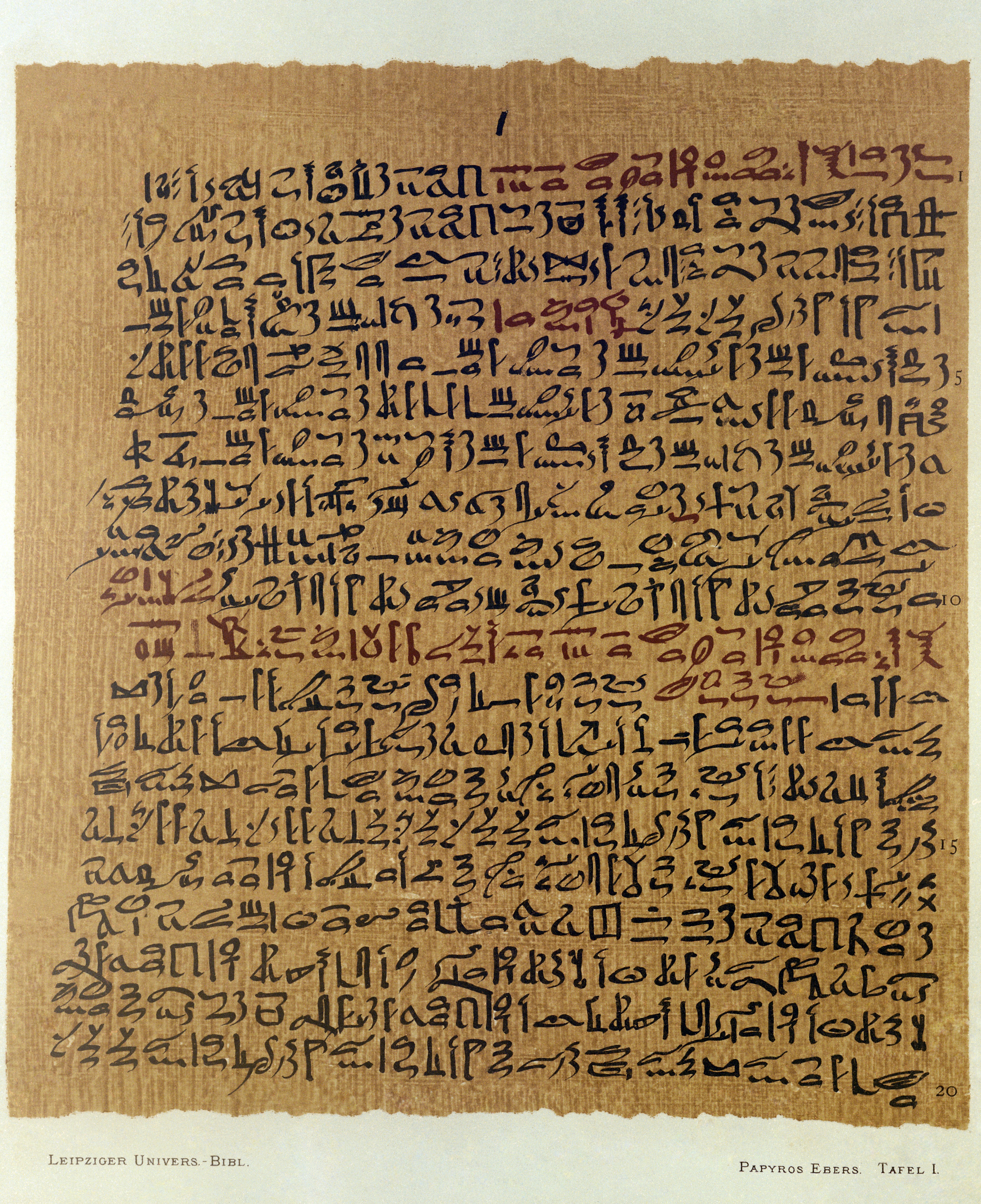
Ancient Egyptian is characterized by its unique writing systems and grammatical structure. Hieroglyphs, the most iconic script, are pictorial signs that could represent sounds (phonograms), ideas (ideograms), or be determinatives clarifying meaning. Hieratic, a cursive simplification of hieroglyphs, was used for administrative and literary texts on papyrus, while Demotic evolved into an even more abbreviated script for everyday documents. Grammatically, it's an Afro-Asiatic language, featuring a verb-subject-object (VSO) word order in earlier stages, which shifted to subject-verb-object (SVO) in later periods. It employed a triliteral root system, similar to Hebrew and Arabic, where core meanings are conveyed by three consonants. Notably, vowels were largely unwritten in hieroglyphic and hieratic scripts, making reconstruction a complex task for scholars like James Henry Breasted.
📊 Key Facts & Numbers
The written record of ancient Egyptian spans an astonishing 5,000 years, making it the longest-attested language in human history. The earliest inscriptions date to approximately 4000 BC, while Coptic, its final descendant, was still in use as a spoken language until the 17th century AD, with its liturgical use continuing today. Over 1.5 million inscriptions and texts, ranging from monumental temple inscriptions to personal letters on ostraca, have been discovered. The Rosetta Stone, discovered in 1799, proved instrumental in decipherment, bearing the same decree in hieroglyphic, Demotic, and Ancient Greek. The corpus of Middle Egyptian texts alone comprises thousands of documents, providing a rich dataset for linguistic analysis.
👥 Key People & Organizations
The decipherment of ancient Egyptian is inextricably linked to Jean-François Champollion, whose groundbreaking work in the 1820s unlocked the hieroglyphic script. His understanding of Coptic, the language's descendant, was crucial. Other key figures include Thomas Young, who made early contributions to understanding hieroglyphic signs, and Jean-Baptiste Champollion (Jean-François's brother), who assisted in cataloging and translating texts. Organizations like the British Museum and the Louvre Museum house vast collections of Egyptian artifacts and texts, crucial for ongoing research. Modern Egyptology continues this work through institutions like the Oriental Institute of the University of Chicago and the Egyptian Museum in Cairo.
🌍 Cultural Impact & Influence
Ancient Egyptian language and its scripts have profoundly influenced global culture and scholarship. The discovery and decipherment of hieroglyphs sparked a fascination with ancient Egypt that permeated art, literature, and architecture throughout the 19th and 20th centuries, seen in Art Nouveau design and Egyptomania trends. Its linguistic structure and vocabulary have informed the study of Afro-Asiatic languages and the history of writing systems. The enduring mystique of hieroglyphs continues to inspire, appearing in modern media and popular culture, often symbolizing wisdom, mystery, and ancient power. The study of its texts provides unparalleled insights into ancient religion, governance, medicine, and daily life, shaping our understanding of early human civilization.
⚡ Current State & Latest Developments
While ancient Egyptian as a spoken vernacular ceased to exist centuries ago, its legacy persists. Coptic remains the liturgical language of the Coptic Orthodox Church and the Coptic Catholic Church, with services still conducted in its dialects. Modern linguistic research continues to refine our understanding of its phonology, grammar, and evolution, utilizing computational linguistics and comparative studies with other Afro-Asiatic languages. Ongoing archaeological discoveries, such as new tomb inscriptions or papyri fragments, constantly add to the corpus of known texts, providing fresh material for analysis by scholars at institutions like Heidelberg University and Oxford University.
🤔 Controversies & Debates
Debates surrounding ancient Egyptian language often center on pronunciation and the precise dating of linguistic stages. Reconstructing the exact sounds of ancient Egyptian is challenging due to the lack of written vowels and the evolution of the language over millennia. Scholars like Albert Grollenberg have proposed various phonetic reconstructions, but consensus remains elusive. Another point of contention is the extent of foreign influence, particularly from Nubian or Semitic languages, on its development. The classification of certain texts within specific linguistic periods also occasionally sparks academic discussion, highlighting the ongoing nature of linguistic archaeology.
🔮 Future Outlook & Predictions
The future of ancient Egyptian language studies lies in advanced digital humanities and comparative linguistics. Projects are underway to create comprehensive digital corpora of all known Egyptian texts, enabling sophisticated textual analysis and cross-referencing. Further comparative studies with related Afro-Asiatic languages, including Berber and Ancient Hebrew, may shed more light on its origins and evolution. As new archaeological finds continue to surface, our understanding of its nuances and regional variations will undoubtedly deepen. The potential for AI-driven linguistic analysis to identify patterns and connections previously missed by human scholars is also a significant area of future exploration.
💡 Practical Applications
The primary practical application of studying ancient Egyptian language is in the field of Egyptology itself, enabling the translation and interpretation of historical texts. This allows historians, archaeologists, and art historians to reconstruct the history, religion, and culture of ancient Egypt. Beyond academia, knowledge of ancient Egyptian scripts and symbolism continues to be relevant in museum studies for artifact interpretation and in conservation efforts for ancient monuments. Furthermore, the linguistic principles and comparative methods developed through studying ancient Egyptian have broader applications in historical linguistics and the study of language evolution across the globe.
Key Facts
- Year
- c. 4000 BC – 1700 AD (spoken), continuing liturgical use
- Origin
- Egypt
- Category
- history
- Type
- topic
Frequently Asked Questions
What is the oldest written language?
Ancient Egyptian is one of the oldest written languages, with its earliest records dating back to around 4000 BC. It boasts the longest continuous written record of any language, spanning over 5,000 years. This makes it a unique subject of study for understanding the evolution of human communication and civilization, offering insights into a culture that shaped much of the ancient world.
How did scholars decipher Egyptian hieroglyphs?
The decipherment of Egyptian hieroglyphs was a monumental achievement, largely credited to Jean-François Champollion in the 1820s. The key was the Rosetta Stone, discovered in 1799, which contained the same decree in three scripts: hieroglyphic, Demotic, and Ancient Greek. Champollion, already proficient in Coptic (the descendant of ancient Egyptian), used the Greek text as a guide to unlock the phonetic and ideographic values of the hieroglyphs, a process that revolutionized the study of ancient Egypt.
What are the main stages of the ancient Egyptian language?
Ancient Egyptian evolved through several distinct stages. These include Archaic Egyptian (c. 4000–2686 BC), Old Egyptian (c. 2686–2181 BC), Middle Egyptian (c. 2055–1650 BC), Late Egyptian (c. 1550–700 BC), Demotic (c. 7th century BC – 5th century AD), and finally Coptic (c. 1st–17th century AD spoken, liturgical use continues). Each stage reflects changes in grammar, vocabulary, and script, offering a rich linguistic history.
Why is ancient Egyptian language important today?
Ancient Egyptian language is crucial for understanding the history, religion, and culture of one of the world's most influential ancient civilizations. Its vast corpus of texts provides direct evidence of their beliefs, governance, scientific knowledge, and daily lives. Furthermore, its study has significantly contributed to the fields of linguistics, archaeology, and the history of writing systems, offering a unique perspective on human intellectual development over millennia.
Is ancient Egyptian related to modern languages?
Yes, ancient Egyptian is part of the Afro-Asiatic language family, which also includes Semitic languages like Hebrew and Arabic, as well as Berber and Cushitic languages. Its direct descendant is Coptic, which, while no longer widely spoken, is still used liturgically by the Coptic Orthodox Church. This lineage allows linguists to trace linguistic evolution and connections across vast geographical and temporal distances.
What are the different scripts used for ancient Egyptian?
Ancient Egyptian was written using several scripts. The most famous is hieroglyphs, which are pictorial symbols used for monumental inscriptions and religious texts. Hieratic is a cursive form of hieroglyphs, used for everyday writing on papyrus. Demotic is an even more abbreviated cursive script that developed later, used for administrative and legal documents. Coptic, the final stage, used an alphabet derived from Greek, with a few additional letters from Demotic.
What can we learn from ancient Egyptian texts?
Ancient Egyptian texts offer an unparalleled window into a complex civilization. We learn about their religious beliefs, including intricate mythologies and funerary practices detailed in texts like the Book of the Dead. Their administrative and legal documents reveal details about governance, economy, and social structures. Medical papyri, such as the Papyrus Ebers, showcase their understanding of medicine and pharmacology, while literary works like the Instruction of Ptahhotep provide insights into their ethical and philosophical views.