
Contents
- 🎶 What is a Composer?
- 🏛️ Historical Context & Evolution
- 💡 Key Figures & Their Legacies
- ⚙️ The Composer's Toolkit
- 📈 Commercial & Cultural Impact
- 🎭 Genres & Styles
- 🌟 Composers in the Digital Age
- 🤔 Debates & Controversies
- 🚀 The Future of Composition
- 📚 Resources for Further Exploration
- Frequently Asked Questions
- Related Topics
Overview
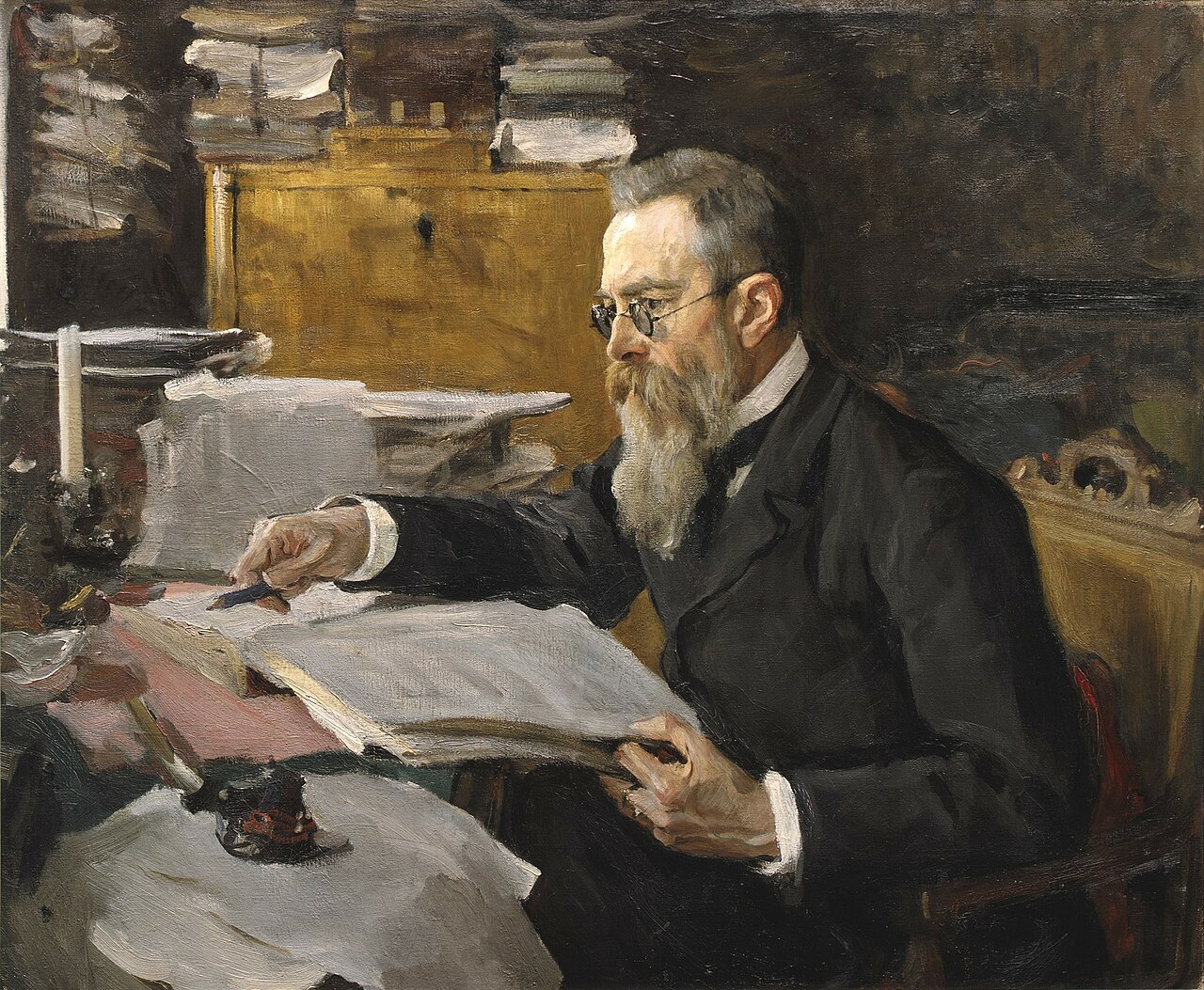
A composer is fundamentally an architect of sound, the individual who conceives and notates musical works. While the term broadly applies to anyone creating music, it most strongly resonates within the tradition of Western classical music, where composers like Johann Sebastian Bach and Wolfgang Amadeus Mozart established enduring paradigms. Beyond classical music, composers are vital in film scoring, video game soundtracks, and contemporary popular music, often working as professional musicians or educators. Their role involves translating abstract ideas into a structured sonic language, a process that demands both technical mastery and profound artistic vision.
🏛️ Historical Context & Evolution
The role of the composer has evolved dramatically since the medieval period, when music was often attributed to anonymous creators or performed as functional liturgical art. The Renaissance saw the rise of the individual composer as a recognized artist, with figures like Josquin des Prez gaining significant renown. The Baroque era, exemplified by Claudio Monteverdi, further cemented the composer's status, while the Classical and Romantic periods, dominated by giants like Ludwig van Beethoven, elevated composition to a high art form, often intertwined with the virtuoso performer. This historical trajectory highlights a shift from communal musical creation to individual artistic expression and intellectual property.
💡 Key Figures & Their Legacies
The pantheon of composers is vast, but certain figures stand out for their transformative impact. Johann Sebastian Bach's intricate counterpoint and harmonic innovations laid groundwork for centuries of musical development. Wolfgang Amadeus Mozart's effortless melodic genius and formal perfection remain benchmarks of classical composition. Ludwig van Beethoven's revolutionary approach to form, emotion, and thematic development bridged the Classical and Romantic eras, influencing countless successors. In the 20th century, composers like Igor Stravinsky and Arnold Schoenberg pushed the boundaries of tonality and rhythm, challenging established norms and opening new sonic territories.
⚙️ The Composer's Toolkit
The composer's primary tool is the musical score, a visual representation of music that dictates pitch, rhythm, dynamics, and articulation. However, modern composers also utilize digital audio workstations (DAWs) and other electronic tools for composition, arrangement, and production. Understanding music theory, harmony, counterpoint, and orchestration are foundational skills, alongside a deep familiarity with various instruments and their capabilities. The ability to conceptualize sound, structure musical ideas, and communicate them effectively to performers or listeners is paramount.
📈 Commercial & Cultural Impact
Composers wield significant commercial and cultural influence, shaping the soundscapes of our lives. Film composers like John Williams have created iconic scores that are inseparable from their cinematic counterparts, generating billions in revenue and shaping audience emotional responses. Video game composers, such as Nobuo Uematsu, craft immersive auditory experiences that define entire franchises. The commercial success of a composer can range from lucrative commissions and performance royalties to the widespread adoption of their music in advertising and media, demonstrating a tangible economic and cultural footprint.
🎭 Genres & Styles
The spectrum of musical genres and styles is a testament to the boundless creativity of composers. From the complex fugues of Johann Sebastian Bach and the symphonic grandeur of Gustav Mahler to the avant-garde experiments of John Cage and the minimalist innovations of Philip Glass, composers have continuously redefined musical language. Each genre, whether it's opera, chamber music, film scores, or electronic music, presents unique challenges and opportunities for compositional expression, demanding specific knowledge and stylistic approaches.
🌟 Composers in the Digital Age
The digital age has democratized music creation and dissemination, profoundly impacting composers. Digital Audio Workstations (DAWs) like Ableton Live and Logic Pro allow for sophisticated composition and production on personal computers, lowering the barrier to entry. Streaming platforms and online marketplaces offer direct access to global audiences, bypassing traditional gatekeepers. However, this also presents challenges regarding music copyright and fair compensation, as composers navigate a landscape where music is often consumed in vast quantities but valued differently.
🤔 Debates & Controversies
The role and recognition of composers are subjects of ongoing debate. A central controversy revolves around the perceived elitism of Western classical music and whether its compositional traditions adequately represent diverse global musical practices. Questions also arise regarding the attribution and compensation of composers in collaborative projects, particularly in film and game scoring, where the composer's contribution can sometimes be overshadowed by directors or producers. Furthermore, the definition of 'composer' itself is contested, with debates about the role of AI in music generation and whether such outputs can be considered 'composed' in the human sense.
🚀 The Future of Composition
The future of composition is likely to be shaped by increasing integration of artificial intelligence, further blurring the lines between human and machine creativity. Expect more experimental approaches to sound design, interactive music systems that respond to listener input, and cross-disciplinary collaborations with visual artists, technologists, and scientists. Composers will continue to explore new sonic palettes, potentially utilizing bio-data or environmental sounds as compositional material. The challenge will be to maintain artistic integrity and human expressiveness amidst rapid technological advancement.
📚 Resources for Further Exploration
For those interested in the craft of composition, exploring the works of Johann Sebastian Bach and Wolfgang Amadeus Mozart offers a foundational understanding of Western musical structure. Studying music theory texts by authors like Arnold Schoenberg or Walter Piston provides technical insight. Engaging with contemporary composers through their recordings and interviews, such as those by Max Richter or Caroline Shaw, reveals modern approaches. Attending live performances of orchestral, chamber, or experimental music is crucial for experiencing composition in its intended sonic environment. Online platforms like Petrucci Music Library offer access to a vast collection of public domain scores.
Key Facts
- Year
- 2023
- Origin
- Global
- Category
- Music
- Type
- Cultural Phenomenon
Frequently Asked Questions
What's the difference between a composer and a songwriter?
While both create music, a composer typically focuses on instrumental works or more complex musical structures, often within classical traditions or for film/games. A songwriter usually emphasizes lyrical content and song-based structures, common in popular music. Many individuals excel at both, but the terms highlight different primary focuses in musical creation.
Do composers need to be able to play an instrument?
Historically, most composers were also accomplished performers, which greatly informed their writing. While not strictly mandatory today, proficiency on at least one instrument, or a deep understanding of instrumental capabilities, is highly beneficial for effective orchestration and conveying musical ideas accurately.
How do composers get paid?
Composers earn income through various streams: commissions for new works, performance royalties (collected by organizations like ASCAP, BMI, SESAC), mechanical royalties for recordings, licensing fees for use in film/TV/games, and sometimes direct sales or teaching. The economic model can vary significantly by genre and region.
Is AI capable of composing music?
AI can generate music by learning patterns from existing datasets. While AI can produce technically proficient or aesthetically pleasing results, the debate continues on whether this constitutes true 'composition' in the human sense, which often involves intent, emotional depth, and lived experience. Current AI-generated music is often used as a tool or starting point for human composers.
What is the role of a conductor in relation to a composer?
A conductor interprets the composer's score, guiding an ensemble to realize the musical vision. While the composer creates the blueprint, the conductor shapes the performance, influencing tempo, dynamics, and overall expression. The conductor acts as a crucial intermediary between the composer's intent and the audience's experience.