
Contents
Overview
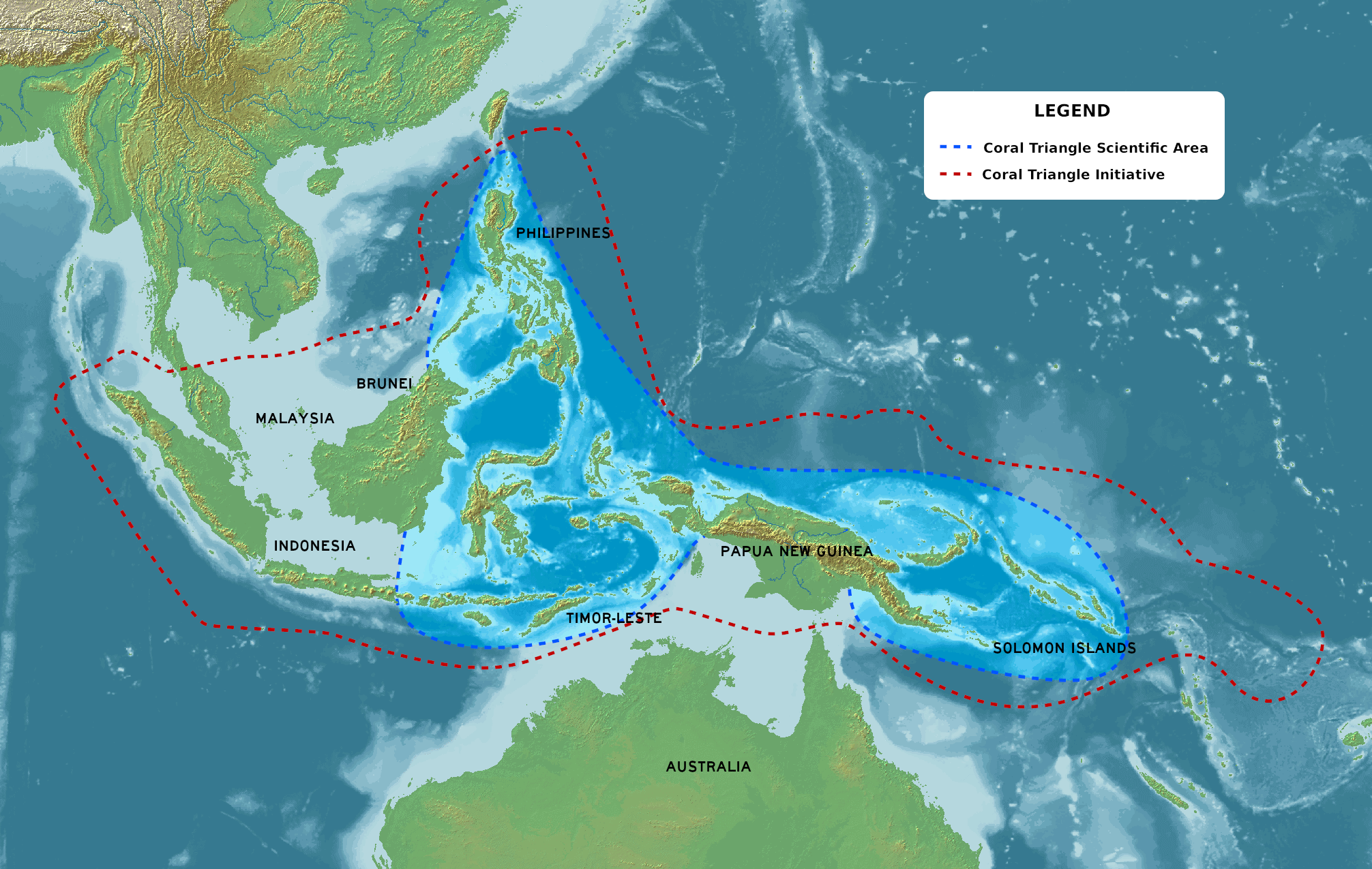
The concept of the Coral Triangle as a distinct biogeographic region emerged from scientific observations in the late 20th century, solidifying in the early 2000s. The Coral Triangle Initiative on Coral Reefs, Fisheries and Food Security (CTI-CFF) marked a significant step in its recognition as a conservation priority. This initiative, driven by the six member nations, aimed to address the threats to the region's unparalleled marine biodiversity. Precursors to this understanding include early marine biological surveys by institutions like the Smithsonian Institution and the Scripps Institution of Oceanography, which documented the extraordinary species richness in the Indo-Pacific. The region's geological history, influenced by tectonic shifts and sea-level changes over millennia, has played a crucial role in fostering this biodiversity hotspot, allowing species to migrate and diversify.
⚙️ How It Works
The Coral Triangle's extraordinary biodiversity is a product of its unique geographical position and oceanographic conditions. Situated at the convergence of the Pacific and Indian Oceans, it acts as a crucible where species from both oceans meet and intermingle, leading to high rates of endemism. The region's complex bathymetry, including deep trenches and shallow seamounts, creates diverse habitats that support a vast array of marine life. Furthermore, ocean currents, such as the Kuroshio Current and the Indonesian Throughflow, facilitate larval dispersal, connecting populations across vast distances and maintaining genetic diversity. This intricate interplay of geography, oceanography, and evolutionary history has resulted in the highest concentration of coral and fish species found anywhere on Earth, forming the foundation of complex marine ecosystems.
📊 Key Facts & Numbers
The sheer scale of biodiversity within the Coral Triangle is staggering. It is home to a significant percentage of the world's shallow-water reef-building coral species and reef fish species. The region also boasts a significant proportion of the world's razor clam species and a significant proportion of the world's marine turtles, sharks, and marine mammals. This biological richness spans an area of roughly 5.7 million square kilometers, encompassing waters from the Philippines down to Timor-Leste and out to the Solomon Islands. The economic value of these resources is immense, supporting fisheries that provide livelihoods for an estimated 120 million people across the six nations, with an estimated annual value of over $12 billion.
👥 Key People & Organizations
Key organizations and individuals have been instrumental in understanding and protecting the Coral Triangle. The Coral Triangle Initiative (CTI) is a multi-stakeholder partnership involving the six member governments: Indonesia, Malaysia, Papua New Guinea, the Philippines, Solomon Islands, and Timor-Leste. Major international NGOs like the WWF and The Nature Conservancy have been active in funding research, implementing conservation projects, and advocating for policy changes. Scientists such as Dr. Ove Hoegh-Guldberg, a leading coral reef expert, have provided critical research on the impacts of climate change on these ecosystems. The Asian Development Bank has also played a significant role in financing conservation and sustainable development initiatives within the region.
🌍 Cultural Impact & Influence
The Coral Triangle's cultural significance is deeply intertwined with the livelihoods and traditions of its coastal communities. For centuries, indigenous peoples have relied on its rich marine resources for food, income, and cultural practices. Traditional fishing methods, passed down through generations, are a testament to this deep connection. The region's biodiversity has also inspired art, folklore, and local mythologies. Beyond local cultures, the Coral Triangle has become a global symbol of marine conservation, influencing international environmental policy and raising public awareness about the threats facing coral reefs worldwide. Its status as the 'Amazon of the Seas' has captured the global imagination, highlighting the urgent need for its protection.
⚡ Current State & Latest Developments
The Coral Triangle is currently facing unprecedented threats, primarily driven by climate change and local anthropogenic pressures. Rising sea temperatures are causing widespread coral bleaching events, with significant mortality observed in recent years, such as the severe bleaching in 2016-2017. Overfishing, destructive fishing practices like blast fishing and cyanide fishing, and pollution from plastic waste and agricultural runoff further degrade reef health. Despite ongoing conservation efforts, the overall health of many reefs within the triangle is declining. However, there are pockets of resilience, and new initiatives are emerging, including the expansion of marine protected areas (MPAs) and the promotion of sustainable aquaculture and ecotourism, as seen in projects supported by the Global Environment Facility.
🤔 Controversies & Debates
The Coral Triangle is a focal point for intense debate regarding conservation strategies and the balance between economic development and ecological preservation. A major controversy surrounds the effectiveness and enforcement of marine protected areas (MPAs); while widely supported, many MPAs struggle with inadequate funding, limited enforcement capacity, and political interference, leading to questions about their true impact. Another contentious issue is the role of international aid and the sustainability of conservation projects once external funding ceases. Furthermore, there are ongoing debates about the best approaches to combatting climate change impacts, with some advocating for aggressive emissions reductions at a global scale, while others focus on local adaptation strategies and resilience-building within the region, such as promoting heat-tolerant coral species.
🔮 Future Outlook & Predictions
The future of the Coral Triangle hinges on a delicate balance between global climate action and robust local management. Projections indicate that without significant reductions in greenhouse gas emissions, the region could experience irreversible ecosystem collapse by mid-century, with devastating consequences for biodiversity and human livelihoods. However, if global warming is limited to 1.5°C above pre-industrial levels, as targeted by the Paris Agreement, a substantial portion of the Coral Triangle's reefs could still persist. Future conservation efforts will likely focus on expanding and effectively managing MPAs, developing innovative coral restoration techniques, promoting sustainable fisheries management through tools like e-permitting systems, and fostering climate-resilient livelihoods for coastal communities, potentially involving increased investment in blue economy initiatives.
💡 Practical Applications
The Coral Triangle's immense biodiversity offers significant practical applications, primarily in fisheries and tourism. It serves as a critical nursery and breeding ground for many commercially important fish species, supporting global seafood supplies and providing livelihoods for millions. The region's vibrant coral reefs are also a major draw for ecotourism, particularly diving and snorkeling, generating substantial revenue for local economies. For instance, the Raja Ampat archipelago in Indonesia is renowned for its unparalleled diving, attracting thousands of tourists annually. Beyond these direct economic benefits, the Coral Triangle is a living laboratory for scientific research, offering invaluable insights into marine ecology, evolutionary biology, and the impacts of climate change, which can inform conservation strategies worldwide. Its genetic resources also hold potential for pharmaceutical discoveries.
Key Facts
- Category
- nature
- Type
- topic