
Contents
Overview
The story of Cubase begins with Steinberg, a German software company, launching the program for the Atari ST home computer. This initial version was primarily a MIDI sequencer, a far cry from the full-fledged digital audio workstation it is today. Its early success was intrinsically linked to the burgeoning MIDI revolution, allowing musicians to compose and arrange complex musical pieces using synthesizers and drum machines. A pivotal moment arrived with the integration of audio recording capabilities, transforming it from a MIDI tool into a comprehensive production environment. This evolution was crucial in keeping pace with the digital audio revolution, allowing Cubase to compete with emerging DAWs like Pro Tools and Logic Pro. The close relationship with Yamaha has also played a significant role in its distribution and integration with hardware.
⚙️ How It Works
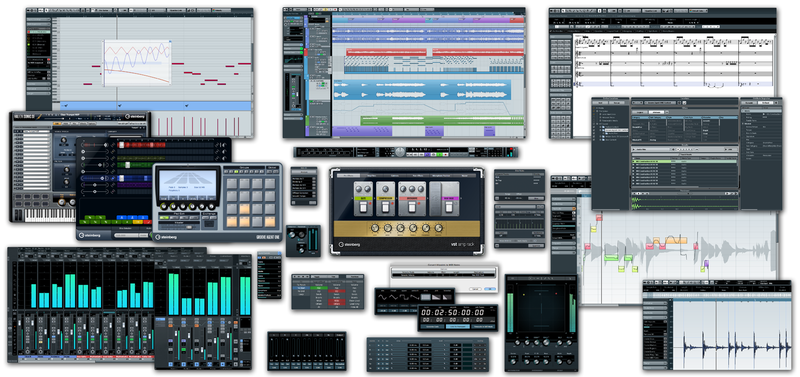
At its core, Cubase functions as a virtual studio, providing a digital canvas for audio and MIDI manipulation. Users can record multiple audio tracks simultaneously, capturing instruments and vocals through audio interfaces. MIDI data, representing musical notes and performance parameters, can be recorded, edited, and sequenced with precision. The software boasts a sophisticated arrangement window, allowing for the linear sequencing of audio and MIDI events, while the mixer provides extensive control over levels, panning, and effects. A vast array of virtual instruments, including synthesizers, samplers, and drum machines, are integrated, alongside a comprehensive suite of audio effects like EQs, compressors, reverbs, and delays. Advanced features such as VariAudio for pitch correction and ADSR envelope manipulation offer fine-grained control over sonic elements, enabling complex sound design and mixing workflows.
📊 Key Facts & Numbers
Cubase has been a dominant force in the DAW market for decades, with an estimated user base in the millions globally. Steinberg continues to invest heavily in research and development, reflecting its continuous development cycle. The software's robust MIDI editing capabilities have been particularly influential in the rise of electronic music genres, allowing for intricate programming and sound design. The complexity of Cubase can be a significant investment for emerging artists, but its reach is global, with strong adoption in North America and Asia. The software supports high-fidelity audio production, demonstrating its capacity for professional use.
👥 Key People & Organizations
The development and evolution of Cubase are intrinsically tied to Steinberg, the company that has nurtured it since its inception. While Steinberg was acquired by Yamaha, it continues to operate as a distinct entity, maintaining its focus on professional audio software. Key figures in its early development include Rolf Wittenbrock, who was instrumental in its initial MIDI sequencing concepts. More recently, product managers and lead developers within Steinberg, though often not publicly named in detail, are responsible for steering its feature set and technical direction. The broader ecosystem of Cubase users, including influential producers like Hans Zimmer and countless others across genres, collectively shape its perceived value and drive its continued relevance. Independent developers also contribute significantly through third-party plugins and hardware controllers designed to integrate seamlessly with the DAW.
🌍 Cultural Impact & Influence
Cubase's influence on modern music production is profound and far-reaching. Its intuitive interface and powerful feature set have democratized music creation, enabling artists to produce professional-sounding music without the need for expensive traditional studios. Furthermore, Cubase's adoption by Yamaha has led to its integration with hardware, creating a more cohesive production workflow for users of both brands. The widespread availability of cut-down versions has also served as an entry point for aspiring musicians, fostering a generation of producers familiar with its workflow and ecosystem.
⚡ Current State & Latest Developments
The ongoing competition from DAWs like Ableton Live, FL Studio, and Studio One ensures a dynamic market, pushing Cubase to continually refine its offerings and maintain its competitive edge. The recent focus on cross-platform compatibility and cloud integration signals a strategic move to adapt to evolving user needs.
🤔 Controversies & Debates
One of the persistent debates surrounding Cubase, and DAWs in general, revolves around the perceived 'sound' of the software. Some engineers and producers argue that certain DAWs impart a subtle sonic character, a notion often met with skepticism by others who contend that the final sound is entirely dependent on the user's skill, plugins, and mixing choices. Another area of contention is the pricing model; while Steinberg offers tiered versions, the cost of the full Pro version and its associated plugins can still be a significant investment for emerging artists. Furthermore, the complexity of Cubase, while a strength for professionals, can present a steep learning curve for beginners, leading to discussions about user-friendliness compared to some competitors. The ongoing transition to subscription models in some software industries also sparks debate about the long-term value and ownership of perpetual licenses, a model Cubase largely adheres to but which remains a point of discussion.
🔮 Future Outlook & Predictions
The future of Cubase appears to be one of continued integration and intelligent assistance. We can anticipate further advancements in AI-powered features, potentially automating tedious tasks like track cleanup, basic mixing, and even suggesting creative arrangements. The trend towards cloud-based collaboration will likely see deeper integration, allowing multiple users to work on the same project seamlessly, regardless of their physical location. Expect enhanced support for immersive audio formats like Dolby Atmos, catering to the growing demand for spatial audio experiences in music and film. Steinberg will also likely continue to refine its virtual instrument and effects offerings, potentially incorporating more advanced synthesis techniques and machine learning-driven sound design tools. The challenge will be to balance these cutting-edge developments with the core usability and stability that have defined Cubase for decades, ensuring it remains accessible to both seasoned professionals and newcomers.
💡 Practical Applications
Cubase's practical applications are vast, serving as the central hub for music production across numerous domains. In music studios, it's used for everything from initial songwriting and MIDI programming to multitrack recording of vocals and instruments, intricate audio editing, mixing, and mastering. For film and game composers, Cubase is indispensable for scoring, synchronizing music to picture, and creating complex soundscapes. Live performers might use it for triggering backing tracks, loops, and samples during concerts. Educators utilize it in academic settings to teach music production and audio engineering.
Key Facts
- Category
- technology
- Type
- topic