
Contents
Overview
Dadaism didn't just emerge; it detonated. Its genesis is inextricably linked to the horrors of World War I, with Zürich serving as a neutral haven for artists and intellectuals fleeing the carnage. Hugo Ball, disgusted by the war's senseless slaughter, co-founded the Cabaret Voltaire in February 1916, a space that became the crucible for Dada's nascent ideas. Ball's 1916 Dada Manifesto articulated a profound disillusionment with logic and reason, deeming them complicit in the war's barbarity. The movement quickly metastasized, with key figures like Tristan Tzara propagating its anti-art ethos across Europe and into New York, challenging established norms with a ferocity that shocked and inspired.
⚙️ How It Works
At its core, Dadaism was an act of deliberate deconstruction. It operated by negating existing artistic and social structures, employing methods that defied conventional understanding. Techniques like chance operations, collage, photomontage, and readymades (ordinary manufactured objects presented as art, famously pioneered by Marcel Duchamp) were central. Sound poems, nonsensical manifestos, and provocative performances at venues like the Cabaret Voltaire aimed to shock audiences out of their complacency. The goal wasn't to create beauty but to provoke, to question, and to dismantle the very notion of what art could be, often through deliberate irrationality and aggressive humor.
📊 Key Facts & Numbers
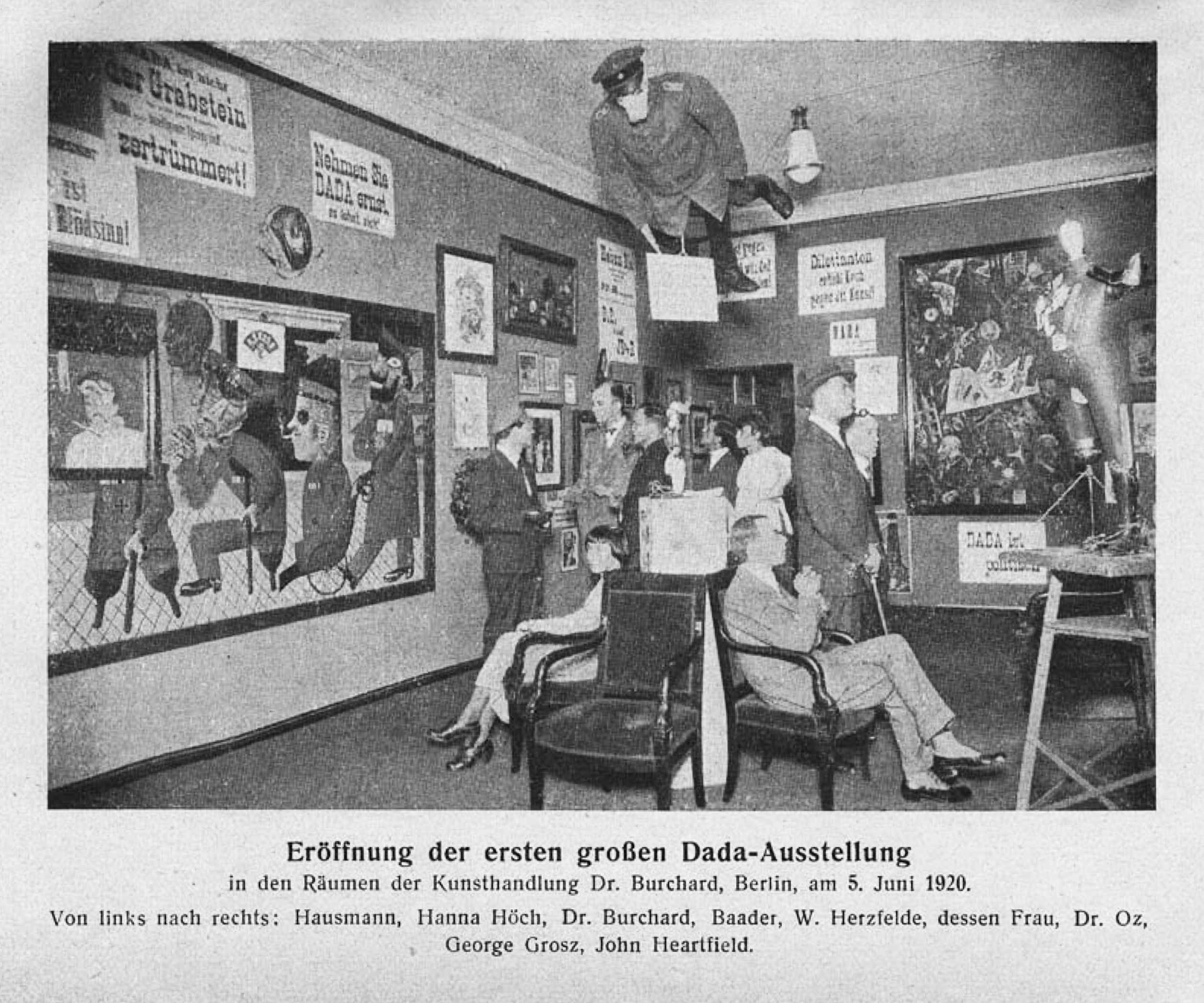
Dadaism, though relatively short-lived as a cohesive movement (peaking between 1916 and 1924), left an indelible mark. Over 100,000 people are estimated to have attended Dada events in Zürich alone during its initial phase. The movement's publications, such as Dada Magazine, numbered at least 10 distinct issues, disseminating its ideas widely. In Berlin, Dadaists like Raoul Hausmann and Hannah Höch produced over 50 photomontages in a single year (1920). The financial investment in Dada exhibitions, while often controversial, was significant enough to generate widespread media attention, with some events costing upwards of 500 Swiss Francs to stage.
👥 Key People & Organizations
The pantheon of Dada includes a constellation of rebellious spirits. Hugo Ball, a poet and mystic, is widely credited as a founder, articulating the movement's philosophical underpinnings. Tristan Tzara, a Romanian-French poet, became Dada's most vocal and provocative propagandist, known for his manifestos and cut-up poetry technique. Marcel Duchamp, though often associated with Cubism and later Surrealism, was a pivotal Dada figure, whose readymades like "Fountain" (1917) fundamentally questioned authorship and artistic value. Other key figures include Hans Arp, Kurt Schwitters, Man Ray, George Grosz, and Sophie Taeuber-Arp, each contributing unique forms of anti-art expression.
🌍 Cultural Impact & Influence
Dada's influence is immeasurable, acting as a vital precursor to nearly every major artistic and cultural development of the 20th century. Its embrace of collage and photomontage directly informed Surrealism, while its questioning of artistic authorship and the nature of the art object laid the foundation for Conceptual Art and Performance Art. The movement's spirit of radical critique and anti-establishment sentiment continues to resonate in punk rock, Situationist International, and various forms of counter-cultural expression. Even the term "Dadaism" itself, chosen by chance, became a shorthand for artistic anarchy.
⚡ Current State & Latest Developments
While Dada as a unified movement dissolved by the mid-1920s, its spirit is far from dormant. Contemporary artists and cultural critics frequently invoke Dadaist principles when challenging established norms, particularly in digital art, internet memes, and activist art. The legacy of Dada is evident in the ongoing debates surrounding AI-generated art and the definition of creativity in the digital age. Galleries and institutions worldwide continue to host retrospectives and exhibitions, such as the 2016 centenary celebrations, ensuring Dada's provocative ideas remain in active dialogue with the present.
🤔 Controversies & Debates
The primary controversy surrounding Dadaism was its very existence: was it art, or merely nihilistic destruction? Critics, particularly from the conservative art establishment of the time, decried Dada works as offensive, meaningless, and lacking in skill. The movement's embrace of chance and irrationality was seen by some as an abdication of artistic responsibility. Furthermore, the political leanings of some Dadaists, particularly in post-war Germany, led to accusations of Bolshevism or anarchism, further polarizing public opinion and fueling debates about art's role in society.
🔮 Future Outlook & Predictions
The future of Dadaism lies not in a revival of its specific historical manifestations, but in the continued application of its core ethos. As technology advances and societal structures evolve, new forms of "anti-art" and protest are bound to emerge. The principles of questioning authority, embracing absurdity, and dismantling conventional forms will likely find expression in emergent digital art forms, decentralized autonomous organizations (DAOs), and new modes of political satire. The question remains: what new "Dadaisms" will arise to challenge the next "great war" or societal ill?
💡 Practical Applications
While Dadaism was primarily an artistic and philosophical movement, its principles have found surprising practical applications. The readymade concept, for instance, fundamentally altered how we perceive everyday objects, influencing product design and industrial aesthetics. Dadaist techniques like collage and photomontage became foundational for graphic design, advertising, and later, film editing. The movement's emphasis on performance and audience interaction has informed modern theater, interactive installations, and even user experience (UX) design, where breaking expectations can create memorable engagement.
Key Facts
- Category
- movements
- Type
- movement