
Contents
Overview
The history of deforestation and land use change is as old as human civilization itself, stretching back to the earliest agricultural societies that cleared forests for crops and settlements. Early deforestation in the Fertile Crescent and the Mediterranean basin, driven by farming and fuel needs, set precedents for landscape alteration. The Roman Empire's extensive clearing for agriculture and timber, and later European colonial expansion from the 15th century onwards, dramatically accelerated this trend globally. The Industrial Revolution, with its insatiable demand for raw materials and space, further intensified land conversion, particularly for large-scale agriculture like sugar cane plantations and cattle ranches. By the mid-20th century, the scale of human-induced land transformation had reached unprecedented levels, marking a distinct geological epoch often referred to as the Anthropocene.
⚙️ How It Works
Land use change, at its core, is the process of transforming one type of land cover into another, most commonly from natural ecosystems like forests, grasslands, or wetlands into managed landscapes such as cropland, pasture, or urban areas. Deforestation, a specific and critical form of land use change, involves the permanent removal of trees to make way for non-forest uses. This conversion is typically driven by economic incentives: clearing land for soybean cultivation, palm oil plantations, beef production, timber harvesting, mining operations, or the expansion of infrastructure like roads and dams. The process often involves logging, burning, and mechanical clearing, fundamentally altering the physical structure, biodiversity, and ecological functions of the original landscape.
📊 Key Facts & Numbers
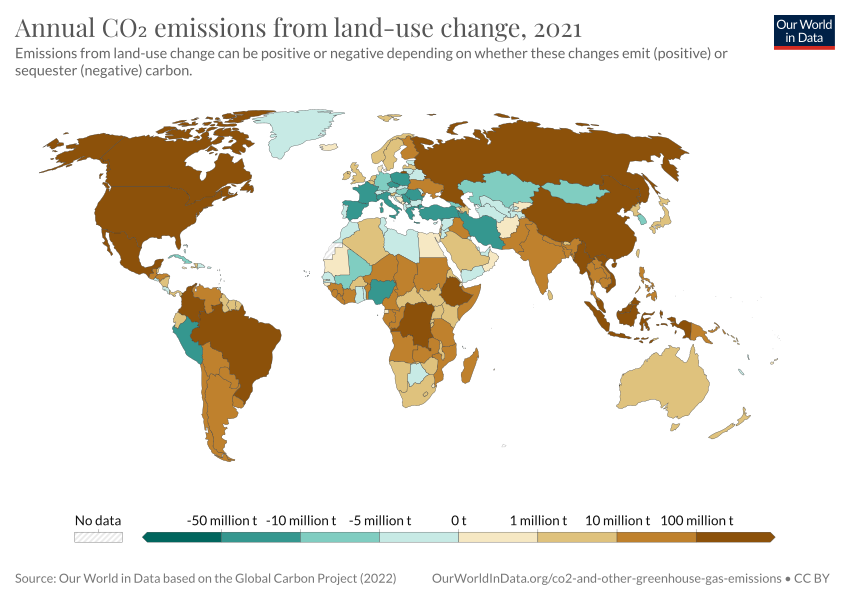
Globally, human activities have altered at least 70% of the Earth's land surface, with agriculture alone accounting for over 50% of habitable land. Tropical forests, vital for biodiversity and climate regulation, are being cleared at alarming rates; between 2000 and 2012, an area equivalent to the size of Spain was lost. Indonesia and Brazil consistently rank among the top countries for tropical deforestation, with cattle and soy being major drivers in the Amazon and palm oil in Southeast Asia. It's estimated that deforestation contributes between 10% and 15% of global anthropogenic greenhouse gas emissions annually, a figure comparable to emissions from the entire global transportation sector. The economic value of ecosystem services lost annually due to land degradation is estimated to be in the trillions of dollars, according to reports from the Intergovernmental Science-Policy Platform on Biodiversity and Ecosystem Services.
👥 Key People & Organizations
Numerous individuals and organizations are at the forefront of understanding and addressing deforestation and land use change. Scientists like Edward O. Wilson have highlighted the critical link between habitat loss and biodiversity extinction. Organizations such as the World Wildlife Fund (WWF), The Nature Conservancy, and Greenpeace actively campaign for forest protection and sustainable land management. Policy initiatives are often championed by bodies like the United Nations Environment Programme (UNEP) and the Food and Agriculture Organization of the United Nations (FAO). In the corporate world, initiatives like the Roundtable on Sustainable Palm Oil (RSPO) attempt to create more responsible supply chains, though their effectiveness is often debated.
🌍 Cultural Impact & Influence
The impact of deforestation and land use change on culture is profound and multifaceted. It has shaped human settlement patterns, agricultural practices, and resource management traditions across millennia. The loss of forests has led to the displacement of indigenous communities, the erosion of traditional knowledge, and the alteration of cultural landscapes. Conversely, growing awareness of these impacts has fueled environmental movements and a global push for conservation, influencing art, literature, and public consciousness. Documentaries like "An Inconvenient Truth" and campaigns by organizations like 350.org have galvanized public opinion, linking environmental degradation directly to human well-being and justice. The concept of rewilding and ecological restoration is also gaining cultural traction as a response to past land use mistakes.
⚡ Current State & Latest Developments
The current state of deforestation and land use change remains a critical global challenge. While some regions have seen success in slowing or reversing deforestation, such as parts of Europe and North America over the past century due to afforestation programs and shifts in land use, tropical regions continue to face intense pressure. In 2023, the Global Forest Watch reported continued high rates of primary forest loss, particularly in South America and Africa. Emerging concerns include the expansion of industrial agriculture into new frontiers and the role of global commodity markets in driving land conversion. Simultaneously, there's a growing focus on nature-based solutions and the implementation of policies like Reducing Emissions from Deforestation and Forest Degradation (REDD+) to incentivize forest conservation.
🤔 Controversies & Debates
The debates surrounding deforestation and land use change are intense and often polarized. A central controversy revolves around the economic drivers: critics argue that conservation efforts often disregard the livelihoods of local populations and indigenous peoples who depend on forest resources, while proponents of conservation emphasize the long-term economic and ecological costs of deforestation. The effectiveness and integrity of certification schemes like the RSPO are frequently questioned, with accusations of 'greenwashing' and insufficient enforcement. Furthermore, there's ongoing debate about the balance between land for food production versus land for conservation, particularly in the face of a growing global population and the need for climate change mitigation. The role of international finance and corporate responsibility in perpetuating or halting destructive land use practices is also a significant point of contention.
🔮 Future Outlook & Predictions
The future outlook for deforestation and land use change is a complex interplay of competing forces. Projections from the Intergovernmental Panel on Climate Change (IPCC) suggest that without significant policy interventions, land use change will continue to be a major driver of emissions and biodiversity loss. However, there is growing momentum for sustainable land management, regenerative agriculture, and large-scale ecosystem restoration. The increasing demand for biofuels and renewable energy sources presents both opportunities for sustainable land use and risks of further conversion. Technological advancements in remote sensing and monitoring, such as those employed by Global Forest Watch, offer improved transparency and accountability. The success of future efforts will likely hinge on effective international cooperation, robust policy frameworks, and a fundamental shift in global consumption patterns, particularly regarding meat and palm oil.
💡 Practical Applications
Understanding and managing land use change has direct practical applications across numerous sectors. In agriculture, it informs practices like agroforestry and conservation tillage to minimize soil erosion and maintain soil health. Urban planning utilizes land use zoning to manage sprawl and preserve green spaces. Conservation organizations employ land use data to identify critical habitats for protection and restoration. The forestry sector uses land use analysis for sustainable timber harvesting and reforestation planning. Furthermore, the development of carbon markets and REDD+ programs relies heavily on accurate land use change monitorin
Key Facts
- Category
- nature
- Type
- topic