
Contents
- 💡 What is Gate Level? The Foundation of Computing
- 🔬 Who Needs to Know Gate Level? Essential for Digital Design
- ⚙️ How it Works: From Logic Gates to Complex Circuits
- 📈 The Evolution of Gate Level: From Vacuum Tubes to Nanometers
- 🤔 Gate Level vs. Higher Abstractions: Understanding the Trade-offs
- 💥 Key Components: Understanding the Building Blocks
- 🏆 Notable Figures in Gate Level Design
- 📚 Resources for Deeper Understanding
- ❓ Frequently Asked Questions about Gate Level
- Frequently Asked Questions
- Related Topics
Overview
Gate level is the most fundamental description of digital circuits, representing them as interconnected networks of basic logic gates like AND, OR, NOT, XOR, NAND, and NOR. Each gate performs a simple Boolean logic function on one or more binary inputs to produce a single binary output. This perspective is crucial because it directly maps to the physical implementation of digital hardware, where transistors are arranged to create these logic gates. Understanding gate level is akin to understanding the atomic structure of digital information processing, providing the bedrock upon which all complex digital systems are built. It's the language spoken by HDLs when they are synthesized into actual silicon.
🔬 Who Needs to Know Gate Level? Essential for Digital Design
Knowledge of gate level is indispensable for digital circuit designers, computer architects, and electrical engineers working on the hardware side of computing. It's essential for anyone involved in VLSI design, FPGA programming, or the creation of custom integrated circuits. While higher-level abstractions like Register-Transfer Level (RTL) are used for initial design and simulation, the gate level is where performance, power consumption, and physical layout are ultimately optimized. Without a grasp of gate level, engineers cannot effectively debug hardware issues, understand timing constraints, or make informed trade-offs in chip design.
⚙️ How it Works: From Logic Gates to Complex Circuits
At its core, gate level logic operates on binary signals (0s and 1s). A logic gate, built from transistors, acts as a switch that controls the flow of these signals. For example, an AND gate outputs a '1' only if all its inputs are '1'. These gates are then interconnected in specific ways to perform more complex operations, such as arithmetic (like adders and multipliers) or control logic. The arrangement and connectivity of these gates define the functionality of the entire digital system, from a simple microcontroller to a powerful CPU.
📈 The Evolution of Gate Level: From Vacuum Tubes to Nanometers
The concept of gate level design has evolved dramatically since the dawn of computing. Early digital computers relied on vacuum tubes and relays to implement logic functions. The invention of the transistor in 1947, and subsequently the integrated circuit (IC) in the late 1950s, allowed for the miniaturization and mass production of logic gates. Today, modern System-on-Chips (SoCs) contain billions of transistors, each acting as a fundamental switch within a vast, intricate network of logic gates, pushing the boundaries of Moore's Law.
🤔 Gate Level vs. Higher Abstractions: Understanding the Trade-offs
While higher-level abstractions like RTL or Behavioral Level descriptions offer ease of design and faster simulation, they abstract away the physical realities of hardware. Gate level provides a direct mapping to the silicon, allowing for precise control over timing, power, and area. Designers often move between these levels: starting with a high-level description, refining it to RTL, and finally synthesizing it down to the gate level for implementation. The trade-off is complexity: gate level is more detailed and harder to manage for large designs, but it's where the ultimate performance is achieved.
💥 Key Components: Understanding the Building Blocks
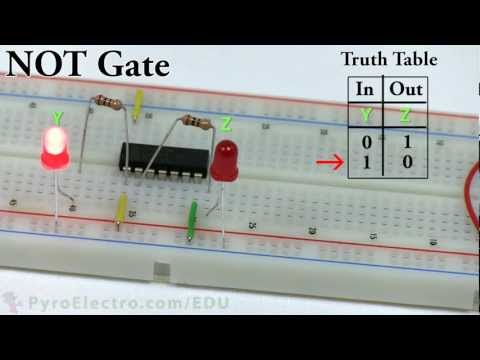
The fundamental building blocks at the gate level are the logic gates themselves: AND, OR, NOT, NAND, NOR, XOR, and XNOR. These are typically implemented using CMOS technology, where pairs of MOSFETs (Metal-Oxide-Semiconductor Field-Effect Transistors) are used to create the switching behavior. Beyond individual gates, designers work with combinational logic (outputs depend only on current inputs, e.g., multiplexers) and sequential logic (outputs depend on current inputs and past states, e.g., flip-flops and latches). Understanding how these elements are interconnected is key to designing functional digital circuits.
🏆 Notable Figures in Gate Level Design
Pioneers like Claude Shannon, often called the 'father of information theory', laid the theoretical groundwork by demonstrating how Boolean algebra could be applied to electrical circuits. Jack Kilby and Robert Noyce independently invented the integrated circuit, enabling the practical realization of complex gate-level designs. Modern advancements in EDA tools and semiconductor physics continue to be shaped by countless engineers and researchers who push the limits of gate-level implementation.
📚 Resources for Deeper Understanding
For those looking to deepen their understanding of gate level logic, several resources are invaluable. Textbooks like 'Digital Design and Computer Architecture' by David Harris and Sarah Harris provide a comprehensive introduction. Online courses on platforms like Coursera and edX offer modules on digital logic design and VLSI. Practicing with FPGA development boards and simulation software such as ModelSim or Vivado is crucial for hands-on experience. Exploring open-source hardware projects can also offer practical insights into real-world gate-level implementations.
❓ Frequently Asked Questions about Gate Level
What is the primary difference between gate level and RTL? RTL describes the flow of data between registers, abstracting away the gate-level implementation details. Gate level represents the actual logic gates and their interconnections, which is closer to the physical hardware. Can I design a complex processor solely at the gate level? While theoretically possible, it's highly impractical due to the immense complexity. Modern design flows use higher abstractions and then synthesize down to the gate level. How does timing analysis work at the gate level? Timing analysis tools simulate signal propagation delays through the gate network to ensure the circuit operates correctly within its specified clock frequency. What are the main challenges in gate level design? Managing complexity, optimizing for performance, power, and area, and ensuring correct timing are the primary challenges. Is gate level design still relevant with AI in chip design? Yes, AI is increasingly used to assist in gate-level optimization and placement, but the fundamental understanding of gate level remains critical for engineers overseeing the process.
Key Facts
- Year
- Mid-20th Century (conceptualization)
- Origin
- Developed alongside the advent of digital computing and semiconductor technology.
- Category
- Computer Science / Electrical Engineering
- Type
- Concept
Frequently Asked Questions
What is the primary difference between gate level and RTL?
RTL describes the flow of data between registers, abstracting away the gate-level implementation details. Gate level represents the actual logic gates and their interconnections, which is closer to the physical hardware. This distinction is vital for understanding the abstraction layers in digital circuit design.
Can I design a complex processor solely at the gate level?
While theoretically possible, it's highly impractical due to the immense complexity. Modern design flows use higher abstractions like Register-Transfer Level (RTL) and then synthesize down to the gate level for implementation. This hierarchical approach makes managing large-scale projects feasible.
How does timing analysis work at the gate level?
Timing analysis tools simulate signal propagation delays through the gate network. They calculate how long it takes for signals to travel from one gate's output to another's input, ensuring the circuit operates correctly within its specified clock frequency. This is critical for synchronous digital systems.
What are the main challenges in gate level design?
Managing the sheer complexity of billions of gates, optimizing for performance (speed), power consumption, and physical area (chip size), and ensuring correct timing across the entire circuit are the primary challenges. These are addressed through sophisticated EDA tools.
Is gate level design still relevant with AI in chip design?
Yes, gate level design remains fundamentally relevant. AI is increasingly used to assist in gate-level optimization, placement, and routing, but the fundamental understanding of how logic gates function and interact is still critical for engineers overseeing the AI-driven design process and for debugging.
What are the most common logic gates used at the gate level?
The most fundamental gates are AND, OR, and NOT. From these, others like NAND, NOR, XOR, and XNOR are derived or implemented directly. These basic building blocks are used to construct all digital logic functions, from simple combinational circuits to complex sequential circuits.