
Contents
- 🎵 Origins & History
- ⚙️ How It Worked: The Presidency
- 📊 Key Facts & Numbers
- 👥 Key People & Organizations
- 🌍 Cultural Impact & Influence
- ⚡ Current State & Latest Developments
- 🤔 Controversies & Debates
- 🔮 Future Outlook & Predictions
- 💡 Practical Applications
- 📚 Related Topics & Deeper Reading
- Frequently Asked Questions
- References
- Related Topics
Overview
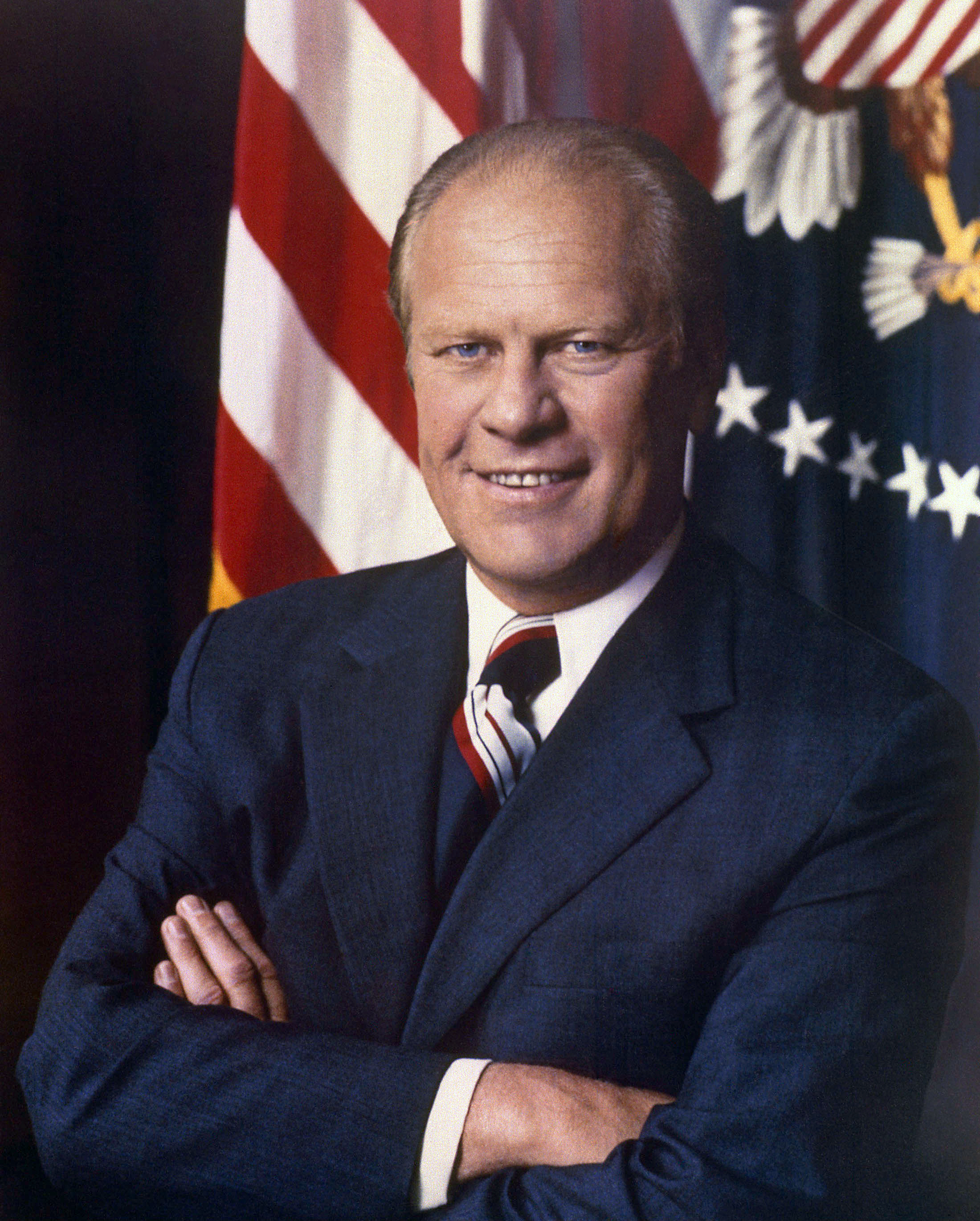
Born Leslie Lynch King Jr. on July 14, 1913, in Omaha, Nebraska, Gerald Ford's early life was marked by upheaval. His parents divorced when he was two, and his mother, Dorothy Ayer Gardner King, remarried Gerald Rudolff Ford Sr., a Grand Rapids, Michigan, businessman, who adopted young Leslie and renamed him Gerald Rudolff Ford Jr. Ford excelled academically and athletically, playing center and linebacker for the University of Michigan's football team, earning All-American honors in 1934. He graduated from the University of Michigan in 1935 and then attended Yale Law School, graduating in 1941. His legal career was interrupted by World War II, during which he served with distinction in the U.S. Naval Reserve, rising to the rank of lieutenant commander. Elected to the U.S. House of Representatives from Michigan's 5th congressional district in 1948, Ford would serve for 25 years, becoming House Minority Leader in 1965, a position he held until his unexpected rise to national prominence.
⚙️ How It Worked: The Presidency
Ford's presidency operated under the immense shadow of Watergate and a nation reeling from the Vietnam War. His administration focused on restoring confidence in government through transparency and a commitment to constitutional processes. Economically, Ford grappled with 'stagflation'—a combination of high inflation and high unemployment—implementing policies like "WIN" (Whip Inflation Now) buttons and tax surcharges, though these had limited success. In foreign policy, he continued Henry Kissinger's policy of détente with the Soviet Union and oversaw the final withdrawal of U.S. forces from Vietnam in April 1975. His approach to governance was characterized by pragmatism and a desire for bipartisan cooperation, often reaching out to Democrats in Congress to advance his agenda. The Ford White House also saw the establishment of the National Archives and Records Administration as an independent agency, a move aimed at safeguarding historical records.
📊 Key Facts & Numbers
Ford's presidency lasted 895 days, making it one of the shortest in U.S. history. He inherited an economy with an inflation rate of 11.2% and an unemployment rate of 5.2% in August 1974; by the end of his term, inflation had fallen to 4.9%, but unemployment had risen to 7.5%. He signed 17 Executive Orders during his presidency. Ford vetoed 66 bills passed by Congress, a relatively high number, though Congress overrode only 12 of them. His pardon of Richard Nixon, issued on September 8, 1974, remains one of the most significant and controversial acts of his presidency, impacting public opinion polls immediately and for years to come. He received approximately 2,500 letters and telegrams regarding the pardon, with a significant portion expressing disapproval.
👥 Key People & Organizations
Key figures surrounding Gerald Ford include his wife, Betty Ford, who became a prominent advocate for mental health and addiction treatment, founding the Betty Ford Center. His Vice President, Nelson Rockefeller, played a crucial role in navigating the transition of power. In Congress, figures like Speaker Carl Albert (D-OK) were key legislative counterparts. Ford's cabinet included Secretary of State Henry Kissinger, who continued to shape foreign policy, and Secretary of the Treasury William Simon, who managed the challenging economic landscape. His Chief of Staff, Donald Rumsfeld, and Deputy Chief of Staff, Dick Cheney, were influential advisors who would later hold significant positions in subsequent administrations. The Republican Party was his political home, though his presidency often required working across the aisle with the Democratic-controlled Congress.
🌍 Cultural Impact & Influence
Ford's presidency left an indelible mark on American political culture, primarily through his handling of the post-Watergate era. His willingness to pardon Richard Nixon, while deeply unpopular with many at the time, is seen by some historians as a necessary, albeit painful, step to allow the nation to move forward and avoid prolonged legal battles that could have further destabilized the country. His public persona, often characterized by a certain Midwestern earnestness and a self-deprecating humor, resonated with a public weary of political scandal. The image of Ford, a former college football star, often contrasted with the more intellectual or calculating figures who preceded and followed him. His post-presidency was active, focusing on public service and commentary on political issues, solidifying his image as a statesman.
⚡ Current State & Latest Developments
While President Ford is no longer in office, his legacy continues to be analyzed and debated. The political climate he navigated—marked by deep partisan divides, economic uncertainty, and a crisis of public trust—bears some resemblance to contemporary challenges. Discussions around presidential pardons, the role of the Vice Presidency, and the importance of national unity during times of crisis often reference his tenure. His commitment to bipartisanship is frequently cited by those seeking to bridge political divides in the modern era. The Gerald Ford Presidential Library and Museum in Grand Rapids, Michigan, serves as a repository for his papers and a center for historical research, ensuring his presidency remains a subject of ongoing study.
🤔 Controversies & Debates
The most significant controversy surrounding Gerald Ford is undoubtedly his September 8, 1974, unconditional pardon of Richard Nixon for any crimes he might have committed while president. Critics, including many in Congress and the public, viewed this as a "corrupt bargain" that undermined the rule of law and denied Nixon his day in court. Ford defended the decision as necessary to heal the nation and allow the country to move past the Watergate scandal, arguing that a prolonged trial would further divide Americans and paralyze the government. This decision significantly impacted his public approval ratings and remains a contentious point in historical assessments of his presidency. Another debate centers on his economic policies, with critics arguing that his anti-inflation measures exacerbated unemployment.
🔮 Future Outlook & Predictions
The future outlook for the interpretation of Gerald Ford's presidency likely involves a continued re-evaluation of his decision-making in the context of the unique pressures he faced. As historical distance grows, scholars may place greater emphasis on his efforts to restore faith in democratic institutions and his commitment to bipartisanship. The long-term impact of his economic policies will continue to be analyzed against the backdrop of global economic trends. Furthermore, the role of presidential pardons in American governance, a power he wielded controversially, will likely remain a subject of discussion and potential reform. His steady, if uncharismatic, leadership style may also find renewed appreciation in an era often characterized by more polarizing political figures.
💡 Practical Applications
The primary 'practical application' of Gerald Ford's presidency lies in its historical precedent for navigating constitutional crises. His ascension without election demonstrated the resilience of the 25th Amendment, providing a mechanism for presidential succession during extraordinary circumstances. His administration's efforts to rebuild public trust after Watergate offer lessons for leaders facing similar challenges of legitimacy. The economic policies he pursued, though mixed in their immediate success, provide case studies for understanding the complexities of managing inflation and unemployment. His foreign policy initiatives, particularly regarding détente with the Soviet Union, offer insights into diplomatic strategies during the Cold War.
Key Facts
- Year
- 1974-1977
- Origin
- United States
- Category
- history
- Type
- person
Frequently Asked Questions
How did Gerald Ford become president?
Gerald Ford became president on August 9, 1974, following the resignation of Richard Nixon due to the Watergate scandal. Ford himself had previously been appointed Vice President in 1973 after Spiro Agnew resigned, making him the only person to serve as both Vice President and President without being elected to either office. His path to the presidency was through the constitutional mechanisms of succession outlined in the 25th Amendment, rather than through the electoral process.
What was the most controversial decision of Gerald Ford's presidency?
The most controversial decision of Gerald Ford's presidency was his unconditional pardon of Richard Nixon on September 8, 1974. Ford stated that the pardon was necessary to heal the nation and allow it to move past the Watergate scandal, arguing that a prolonged trial would further divide Americans and paralyze the government. However, this decision was met with widespread public outcry and accusations of a "corrupt bargain," significantly impacting his approval ratings and historical legacy.
What were the major economic challenges during Ford's presidency?
Gerald Ford inherited a difficult economic situation characterized by 'stagflation,' a combination of high inflation and high unemployment. In August 1974, inflation stood at 11.2% and unemployment at 5.2%. Ford's administration implemented policies aimed at curbing inflation, such as the "WIN" (Whip Inflation Now) campaign, which encouraged voluntary wage and price restraint, and a temporary tax surcharge. Despite these efforts, unemployment rose to 7.5% by the end of his term, and inflation, while reduced, remained a concern.
What was Gerald Ford's background before becoming president?
Before becoming president, Gerald Ford had a distinguished career in public service. He served in the U.S. Naval Reserve during World War II, achieving the rank of lieutenant commander. He was elected to the U.S. House of Representatives from Michigan in 1948, representing his district for 25 years. During his tenure in Congress, he rose to become the House Minority Leader, a position he held for nine years before being nominated and confirmed as Vice President in 1973.
How did Gerald Ford's presidency differ from Richard Nixon's?
Gerald Ford's presidency was marked by a stark contrast in style and public perception compared to Richard Nixon's. While Nixon's administration was embroiled in the Watergate scandal, leading to his resignation, Ford sought to restore public trust and transparency. Ford's approach was characterized by a more open and accessible style, often emphasizing bipartisanship and a return to traditional political norms. His pardon of Nixon, while controversial, was intended to close a painful chapter, whereas Nixon's legacy remains tied to the abuses of power revealed by Watergate.
What is Gerald Ford's most enduring legacy?
Gerald Ford's most enduring legacy is his role as the "accidental president" who guided the United States through a profound constitutional crisis. His calm demeanor and commitment to democratic processes during the Watergate aftermath provided a sense of stability. While the Nixon pardon remains a point of contention, his supporters argue it was a courageous act of statesmanship necessary for national healing. His post-presidency was also notable for his continued engagement in public discourse and his advocacy for civic responsibility.
What foreign policy achievements did Gerald Ford oversee?
During Gerald Ford's presidency, significant foreign policy developments included the final withdrawal of U.S. forces from Vietnam in April 1975, following the fall of Saigon. He continued the policy of détente with the Soviet Union, working with Henry Kissinger to manage relations during the Cold War. Ford also signed the Helsinki Accords in 1975, a landmark agreement that aimed to improve relations between the East and West by recognizing post-World War II borders and promoting human rights, though its implementation proved complex.