
Contents
- ✨ What is the Gilded Age?
- 🕰️ Timeline & Key Dates
- 💰 The Titans of Industry (and their Critics)
- 🏭 The Engine of Progress: Innovation & Industry
- ⚖️ The Other Side of the Coin: Labor & Inequality
- 🏛️ Political Machines & Corruption
- 🌍 Global Echoes: America on the World Stage
- 📚 The Literary Lens: Twain & Beyond
- 💡 Vibepedia Vibe Score & Controversy Spectrum
- ⭐ What People Say
- 🔍 Similar Eras & Movements
- 🚀 Getting Started with Gilded Age Studies
- Frequently Asked Questions
- Related Topics
Overview
The Gilded Age (roughly 1870s-1890s) was a period in American history characterized by rapid economic growth, industrial expansion, and a dramatic increase in wealth for a select few, juxtaposed with widespread poverty and social unrest. The term, coined by Mark Twain and Charles Dudley Warner in their 1873 novel of the same name, satirized an era that appeared golden on the surface but was riddled with corruption, exploitation, and social problems beneath. It's a crucial period for understanding the foundations of modern American capitalism and its enduring tensions between wealth and labor. This era bridges the Reconstruction Era and the Progressive Era, serving as a critical crucible for many of the issues that would define the 20th century.
🕰️ Timeline & Key Dates
The Gilded Age isn't a precisely defined box, but historians generally place its start around the end of Reconstruction in 1877 and its conclusion with the turn of the century, around 1896 or 1900, leading into the Progressive Era. Key milestones include the completion of the Transcontinental Railroad in 1869 (though its impact reverberated throughout the period), the rise of powerful trusts like Standard Oil in the 1870s and 1880s, the Haymarket Affair of 1886 highlighting labor strife, and the Panic of 1893, a severe economic depression that underscored the era's volatility. Understanding these temporal markers helps contextualize the rapid, often chaotic, transformations occurring across the nation.
💰 The Titans of Industry (and their Critics)
This era was defined by colossal fortunes amassed by industrialists like Andrew Carnegie (steel), John D. Rockefeller (oil), J.P. Morgan (finance), and Cornelius Vanderbilt (railroads). These 'robber barons' wielded immense economic and political power, often through monopolistic practices and ruthless competition. However, their rise was met with fierce criticism from figures like Henry George, who advocated for land value taxation, and labor leaders who challenged their exploitative labor practices. The sheer scale of their wealth, often exceeding that of entire nations, remains a point of fascination and contention.
🏭 The Engine of Progress: Innovation & Industry
The Gilded Age was an engine of unprecedented technological advancement and industrialization. Innovations like the Bessemer process for steel production, the widespread adoption of electricity, the invention of the telephone by Alexander Graham Bell, and advancements in manufacturing fueled rapid economic expansion. This led to the growth of massive factories, the expansion of the railroad network, and the rise of urban centers. The sheer output of American industry during this period was staggering, transforming the nation from an agrarian society into an industrial powerhouse, though often at a significant human cost.
⚖️ The Other Side of the Coin: Labor & Inequality
Beneath the glittering surface of wealth lay a stark reality of immense social inequality and harsh working conditions. Millions of immigrants and rural migrants flocked to cities for factory jobs, often facing long hours, dangerous environments, and meager wages. The rise of powerful labor unions like the Knights of Labor and the American Federation of Labor (AFL) was a direct response to this exploitation, leading to significant labor disputes, strikes, and sometimes violent confrontations, such as the Pullman Strike of 1894. The gap between the ultra-rich and the working poor widened dramatically.
🏛️ Political Machines & Corruption
The political landscape of the Gilded Age was deeply compromised by corruption and the influence of big business. Political machines, like Tammany Hall in New York, controlled urban politics through patronage and graft. National politics saw widespread bribery and lobbying, with industrialists exerting significant influence over legislation. Figures like Boss Tweed became synonymous with this era's political rot. This pervasive corruption fueled public cynicism and laid the groundwork for the reform movements of the subsequent Progressive Era.
🌍 Global Echoes: America on the World Stage
While the Gilded Age is primarily an American story, its themes of industrialization, capitalism, and social stratification resonated globally. European powers were also experiencing industrial booms, and American economic might began to assert itself on the world stage, particularly with the Spanish-American War in 1898. The era saw increased American investment abroad and a growing sense of national ambition, setting the stage for America's emergence as a global power in the 20th century. The dynamics of wealth creation and labor exploitation were not unique to the U.S. but played out with particular intensity.
📚 The Literary Lens: Twain & Beyond
The very term 'Gilded Age' comes from Mark Twain's 1873 novel, which, along with Charles Dudley Warner's co-authorship, offered a biting critique of the era's superficial prosperity masking moral decay. Other writers and journalists of the period, like Jacob Riis in 'How the Other Half Lives' (1890), exposed the grim realities of urban poverty and tenement life. Literature and journalism played a crucial role in shaping public perception, highlighting the stark contrasts and fueling calls for reform. These works remain essential primary sources for understanding the era's social consciousness.
💡 Vibepedia Vibe Score & Controversy Spectrum
The Gilded Age scores a Vibe Score of 85/100 for its sheer cultural impact and the dramatic societal shifts it represents. Its Controversy Spectrum is high, sitting at 90/100, as debates rage over the legacy of its industrialists, the nature of capitalism, and the roots of modern inequality. Perspectives range from celebrating the era's entrepreneurial spirit and innovation (optimistic) to condemning its exploitation and corruption (pessimistic). The contrarian view might argue that the era's excesses were a necessary, albeit painful, precursor to modern American prosperity and regulatory frameworks.
⭐ What People Say
People often describe the Gilded Age as a period of 'rags to riches' stories, but also one of 'riches to rags' for many who were exploited. Common sentiments include awe at the scale of wealth accumulation and innovation, coupled with outrage at the working conditions and political corruption. Historians frequently debate whether the era's industrialists were 'captains of industry' or 'robber barons,' a testament to its enduring complexity. Many find the stark contrast between the opulent mansions of Fifth Avenue and the squalid tenements of the Lower East Side particularly striking and illustrative of the era's defining tensions.
🔍 Similar Eras & Movements
The Gilded Age shares thematic similarities with other periods of rapid industrialization and wealth disparity. The Roaring Twenties (1920s) saw another boom in wealth and cultural change, though with different social dynamics. The Progressive Era (early 1900s) was a direct reaction to the Gilded Age's excesses, focusing on reform and regulation. Globally, periods like Britain's Victorian era or Japan's Meiji Restoration involved similar industrial transformations and societal shifts. Understanding these parallels can offer a broader perspective on the universal challenges of rapid economic development.
🚀 Getting Started with Gilded Age Studies
To begin exploring the Gilded Age, start with primary sources like Mark Twain's novel or Jacob Riis's photographic essays. For a comprehensive overview, consult academic works by historians such as Nell Irvin Painter or Howard Zinn. Consider visiting historical sites like the Vanderbilt Mansion in Hyde Park, New York, or exploring digital archives of newspapers and photographs from the era. Engaging with documentaries or museum exhibits focused on industrial history or urban development can also provide valuable context. The key is to approach the period with an eye for both its dazzling achievements and its profound social costs.
Key Facts
- Year
- 1870-1900
- Origin
- Coined by Mark Twain and Charles Dudley Warner in their 1873 novel 'The Gilded Age: A Tale of Today'.
- Category
- History & Society
- Type
- Historical Period
Frequently Asked Questions
What is the most iconic symbol of the Gilded Age?
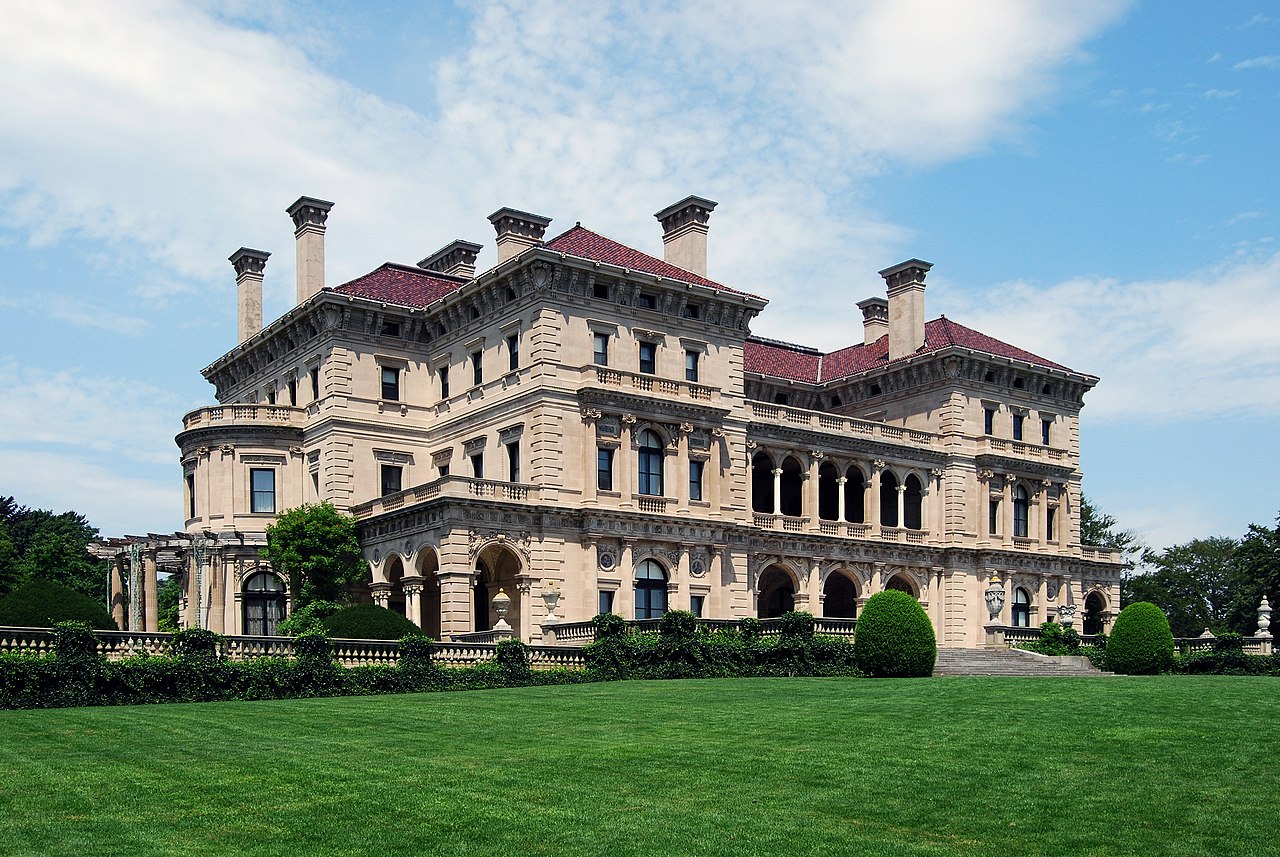
The most iconic symbols are often the opulent mansions of industrialists like the Vanderbilts and Carnegies, representing extreme wealth, alongside the massive factories and sprawling railroad networks that symbolized industrial might. Conversely, the crowded, unsanitary tenements depicted by Jacob Riis represent the stark inequality and hardship faced by the majority. These contrasting images encapsulate the era's defining duality.
Who were the most influential figures of the Gilded Age?
Key figures include industrialists like Andrew Carnegie (steel), John D. Rockefeller (oil), J.P. Morgan (finance), and Cornelius Vanderbilt (railroads). Politically, figures like President Ulysses S. Grant (whose administration was marked by scandals) and powerful urban political bosses like 'Boss' Tweed were highly influential. Labor leaders such as Samuel Gompers of the AFL also played a critical role in shaping the era's social landscape.
What were the major social problems of the Gilded Age?
The era was plagued by extreme income inequality, dangerous and exploitative working conditions in factories and mines, child labor, rampant political corruption and bribery, and the rise of powerful, unchecked monopolies. Urban areas suffered from overcrowding, poor sanitation, and disease, particularly in immigrant neighborhoods. The stark contrast between immense wealth and abject poverty was a defining social problem.
How did the Gilded Age lead to the Progressive Era?
The excesses and injustices of the Gilded Age – the corruption, monopolies, and exploitation of labor – created widespread public discontent and a demand for reform. This sentiment coalesced into the Progressive Movement, which sought to address these issues through government regulation, social justice initiatives, and increased citizen participation. The Progressive Era can be seen as a direct response and corrective to the problems that festered during the Gilded Age.
Was the Gilded Age only about wealth and corruption?
While wealth and corruption are defining characteristics, the Gilded Age was also a period of immense innovation, technological advancement, and significant national growth. It saw the completion of the transcontinental railroad, the invention of the telephone, and the rise of American industry as a global force. It was a complex era of both progress and profound social challenges, not solely defined by its negative aspects.
What is the historical significance of the term 'Gilded Age'?
The term 'Gilded Age,' popularized by Mark Twain and Charles Dudley Warner, is significant because it immediately signals a critique of the era. It suggests that the period was 'gilded' – covered in a thin layer of gold – implying that beneath the shiny surface of prosperity and progress lay a foundation of corruption, social problems, and moral decay. It's a literary and historical label that captures the era's inherent contradictions.