
Vibepedia

Glam Rock | Vibepedia

rock 70s visual-art androgyny
Glam Rock | Vibepedia

Glam rock, a seismic tremor in the rock and roll universe, erupted in the early 1970s, fundamentally altering the visual and sonic landscape of popular music…

Contents

  1. Origins and Key Figures
  2. The Power of Presentation
  3. Enduring Legacy
  4. Cultural Significance
  5. Frequently Asked Questions
  6. Related Topics

Overview

The genesis of glam rock can be traced to the late 1960s, with precursors like [[the-beatles|The Beatles]]' late-career experimentation and the theatricality of [[the-kinks|The Kinks]]' 'Lola'. However, it was [[david-bowie|David Bowie]]'s Ziggy Stardust persona, launched in 1972 with the album [[the-rise-and-fall-of-ziggy-stardust-and-the-spiders-from-mars|The Rise and Fall of Ziggy Stardust and the Spiders from Mars]], that truly codified the genre. Bowie, alongside [[marc-bolan|Marc Bolan]] of [[t-rex|T. Rex]], became the movement's twin avant-garde figureheads. Their embrace of glitter, platform boots, flamboyant makeup, and androgynous personas offered a stark, colorful contrast to the gritty, earnest blues-rock and folk-rock that dominated the preceding years. The music itself often featured catchy, pop-infused melodies, driving rhythms, and a certain theatrical flair, moving away from the extended improvisations of psychedelic rock towards more concise, hook-laden tracks.

The Power of Presentation

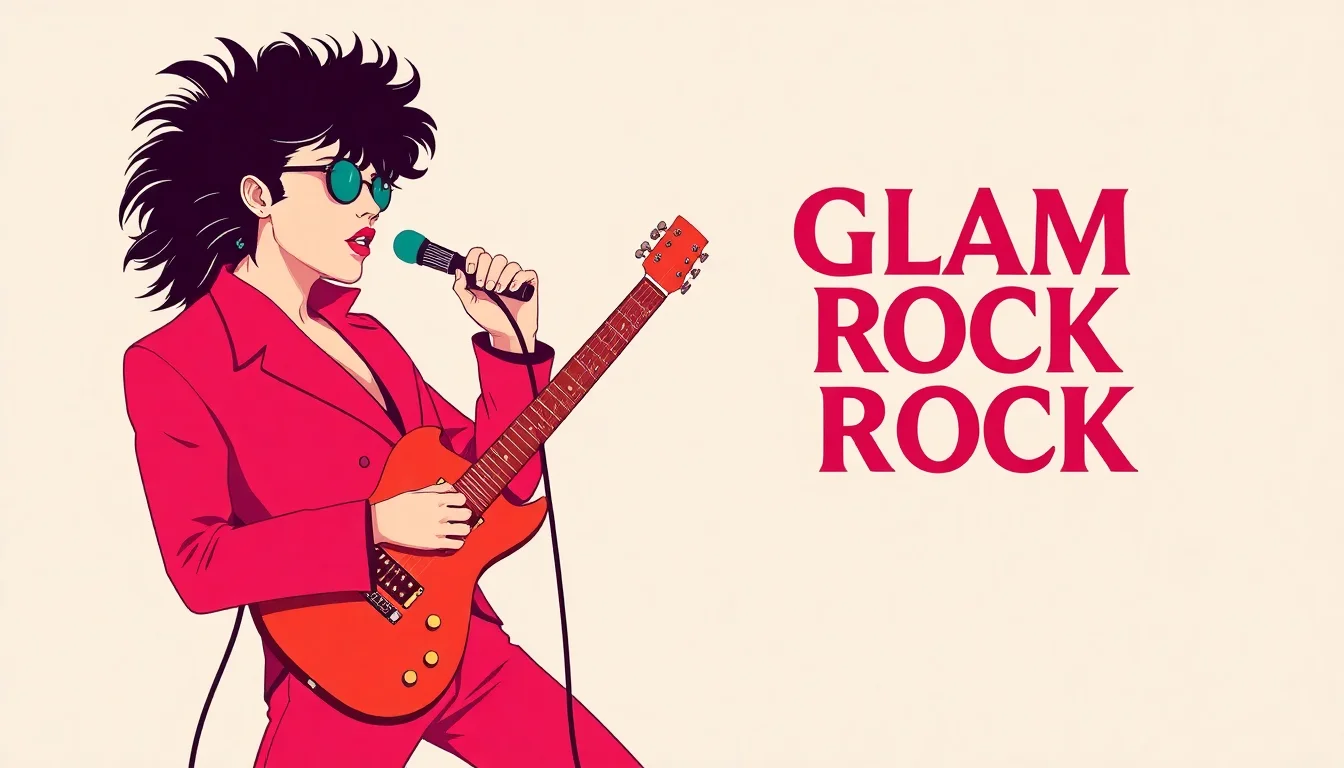
The visual element was paramount. Glam artists treated their appearance as an extension of their music, blurring the lines between performer and character. This was not just superficial posturing; it was a deliberate statement against the perceived drabness of everyday life and the rigid social norms of the era. Bands like [[sweet|The Sweet]] and [[slade|Slade]] brought a more anthemic, pub-rock-infused energy to the glam sound, while [[e-l-o|Electric Light Orchestra]] incorporated a more orchestral and futuristic sheen. The influence of science fiction, Kabuki theatre, and Weimar cabaret was palpable, creating a sense of escapism and heightened reality. The BBC's Top of the Pops became a crucial platform, broadcasting these dazzling displays of sartorial rebellion into living rooms across the UK, amplifying the genre's reach and impact.

Enduring Legacy

While its commercial peak was relatively brief, lasting through the mid-1970s, glam rock's legacy is profound and far-reaching. The genre's emphasis on visual presentation and theatricality laid crucial groundwork for later movements like [[new-wave|New Wave]], [[goth-rock|Goth Rock]], and especially [[80s-new-romantic|New Romantic]] artists such as [[duran-duran|Duran Duran]] and [[spandau-ballet|Spandau Ballet]]. The punk rock movement, while ideologically opposed in many ways, absorbed some of glam's DIY spirit and theatricality, albeit with a more aggressive and stripped-down aesthetic. Furthermore, glam's challenge to gender norms and its celebration of artifice and self-invention continue to resonate with artists across the musical spectrum, proving that the glitter, once shed, never truly fades.

Cultural Significance

Beyond its musical contributions, glam rock was a significant cultural phenomenon that questioned and reshaped perceptions of identity, celebrity, and artistic expression. It provided a much-needed splash of color and fantasy in a world grappling with economic uncertainty and social change. The genre's embrace of the artificial and the performative offered a powerful critique of authenticity-obsessed culture, suggesting that identity could be fluid, constructed, and, most importantly, fun. The enduring appeal of glam lies in its bold assertion that music could be as much about the spectacle and the persona as it was about the song itself, a lesson that continues to inform popular culture.

Key Facts

Year
1970s
Origin
United Kingdom
Category
music
Type
genre

Frequently Asked Questions

What are the defining characteristics of Glam Rock?

Glam rock is defined by its visual spectacle: glitter, extravagant costumes, platform boots, makeup, and androgynous personas. Musically, it often features catchy guitar riffs, simple song structures, and anthemic choruses.

Who were the most important Glam Rock artists?

Key artists include David Bowie (especially his Ziggy Stardust era), T. Rex, Slade, Sweet, and Roxy Music. Alice Cooper is often cited as a precursor.

When was the peak of Glam Rock?

The genre reached its commercial peak in the United Kingdom primarily between 1971 and 1974.

How did Glam Rock influence later music genres?

Glam rock's emphasis on visual presentation, theatricality, and challenging gender norms heavily influenced punk rock, New Wave, synth-pop, and artists in various genres who embraced bold aesthetics and performance art.