
Contents
Overview
Global trade is the lifeblood of the modern world, a complex web of transactions that moves everything from microchips to mangoes across continents. It's a historical constant, evolving from ancient Silk Roads to today's hyper-connected digital marketplaces, driven by comparative advantage and the relentless pursuit of efficiency. However, this interconnectedness isn't without its friction – sparking debates on fairness, labor, environmental impact, and national sovereignty. Understanding global trade means grasping the intricate dance between supply and demand on a planetary scale, the policies that shape it, and the profound impact it has on daily life and geopolitical power dynamics.
🗺️ What is Global Trade, Really?
Global trade is the lifeblood of the modern world, far more than just a simple exchange of goods. It's the intricate network of capital, goods, and services flowing across borders, driven by demand and specialization. Think of it as the planet's circulatory system, where Raw Materials from one continent become finished products on another, fueling economies and shaping cultures. This exchange isn't new; its roots stretch back to ancient Silk Road routes, but today's scale, facilitated by Containerization, is unprecedented. Understanding global trade means understanding how nations interact, compete, and cooperate on a massive scale.
🚢 The Backbone: Shipping & Logistics
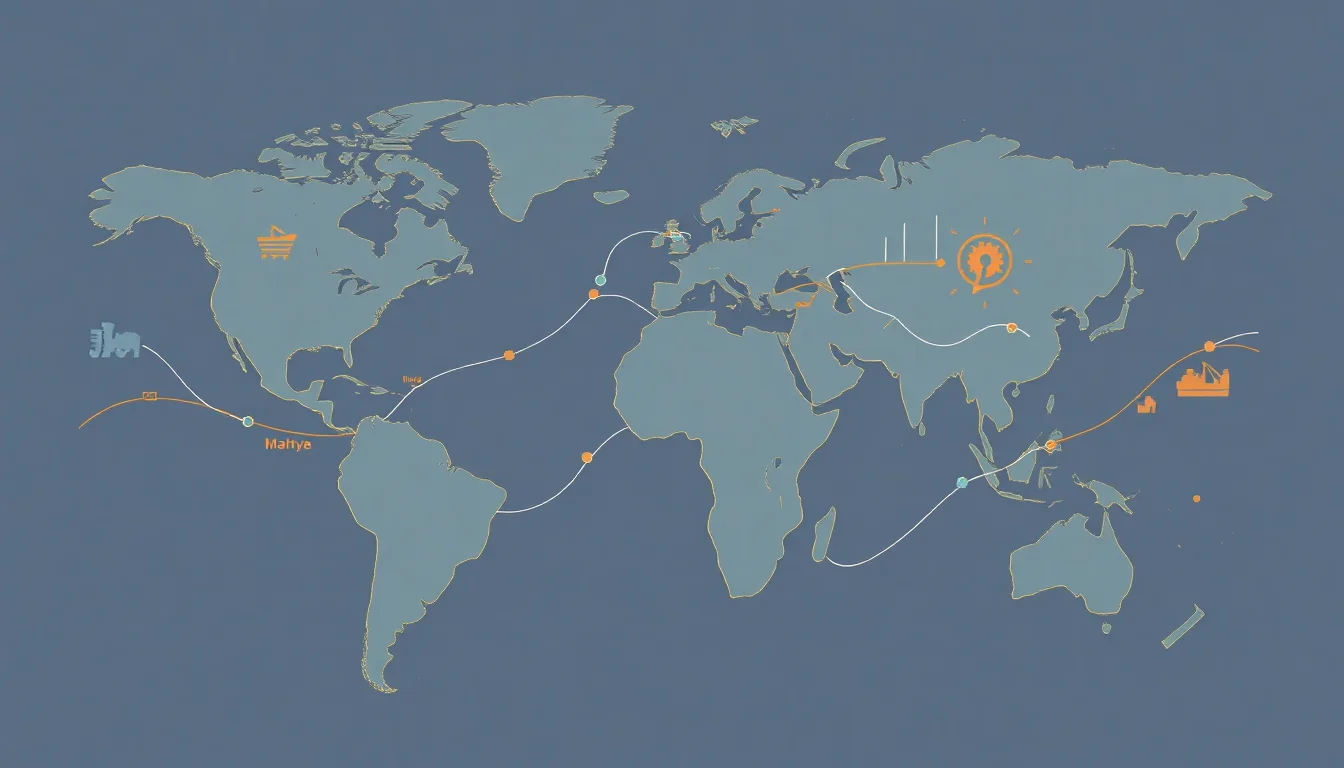
The physical movement of goods is where the rubber meets the road, or more accurately, where the container meets the ship. Over 80% of global trade by volume travels by sea, making Maritime Shipping the undisputed king. Major hubs like the Port of Singapore and Port of Rotterdam handle millions of TEUs (twenty-foot equivalent units) annually, acting as critical chokepoints. Beyond ships, air cargo, rail, and trucking form essential legs of the journey, all orchestrated by complex Supply Chain Management systems. Disruptions here, like the Suez Canal blockage in 2021, send ripples through the entire global economy.
📈 Key Players & Markets
The landscape of global trade is dominated by a few economic superpowers, with China currently leading as the world's largest exporter. The United States remains a colossal importer and exporter, while the European Union bloc collectively represents a massive trading entity. Emerging economies like India and Brazil are increasingly significant players, shifting the balance of power. Understanding these dynamics requires tracking Trade Balances and the flow of Foreign Direct Investment (FDI).
⚖️ Trade Agreements & Regulations
Navigating the complexities of international commerce requires a framework of rules. The World Trade Organization (WTO) sets global trade rules, aiming to liberalize trade and resolve disputes. Beyond that, a dense web of Bilateral Trade Agreements and regional pacts, such as the United States-Mexico-Canada Agreement, govern specific trade relationships. These agreements cover tariffs, quotas, intellectual property, and labor standards, often becoming battlegrounds for national interests and global cooperation.
💡 The Vibe: Economic Pulse
The 'vibe' of global trade is a fascinating mix of relentless efficiency and underlying tension. On one hand, it represents an optimistic belief in interconnectedness and mutual benefit, driving down consumer prices and fostering innovation. The Vibe Score for Global Trade fluctuates, often peaking during periods of economic expansion and falling during trade wars or geopolitical crises. It's the hum of activity in ports, the constant negotiation in trade ministries, and the quiet satisfaction of a consumer receiving a product from halfway across the world.
🤔 Controversy & Challenges
Global trade is far from a harmonious utopia. Debates rage over Protectionism versus free trade, with countries like the US under the Trump administration imposing significant tariffs. Concerns about Labor Exploitation in developing nations, environmental impacts from shipping, and the concentration of economic power in a few hands are persistent issues. The rise of Economic Nationalism challenges the very foundations of multilateral trade systems, creating significant uncertainty.
🚀 Future Flows & Disruptions
The future of global trade is being shaped by powerful forces. Digitalization is transforming how goods are tracked and traded, while the rise of E-commerce platforms opens new avenues for smaller businesses. Geopolitical shifts, such as the growing influence of BRICS Nations, are reshaping trade blocs. Furthermore, the push for Sustainability and resilience in supply chains, accelerated by the COVID-19 pandemic, is leading to diversification and regionalization, potentially altering long-standing trade routes.
📚 Further Exploration
To truly grasp global trade, look beyond the headlines. Explore the history of Mercantilism and its evolution into modern trade theory. Investigate the impact of specific trade wars, like the US-China Trade War, on consumer prices and industrial output. Understanding the mechanics of Letters of Credit and Customs Procedures offers a practical glimpse into the operational side. The ongoing debate about Trade Liberalization versus managed trade is central to understanding current policy directions.
Key Facts
- Year
- Ancient Origins (c. 3000 BCE)
- Origin
- Humanity's earliest forms of exchange and specialization.
- Category
- Economics & Geopolitics
- Type
- Concept
Frequently Asked Questions
What is the primary driver of global trade?
The primary driver is the principle of comparative advantage, where countries specialize in producing goods and services they can make most efficiently and then trade for others. This leads to lower costs for consumers and a wider variety of products. Demand and need also play a crucial role, as countries seek resources or finished goods they cannot produce domestically.
How has technology impacted global trade?
Technology has revolutionized global trade by dramatically reducing transportation costs (e.g., containerization), improving communication and logistics (e.g., real-time tracking), and enabling new forms of commerce (e.g., e-commerce). Digitalization streamlines customs processes and facilitates financial transactions, making cross-border trade faster and more accessible than ever before.
What are the main challenges facing global trade today?
Key challenges include geopolitical tensions leading to trade wars and protectionist policies, supply chain vulnerabilities exposed by events like pandemics, concerns over labor standards and environmental impacts, and the concentration of economic power. Navigating complex regulatory environments and intellectual property protection also remains a significant hurdle for many businesses.
What is the role of the World Trade Organization (WTO)?
The WTO is the primary international organization that governs global trade. Its main functions include administering trade agreements, acting as a forum for trade negotiations, settling trade disputes between member governments, and providing technical assistance to developing countries. It aims to ensure that trade flows as smoothly, predictably, and freely as possible.
How do trade agreements affect consumers?
Trade agreements can significantly benefit consumers by lowering tariffs and other trade barriers, which often translates into lower prices for imported goods. They can also increase the variety of products available in a market. However, some agreements might lead to job losses in domestic industries that face increased foreign competition.
What is the difference between bilateral and multilateral trade agreements?
Multilateral trade agreements involve three or more countries, with the WTO being the most prominent example governing global trade rules. Bilateral trade agreements, on the other hand, are negotiated and signed between just two countries. These agreements often focus on specific trade relationships and can be more tailored to the unique economic ties between the two nations.