
Contents
Overview
Ancient Greek philosophy burst onto the scene in the 6th century BC, primarily in the Ionian city of Miletus, with thinkers like Thales, Anaximander, and Anaximenes seeking naturalistic explanations for the cosmos, moving away from mythological accounts. This pre-Socratic era saw a proliferation of ideas concerning the fundamental substance of reality, or arche. The subsequent Classical period, dominated by Socrates, Plato, and Aristotle, shifted focus towards ethics, politics, and epistemology, establishing systematic approaches to philosophical inquiry. The Hellenistic period, following the conquests of Alexander the Great, saw the rise of schools like Stoicism, Epicureanism, and Skepticism, which often emphasized personal ethics and tranquility in a changing world. This rich intellectual heritage continued to evolve through the Roman Empire, influencing thinkers like Cicero and Seneca the Younger.
⚙️ Core Concepts & Schools
Greek philosophy is characterized by its diverse schools and foundational concepts. The Milesian school sought a single material principle, while the Eleatics, like Parmenides, argued for the unchanging nature of Being. The Atomists, such as Leucippus and Democritus, proposed that reality is composed of indivisible particles. Socrates famously employed the Socratic method to uncover ignorance and pursue virtue, a method elaborated by his student Plato in his Theory of Forms. Aristotle, Plato's student, developed a comprehensive system encompassing logic, metaphysics, ethics, and politics, emphasizing empirical observation and teleology. Later schools like Stoicism focused on virtue and reason as paths to happiness, while Epicureanism advocated for pleasure and the absence of pain.
📊 Key Figures & Their Contributions
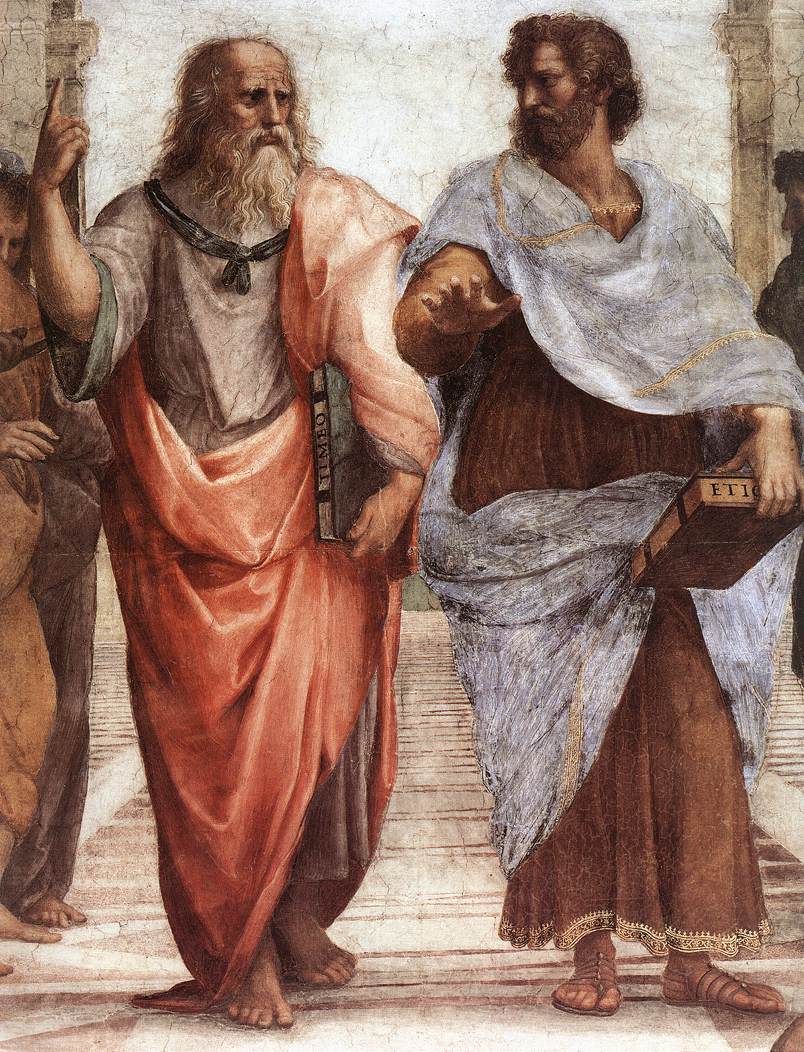
The pantheon of Greek philosophers includes towering figures whose ideas continue to resonate. Socrates (c. 470–399 BC), though he wrote nothing himself, is known through the dialogues of his student Plato (c. 428–348 BC), who founded the Academy of Athens and developed the Theory of Forms. Aristotle (384–322 BC), Plato's student and tutor to Alexander the Great, established the Lyceum and made seminal contributions to logic, biology, ethics, and metaphysics. Other critical figures include Heraclitus (c. 535–475 BC), known for his doctrine of flux, and Pythagoras (c. 570–495 BC), associated with mathematical principles and the transmigration of souls. The Hellenistic period produced Zeno of Citium (c. 334–262 BC), founder of Stoicism, and Epicurus (341–270 BC), founder of Epicureanism.
🌍 Influence & Legacy
The influence of Greek philosophy on Western civilization is immeasurable. It provided the intellectual framework for Roman thought, profoundly shaped early Christian theology through figures like Augustine of Hippo, and was preserved and expanded upon by Islamic Golden Age scholars like Avicenna. During the Middle Ages, Scholasticism, particularly the work of Thomas Aquinas, reintegrated Aristotelian thought into Christian doctrine. The Renaissance saw a renewed interest in classical texts, and the Age of Enlightenment thinkers like Immanuel Kant and John Locke directly engaged with and built upon Greek philosophical traditions. Its concepts permeate modern education, law, science, and ethics, forming the bedrock of much of Western intellectual discourse.
⚡ Modern Relevance & Debates
Despite its ancient origins, Greek philosophy remains remarkably relevant. Debates on virtue ethics, the nature of justice, and the pursuit of the good life continue to be informed by thinkers like Aristotle and Plato. Questions about the existence of objective truth, the relationship between mind and body, and the structure of reality, first articulated by Parmenides or Democritus, are still central to contemporary philosophical discussions. The Socratic method is still a pedagogical tool, and the Stoic emphasis on resilience and acceptance finds echoes in modern psychology and self-help movements. The enduring power of these ideas lies in their ability to address fundamental human concerns that transcend time.
🤔 Philosophical Methods
Greek philosophers developed rigorous methods for inquiry. The Socratic method, characterized by dialectic and questioning, aimed to expose contradictions and arrive at clearer understanding. Plato's use of dialogue presented philosophical ideas through character interactions and reasoned argument. Aristotle formalized logic, developing syllogistic reasoning as a tool for valid inference, and emphasized empirical observation and classification in his scientific works. The Skeptics employed doubt and suspension of judgment as a path to intellectual peace, while the Stoics relied on reason and natural law to guide their ethical systems. These diverse methodologies laid the groundwork for scientific and philosophical inquiry for centuries.
💡 Ethical Frameworks
Ethical frameworks developed by the Greeks remain influential. Aristotle's Nicomachean Ethics posits virtue as a mean between extremes and emphasizes eudaimonia (flourishing) as the ultimate human good. Stoicism, founded by Zeno of Citium, teaches that virtue is the only good and that one should live in accordance with nature and reason, accepting what cannot be controlled. Epicureanism, while often misunderstood as hedonism, advocated for moderate pleasures and the avoidance of pain, particularly mental anguish, as the path to a tranquil life. These ethical systems continue to offer compelling perspectives on how to live a meaningful and fulfilling life.
🔮 Metaphysical Inquiries
Metaphysical questions about the nature of reality were central to early Greek thought. The pre-Socratics grappled with the fundamental substance of the universe, from Thales' water to Anaximenes' air. Parmenides argued for a single, unchanging, eternal reality, while Heraclitus posited that change and flux are fundamental. Plato's Theory of Forms proposed a realm of perfect, eternal, and unchanging Forms as the true reality, with the physical world being a mere shadow. Aristotle rejected Plato's separate realm of Forms, arguing that form and matter are inseparable and that reality is found in the particular substances of the world, understood through their potentiality and actuality.
📚 Further Exploration
For those seeking to delve deeper into the wellspring of Western thought, exploring the original texts is paramount. Reading Plato's dialogues, such as the Republic and Apology, offers direct engagement with Socratic thought and Platonic idealism. Aristotle's Nicomachean Ethics and Metaphysics provide foundational texts for ethics and ontology, respectively. For the Hellenistic schools, works by Epictetus (e.g., Enchiridion), Seneca the Younger (e.g., Moral Letters to Lucilius), and Epicurus (fragments and summaries) offer practical wisdom. Secondary scholarship from reputable historians of philosophy, such as W.K.C. Guthrie or Frederick Copleston, can provide invaluable context and analysis.
🏛️ Key Texts & Works
The corpus of Greek philosophical literature is vast and foundational. Key texts include Plato's Republic, which explores justice, the ideal state, and the Theory of Forms, and his Apology, a defense of Socrates. Aristotle's Nicomachean Ethics outlines his virtue ethics and theory of happiness, while his Politics analyzes different forms of government. The pre-Socratics are known primarily through fragments and later commentaries, but works attributed to Heraclitus and Parmenides offer glimpses into their cosmologies. For Hellenistic philosophy, Epictetus' Enchiridion and Marcus Aurelius' Meditations are seminal Stoic works, while the writings of Epicurus, though fragmented, illuminate his philosophy of pleasure and tranquility. These texts remain the primary sources for understanding Greek philosophical thought.
Key Facts
- Year
- c. 6th century BC - c. 3rd century AD
- Origin
- Ancient Greece
- Category
- philosophy
- Type
- concept
Frequently Asked Questions
What is the most significant contribution of Greek philosophy?
The most significant contribution of Greek philosophy is its establishment of systematic rational inquiry into fundamental questions about existence, knowledge, ethics, and politics. Thinkers like Plato and Aristotle developed logical frameworks, ethical theories, and metaphysical concepts that have served as the bedrock for Western thought for over two millennia. Their methods of questioning, argumentation, and empirical observation laid the groundwork for scientific and philosophical disciplines, shaping how humanity understands itself and the universe.
Who were the three most influential Greek philosophers?
The three most influential Greek philosophers are widely considered to be Socrates, Plato, and Aristotle. Socrates, known for his method of questioning, profoundly influenced Plato, who in turn founded the Academy and developed the Theory of Forms. Aristotle, Plato's student, created a comprehensive philosophical system that dominated Western thought for centuries, contributing significantly to logic, ethics, metaphysics, and political science. Their collective works and ideas form the core of classical Greek philosophy.
How did Greek philosophy differ from earlier mythological explanations?
Greek philosophy marked a departure from earlier mythological explanations by seeking naturalistic and rational accounts of the world, rather than relying on divine intervention or anthropomorphic deities. Pre-Socratic philosophers like Thales attempted to identify a fundamental material principle (arche) underlying all phenomena, moving away from stories of gods creating the cosmos. This shift towards reason, logic, and empirical observation, exemplified by thinkers like Aristotle, laid the foundation for scientific inquiry and a more secular understanding of the universe.
What is the 'Theory of Forms' and why is it important?
Plato's Theory of Forms posits that the physical world we perceive is merely a shadow or imperfect copy of a higher, eternal, and unchanging realm of Forms or Ideas. These Forms, such as Beauty, Justice, and Goodness, are the true realities and the objects of genuine knowledge. This theory is crucial because it provided a metaphysical basis for Plato's epistemology and ethics, suggesting that true understanding comes from apprehending these perfect Forms through reason, rather than from sensory experience. It has had a profound impact on subsequent Western philosophy and theology.
What is Stoicism and how is it still relevant today?
Stoicism, founded by Zeno of Citium, is a philosophy that emphasizes virtue, reason, and living in accordance with nature. Stoics believe that virtue is the only true good and that external events are beyond our control, so we should focus on what we can control: our judgments and actions. Its relevance today lies in its practical guidance for resilience, emotional regulation, and ethical living. Concepts like accepting what you cannot change, focusing on personal character, and practicing mindfulness are echoed in modern psychology and self-help practices, making Stoic wisdom enduringly applicable.
Where can I start reading Greek philosophy?
A good starting point for reading Greek philosophy is with Plato's dialogues, particularly the Apology, which presents Socrates' defense, and the Phaedo, which discusses the immortality of the soul. The Republic offers a comprehensive overview of Plato's ideas on justice and the ideal state. For Aristotle, his Nicomachean Ethics provides accessible insights into his ethical framework. Reading these foundational texts, perhaps with a good annotated edition or a companion guide, offers direct engagement with the core ideas that shaped Western thought.
What were the main metaphysical debates among Greek philosophers?
Key metaphysical debates among Greek philosophers revolved around the fundamental nature of reality. The pre-Socratics debated whether reality was ultimately composed of one substance (monism, e.g., Thales' water) or many (pluralism, e.g., Democritus' atoms). Parmenides argued for an unchanging, singular Being, while Heraclitus insisted on constant flux. Plato proposed a dualistic reality of the physical world and the perfect, eternal realm of Forms. Aristotle sought to reconcile these by focusing on substance, form, matter, potentiality, and actuality within the observable world.