Heavy Metal Guitarists | Vibepedia
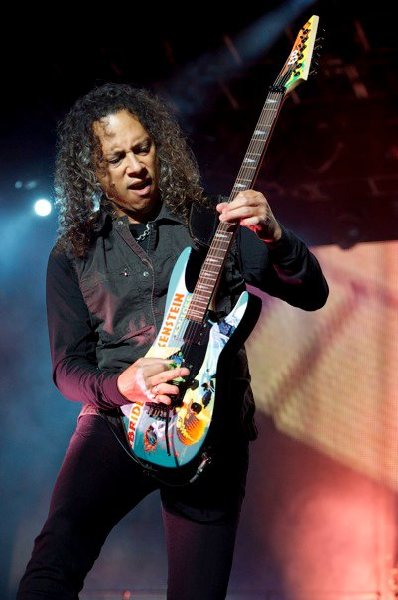
Heavy metal guitarists are the sonic titans who forged the genre's signature sound through blistering solos, crushing riffs, and sheer volume. Emerging from…
Contents
- 🎵 Origins & History
- ⚙️ The Metal Guitar Sound
- 📊 Key Facts & Numbers
- 👥 The Pantheon of Guitar Gods
- 🌍 Cultural Impact & Influence
- ⚡ Modern Metal Guitaristry
- 🤔 Debates & Controversies
- 🔮 The Future of the Shred
- 💡 Beyond the Stage: Gear & Pedagogy
- 📚 Related Topics & Deeper Reading
- Frequently Asked Questions
- References
- Related Topics
Overview
The roots of heavy metal guitar can be traced back to the late 1960s, a period of intense experimentation in blues-rock and psychedelic rock. Bands like [[led-zeppelin|Led Zeppelin]], [[deep-purple|Deep Purple]], and especially [[black-sabbath|Black Sabbath]] laid the groundwork. [[tony-iommi|Tony Iommi]], often cited as the progenitor, famously tuned his guitar down to mitigate finger injuries, creating a darker, heavier tone that became foundational. [[jimmy-page|Jimmy Page]]'s innovative use of feedback and slide guitar, and [[richie-blackmore|Ritchie Blackmore]]'s classical-influenced solos, further expanded the sonic palette. By the early 1970s, with the emergence of bands like [[judas-priest|Judas Priest]] and [[motorhead|Motörhead]], the genre solidified, with guitarists like [[kk-downing|K.K. Downing]], [[glenn-tipton|Glenn Tipton]], and [[fast-eddie-clarke|"Fast" Eddie Clarke]] defining a more aggressive, high-gain sound. The 1980s saw an explosion of technicality and speed, with the rise of [[thrash-metal|thrash metal]] guitarists like [[kirk-hammett|Kirk Hammett]] of [[metallica|Metallica]] and [[dave-mustaine|Dave Mustaine]] of [[megadeth|Megadeth]], alongside the neoclassical shredders.
⚙️ The Metal Guitar Sound
The quintessential heavy metal guitar sound is a carefully constructed edifice of amplification, distortion, and articulation. High-volume tube amplifiers, pushed into overdrive, are the bedrock, often paired with a plethora of distortion pedals like the [[boss-ds-1|Boss DS-1]] or the [[ibanez-tube-screamer|Ibanez Tube Screamer]] to achieve searing sustain and harmonic richness. The use of noise gates, like those from [[ berkaitan-dengan-gated-reverb|ISP Technologies]], is crucial to tame the inherent hum and feedback of high-gain setups, allowing for tight, percussive palm-muted riffs. Guitarists employ techniques such as pinch harmonics, whammy bar dives, and rapid alternate picking to inject aggression and flair. Dual-guitar harmonies, a signature of bands like [[iron-maiden|Iron Maiden]], add melodic complexity and a symphonic quality, often played in unison or in thirds, creating a powerful, layered sound that distinguishes metal from its rock predecessors.
📊 Key Facts & Numbers
The electric guitar is the undisputed king of heavy metal, with an estimated 90% of metal songs featuring prominent guitar work. Over 15 million electric guitars are sold annually worldwide, with a significant portion destined for metal musicians. The average metal guitarist owns between 3 to 5 guitars, with many investing upwards of $2,000 for a professional-grade instrument. Distortion pedals alone represent a global market exceeding $500 million annually. Live metal concerts often exceed 120 decibels, with guitar amplifiers contributing a substantial portion of this sonic assault. The average guitar solo in a metal track can range from 15 seconds to over a minute, with some epics featuring multiple solos exceeding 3 minutes in length, showcasing the guitar's central role.
👥 The Pantheon of Guitar Gods
The pantheon of heavy metal guitarists is vast and fiercely debated, but certain figures are universally acknowledged. [[tony-iommi|Tony Iommi]] (Black Sabbath) is the undisputed godfather, his downtuned riffs defining the genre's dark heart. [[jimmy-page|Jimmy Page]] (Led Zeppelin) brought bluesy innovation and mystical flair. [[richie-blackmore|Ritchie Blackmore]] (Deep Purple, Rainbow) fused classical music with hard rock. [[eddie-van-halen|Eddie Van Halen]] revolutionized guitar playing with his tapping technique and innovative use of effects. [[ozzy-osbourne-era-guitarists|Ozzy Osbourne's]] guitarists, from [[randy-rhoads|Randy Rhoads]] to [[zakk-wylde|Zakk Wylde]], have consistently pushed boundaries. [[dimebag-darrell|Dimebag Darrell]] (Pantera) redefined groove metal with his aggressive, harmonically rich playing. [[yngwie-malmsteen|Yngwie Malmsteen]] brought neoclassical virtuosity to the forefront, while [[kirk-hammett|Kirk Hammett]] and [[james-hetfield|James Hetfield]] (Metallica) defined thrash metal's dual-guitar attack. Other essential figures include [[jeff-beck|Jeff Beck]], [[steve-vai|Steve Vai]], [[joe-satriani|Joe Satriani]], and [[guthrie-govan|Guthrie Govan]].
🌍 Cultural Impact & Influence
Heavy metal guitarists have profoundly shaped not only the genre itself but also broader musical culture. Their technical innovations, from [[eddie-van-halen|Eddie Van Halen]]'s two-handed tapping to [[yngwie-malmsteen|Yngwie Malmsteen]]'s neoclassical sweep picking, have become standard vocabulary for guitarists across numerous genres, including [[shred-guitar|shred guitar]], [[progressive-metal|progressive metal]], and even [[modern-rock|modern rock]]. The visual aesthetic of the metal guitarist – the leather, the long hair, the iconic guitar models like the [[gibson-les-paul|Gibson Les Paul]] and [[jackson-guitars|Jackson Rhoads]] – has become a powerful cultural signifier. Furthermore, the DIY ethos prevalent in the metal scene, particularly in the early days of [[independent-music|independent music]] and [[underground-metal|underground metal]], fostered a culture of self-production and independent label releases, influencing the music industry's evolution. The sheer intensity and emotional catharsis offered by metal guitar playing have resonated with millions, providing an outlet for aggression, rebellion, and complex emotions.
⚡ Modern Metal Guitaristry
The landscape of modern metal guitar is a vibrant ecosystem of innovation and tradition. While the foundational techniques remain, contemporary players are integrating new technologies and influences. Guitarists like [[tosin-abasi|Tosin Abasi]] of [[animals-as-leaders|Animals as Leaders]] are pushing the boundaries with extended-range guitars (8-string and beyond) and complex polyrhythmic structures, often incorporating elements of [[djent|djent]] and [[math-metal|math metal]]. [[polyphia|Polyphia]]'s blend of trap, hip-hop, and progressive rock guitar has garnered massive online attention, showcasing a more melodic and groove-oriented approach. The rise of [[youtube-com|YouTube]] and [[instagram-com|Instagram]] has democratized guitar education and performance, allowing virtuosos like [[polyphia-tim-henson|Tim Henson]] and [[polyphia-scott-lepage|Scott LePage]] to build global followings independently. Digital modeling amplifiers and sophisticated effects processors from companies like [[neural-dsp|Neural DSP]] and [[line-6|Line 6]] offer unprecedented tonal flexibility, allowing guitarists to meticulously craft their sound without relying solely on traditional analog gear.
🤔 Debates & Controversies
The debate over what constitutes 'true' metal guitar playing is a perennial source of contention. Purists often lament the perceived decline in raw aggression, arguing that excessive technicality can overshadow musicality. Critics sometimes dismiss the genre as derivative or lacking in innovation, pointing to the reliance on established tropes. Conversely, proponents highlight the genre's continuous evolution, citing the integration of diverse influences and the emergence of new subgenres. The role of the producer in shaping the modern metal guitar sound is also a point of discussion; some argue that heavy reliance on digital processing and editing can create an artificial, overly polished sound that lacks the organic feel of classic recordings. The question of whether speed and complexity are inherently superior to raw, simple power remains a constant undercurrent in discussions about metal guitar.
🔮 The Future of the Shred
The future of heavy metal guitar appears to be one of continued hybridization and technological integration. Expect to see further exploration of extended-range instruments and unconventional tunings, blurring the lines between metal and genres like [[jazz-fusion|jazz fusion]] and [[electronic-music|electronic music]]. The increasing sophistication of AI-powered music creation tools and virtual instruments may also present new avenues for guitarists to explore, potentially leading to entirely new sonic textures and compositional approaches. Live performance technology will continue to evolve, offering immersive visual and auditory experiences that complement the guitar's sonic power. While the core elements of distortion and aggression will likely endure, the ways in which they are expressed will undoubtedly continue to diversify, driven by a new generation of players eager to push the boundaries of what the electric guitar can achieve within the metal idiom.
💡 Beyond the Stage: Gear & Pedagogy
Beyond the stage, the world of heavy metal guitar encompasses a robust ecosystem of gear manufacturers, educators, and online communities. Companies like [[gibson-guitars|Gibson]], [[fender-guitars|Fender]], [[prs-guitars|PRS Guitars]], and [[esp-guitars|ESP Guitars]] produce iconic instruments, while pedal manufacturers such as [[boss-corporation|Boss]], [[digitech|DigiTech]], and [[mxr-guitars|MXR]] offer a universe of sonic manipulation. The rise of online guitar lessons and masterclasses, pioneered by platforms like [[truefire-com|TrueFire]] and [[guitar-world-com|Guitar World]], has made expert instruction accessible globally. Many legendary guitarists, including [[steve-vai|Steve Vai]] and [[paul-gilbert|Paul Gilbert]], have developed their own signature lines of guitars and amplifiers, further cementing their influence. The community aspect is also vital, with forums like [[sevenstring-org|Sevenstring.org]] and dedicated subreddits on [[reddit-com|Reddit]] serving as hubs for discussion, gear trading, and mutual inspiration among players.
Key Facts
- Year
- 1969-present
- Origin
- United Kingdom
- Category
- culture
- Type
- movement
Frequently Asked Questions
Who is considered the 'father' of heavy metal guitar?
Tony Iommi of Black Sabbath is widely credited as the father of heavy metal guitar. His decision to downtune his guitar due to finger pain, combined with his use of dark, heavy riffs, laid the foundational sonic blueprint for the genre. Albums like 'Paranoid' (1970) and 'Master of Reality' (1971) showcase his pioneering sound, influencing countless guitarists who followed.
What are the key techniques that define heavy metal guitar playing?
Key techniques include heavy distortion, palm-muted chugging riffs, fast alternate picking, pinch harmonics, whammy bar dives, and two-handed tapping. Many subgenres also emphasize specific styles, such as the neoclassical sweep picking of Yngwie Malmsteen or the intricate polyrhythms of modern progressive metal guitarists like Tosin Abasi.
How did Eddie Van Halen change heavy metal guitar?
Eddie Van Halen revolutionized heavy metal guitar in the late 1970s and early 1980s. His innovative use of two-handed tapping, dive bombs with the Floyd Rose tremolo system, and custom-built "Frankenstrat" guitar, along with his unique, highly processed "brown sound" tone, inspired a generation of guitarists to push technical and sonic boundaries.
What is the difference between rhythm and lead guitar in heavy metal?
In heavy metal, the rhythm guitarist typically provides the foundational riffs, chord progressions, and percussive 'chugging' that drive the song's structure and power. The lead guitarist, on the other hand, is primarily responsible for playing melodic solos, instrumental passages, and often intricate fills that add flair, emotion, and technical display to the music. Many bands feature dual lead guitarists who play harmonized melodies or engage in call-and-response solos.
Are heavy metal guitarists still relevant in today's music scene?
Absolutely. While mainstream music trends may shift, heavy metal guitarists remain highly relevant within their genre and continue to influence adjacent styles. Modern players are constantly innovating, incorporating elements from electronic music, jazz, and hip-hop, while also honoring the legacy of the pioneers. The sheer technical skill and sonic innovation demonstrated by many metal guitarists continue to captivate audiences and inspire new musicians across the globe.
What kind of gear do heavy metal guitarists typically use?
Heavy metal guitarists commonly use high-gain amplifiers (like Marshall, Mesa Boogie, Peavey) often pushed into overdrive, paired with distortion pedals (e.g., Boss DS-1, Ibanez Tube Screamer) for added saturation. They favor guitars with humbucker pickups for a thicker tone and often employ features like tremolo systems (Floyd Rose) for expressive pitch bending. Noise gates are also crucial for maintaining clarity amidst high gain. Signature models from brands like [[jackson-guitars|Jackson]], [[esp-guitars|ESP]], and [[gibson-guitars|Gibson]] are prevalent.
How has the internet impacted heavy metal guitarists?
The internet has democratized heavy metal guitar. Platforms like [[youtube-com|YouTube]] allow guitarists to share tutorials, performances, and gear reviews globally, bypassing traditional gatekeepers. Online communities on [[reddit-com|Reddit]] and dedicated forums foster discussion and collaboration. Many modern metal guitarists have built successful careers primarily through online presence, reaching vast audiences without major label backing. This has also led to a greater accessibility of knowledge and inspiration for aspiring players worldwide.