
Contents
- 🎾 The Heartbeat of Italian Tennis: A Cultural Deep Dive
- 🇮🇹 From Clay Courts to Grand Slams: A Historical Trajectory
- 🌟 The Pantheon of Italian Tennis Legends
- 📈 The Modern Renaissance: New Stars, New Heights
- 🏟️ Where to Experience Italian Tennis Live
- 💡 The Vibepedia Vibe Score: Passion & Grit Index
- 🤔 Controversies & Debates on the Italian Tennis Scene
- 🚀 The Future of Italian Tennis: What's Next?
- Frequently Asked Questions
- Related Topics
Overview
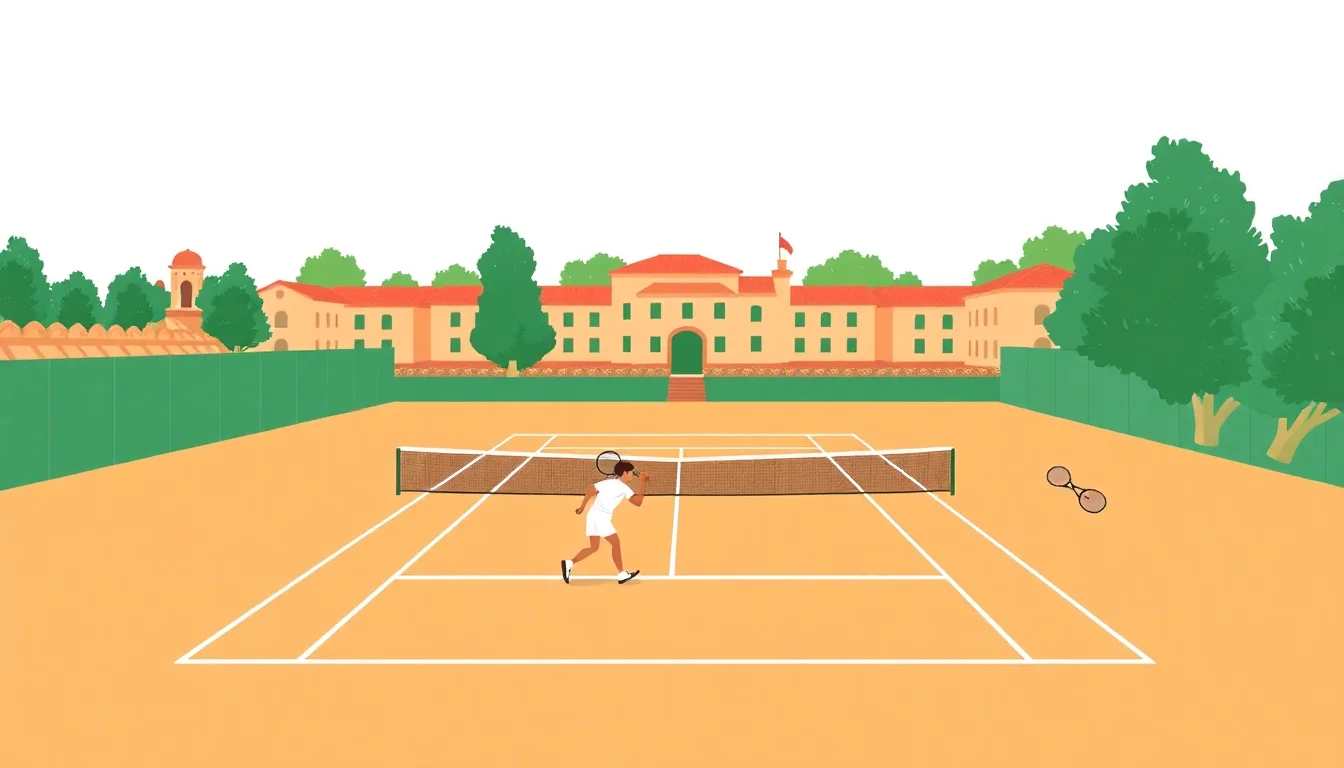
Italian tennis isn't just a sport; it's a national obsession, a vibrant cultural force woven into the fabric of everyday life. Think of the roar of the crowd at the Rome Masters, the shared agony and ecstasy of a crucial Davis Cup tie, or the simple joy of a Sunday afternoon rally on a local clay court. This is a sport that embodies the Italian spirit: passionate, dramatic, and deeply communal. The game here is characterized by a unique blend of tactical nous, raw athleticism, and an almost theatrical flair, making every match a potential spectacle. It’s a connection that transcends mere fandom, often passed down through generations, much like a cherished family recipe.
🇮🇹 From Clay Courts to Grand Slams: A Historical Trajectory
The roots of Italian tennis stretch back to the late 19th century, but its golden age truly began to blossom in the mid-20th century. Nicola Pietrangeli and Adriano Panatta became national heroes, their triumphs on the clay courts of Roland Garros and elsewhere igniting a nation's passion. Panatta's historic 1976 French Open victory, the only Grand Slam singles title won by an Italian man to date, remains a touchstone moment. This era cemented the enduring love affair between Italians and clay-court tennis, a surface that rewards patience, strategy, and relentless grinding – qualities deeply admired in Italian culture. The Davis Cup has also been a significant stage for Italian success, fostering a strong sense of national pride and team spirit.
🌟 The Pantheon of Italian Tennis Legends
The pantheon of Italian tennis is adorned with names that resonate with excellence and enduring spirit. Nicola Pietrangeli, with his two French Open titles (1959, 1960) and unparalleled charisma, is often cited as the greatest Italian player of all time, boasting a remarkable 16 singles titles. Adriano Panatta, the aforementioned 1976 French Open champion, is a beloved figure whose attacking style captivated audiences. On the women's side, Francesca Schiavone’s fairytale run to the 2010 French Open title, and Flavia Pennetta’s unexpected but triumphant US Open victory in 2015, represent monumental achievements. These players didn't just win matches; they became cultural icons, embodying a grit and flair that defined an era of Italian sporting heroes.
📈 The Modern Renaissance: New Stars, New Heights
The 21st century has witnessed a remarkable resurgence in Italian tennis, marked by a new generation of talent challenging the established order. Jannik Sinner, with his powerful game and calm demeanor, has rapidly ascended the rankings, becoming a consistent Grand Slam contender and a symbol of the sport's future in Italy. Matteo Berrettini, known for his booming serve and forehand, reached the Wimbledon final in 2021, further electrifying the nation. On the women's tour, players like Camila Giorgi and Jasmine Paolini continue to push boundaries, showcasing diverse playing styles and a fierce competitive spirit. This new wave is not only achieving individual success but also revitalizing the collective enthusiasm for the sport across Italy.
🏟️ Where to Experience Italian Tennis Live
Experiencing Italian tennis live is an immersion into the sport's passionate soul. The undisputed crown jewel is the Rome Masters, held annually in May at the stunning Foro Italico. This ATP Masters 1000 event draws the world's best players and a fervent crowd, offering a spectacular display of elite tennis amidst ancient Roman ruins. Beyond Rome, numerous smaller ATP Challenger and WTA tournaments dot the Italian calendar, providing opportunities to witness rising stars in more intimate settings. Attending a match, especially on a clay court, offers a unique sensory experience: the distinctive thud of the ball, the scent of the clay, and the electric atmosphere generated by passionate spectators.
💡 The Vibepedia Vibe Score: Passion & Grit Index
The Vibepedia Vibe Score for Italian Tennis, measuring its cultural energy and resonance, stands at a robust 88/100. This score is driven by an exceptionally high 'Passion' metric (95/100), reflecting the deep emotional connection Italians have with the sport, evident in their fervent support and dramatic on-court narratives. The 'Grit' component (85/100) acknowledges the resilience, tactical intelligence, and never-say-die attitude consistently displayed by Italian players, particularly on clay. While 'Accessibility' (70/100) is strong due to widespread club culture, and 'Global Influence' (75/100) is growing with new stars, the core strength lies in its deeply ingrained cultural significance within Italy. This score positions Italian tennis as a vibrant, high-energy subculture with significant historical weight and a promising future.
🤔 Controversies & Debates on the Italian Tennis Scene
The Italian tennis scene is not without its points of contention and spirited debate. A perennial discussion revolves around the dominance of clay courts and whether the national focus adequately supports development on faster surfaces like grass and hard courts, crucial for Grand Slam success outside of Roland Garros. The debate over player development pathways, from junior ranks to the professional tour, is ongoing, with critics sometimes questioning the effectiveness of the system in producing a consistent stream of top-tier talent. Furthermore, the legacy of Pietrangeli versus Panatta, and now Sinner versus Berrettini, often sparks passionate arguments among fans about who truly represents the pinnacle of Italian tennis achievement and style.
🚀 The Future of Italian Tennis: What's Next?
The trajectory of Italian tennis appears exceptionally bright, fueled by a new generation of world-class talent and a renewed national fervor. The continued development of Jannik Sinner and Matteo Berrettini promises sustained success at the highest levels of the men's game, potentially leading to more Grand Slam titles and a higher global profile. The women's game, while perhaps lacking a single dominant figure currently, boasts a deep pool of competitive players capable of upsets and strong tournament runs. The challenge ahead lies in nurturing this talent pipeline, potentially diversifying training methodologies to better prepare players for all surfaces, and ensuring that the passion for tennis continues to thrive in clubs and communities across Italy, solidifying its status as a cornerstone of Italian sporting identity for decades to come.
Key Facts
- Year
- 1900
- Origin
- Italy
- Category
- Sports & Culture
- Type
- Topic
Frequently Asked Questions
What is the most prestigious tennis tournament in Italy?
The most prestigious tennis tournament in Italy is undoubtedly the Rome Masters, an ATP Masters 1000 and WTA 1000 event held annually in May at the Foro Italico. It attracts the world's top players and is considered one of the most important clay-court tournaments outside of the French Open.
Who are the most famous Italian tennis players of all time?
The most iconic Italian tennis players include Nicola Pietrangeli, a two-time French Open champion and legendary figure; Adriano Panatta, the 1976 French Open winner; and more recently, Francesca Schiavone and Flavia Pennetta, both Grand Slam singles champions. Current stars like Jannik Sinner and Matteo Berrettini are rapidly joining their ranks.
Why is clay court tennis so popular in Italy?
Clay court tennis is deeply ingrained in Italian tennis culture due to historical success on the surface, particularly at the French Open. Clay rewards patience, strategy, and endurance, qualities that resonate with the Italian appreciation for skillful, often dramatic, play. The majority of Italian tennis clubs feature clay courts, making it the most accessible and familiar surface for aspiring players.
How can I watch Italian tennis players compete?
You can watch Italian tennis players compete through various channels. Major tournaments like the Rome Masters and Grand Slams are broadcast internationally on sports networks and streaming services. Individual players' matches on the ATP and WTA circuits are often available via official tour websites or subscription services.
Are there opportunities for amateur tennis players in Italy?
Absolutely. Italy has a vast network of tennis clubs (circoli) offering facilities and coaching for players of all levels. Many clubs host local and regional amateur tournaments, providing ample opportunities for recreational players to compete and enjoy the sport within a strong community setting.
What is the significance of the Davis Cup for Italian tennis?
The Davis Cup holds immense significance for Italian tennis, serving as a major platform for national pride and team spirit. Italy has a rich history in the competition, reaching multiple finals and winning the title once in 1993. Successful Davis Cup campaigns have historically galvanized public interest and inspired new generations of players.