
Contents
Overview
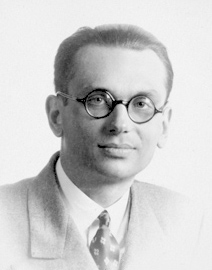
Kurt Gödel (1906-1978) was an Austrian-born logician and mathematician whose groundbreaking incompleteness theorems fundamentally reshaped our understanding of mathematics and logic. His work demonstrated that within any consistent formal system powerful enough to describe arithmetic, there will always be true statements that cannot be proven within that system. This revelation sent shockwaves through the foundations of mathematics, challenging the prevailing belief in a complete and decidable mathematical universe championed by figures like David Hilbert. Gödel's theorems have profound implications not only for mathematics but also for computer science, philosophy of mind, and artificial intelligence, questioning the limits of formal systems and the nature of truth itself.
🧠 Who is Kurt Gödel?
Kurt Gödel (1906-1978) was a towering figure in 20th-century logic, mathematics, and philosophy, whose work fundamentally reshaped our understanding of formal systems. Born in Brünn, Austria-Hungary (now Brno, Czech Republic), Gödel's intellectual journey took him through Vienna and later to Princeton, where he spent the latter half of his career at the Institute for Advanced Study. His profound insights into the limits of formal systems continue to resonate across disciplines, from theoretical computer science to metaphysics. He is widely regarded as one of history's greatest logicians, standing shoulder-to-shoulder with giants like Aristotle and Gottlob Frege.
📜 Key Contributions & Concepts
Gödel's most celebrated achievements are his Incompleteness Theorems, published in 1931. These theorems demonstrated that any consistent formal system, powerful enough to describe arithmetic, must contain true statements that cannot be proven within that system. This shattered the prevailing belief in the completeness of mathematics, a goal actively pursued by mathematicians like David Hilbert. Beyond the theorems, Gödel also made significant contributions to set theory, particularly his work on the continuum hypothesis, and developed the concept of Gödel numbering, a method for encoding formal statements as numbers.
💡 Gödel's Incompleteness Theorems Explained
The First Incompleteness Theorem states that for any consistent recursive axiomatic system, there exist statements about natural numbers that are true but cannot be proven within the system. The Second Incompleteness Theorem extends this by showing that such a system cannot prove its own consistency. Imagine a complex machine designed to generate all true mathematical statements; Gödel proved that no matter how sophisticated, this machine will always miss some true statements, and it can never definitively prove that it won't produce contradictions. This has profound implications for the certainty we can achieve in formal reasoning.
🤔 Philosophical Impact & Legacy
Philosophically, Gödel's work challenged positivism and formalism, the dominant intellectual currents of his time. His theorems suggested inherent limitations to what can be known through purely formal methods, opening doors for intuitionism and other philosophies that emphasize the role of human understanding or non-formalizable insights. His later philosophical interests, particularly his engagement with Leibniz and his defense of Platonism in mathematics, reveal a deep concern with the nature of mathematical truth and existence beyond mere formal manipulation.
🌐 Gödel's Influence on Computing & AI
The implications of Gödel's work extend far beyond pure mathematics. His theorems are foundational to computability theory and the limits of what computers can do. The concept of undecidability, a direct consequence of the incompleteness theorems, underpins the understanding that there are problems that no algorithm can solve, such as the halting problem famously posed by Alan Turing. This has direct relevance to the aspirations and limitations of Artificial Intelligence, suggesting that true artificial general intelligence, if defined by formal computational processes, might face inherent boundaries.
📚 Where to Learn More About Gödel
For those eager to explore Gödel's groundbreaking ideas, the primary source remains his 1931 paper, "Über die Unentscheidbarkeit der Peano-Arithmetik" (On the Undecidability of Peano Arithmetic). Accessible introductions can be found in works like Raymond Smullyan's "Gödel's Proof" and Douglas Hofstadter's Pulitzer Prize-winning "Gödel, Escher, Bach: An Eternal Golden Braid". For a deeper dive into his life and thought, biographies such as Raymond Smullyan's "This Was Gödel" offer invaluable context. Many university mathematics and philosophy departments also offer courses that cover his theorems.
⭐ Vibepedia Vibe Score & Controversy
Gödel's work carries a Vibe Score of 95/100 for intellectual impact, representing a seismic shift in foundational thought. The Controversy Spectrum for his theorems is low; their mathematical validity is universally accepted. However, the philosophical interpretations and implications of his work remain a subject of ongoing debate, particularly concerning the nature of consciousness and the limits of scientific explanation. His personal life, marked by increasing paranoia and a deep distrust of medicine, adds a layer of tragic human drama to his intellectual brilliance, contributing to his enduring mystique.
Key Facts
- Year
- 1906
- Origin
- Brno, Austria-Hungary (now Czech Republic)
- Category
- Mathematics & Philosophy
- Type
- Person
Frequently Asked Questions
What are Gödel's Incompleteness Theorems?
Gödel's Incompleteness Theorems, published in 1931, are two fundamental theorems of mathematical logic. The First Theorem states that any consistent formal system, capable of expressing basic arithmetic, contains true statements that cannot be proven within that system. The Second Theorem states that such a system cannot prove its own consistency. These theorems demonstrated inherent limitations in formal axiomatic systems.
Why is Gödel considered so important?
Gödel is considered one of the most significant logicians in history because his Incompleteness Theorems fundamentally altered the course of mathematics and philosophy. They shattered the dream of a complete and consistent axiomatic system for all of mathematics, a goal championed by mathematicians like David Hilbert. His work revealed inherent limits to formal reasoning and had profound implications for fields like computer science and artificial intelligence.
Did Gödel work with Albert Einstein?
Yes, Kurt Gödel and Albert Einstein were colleagues and friends at the Institute for Advanced Study in Princeton, New Jersey. They shared a mutual admiration and often walked home together from the institute. While Einstein was deeply interested in Gödel's work on the foundations of mathematics and logic, Gödel also developed an interest in Einstein's theories, even contributing to discussions on the nature of time and cosmology with his own solutions to Einstein's field equations.
What is Gödel numbering?
Gödel numbering is a technique developed by Kurt Gödel to represent formal statements and proofs as sequences of natural numbers. By assigning a unique number to each symbol, variable, and operation, Gödel could translate complex logical formulas into arithmetic statements. This ingenious method was crucial for proving his Incompleteness Theorems, as it allowed him to construct statements that essentially 'talked about themselves' within the formal system.
What is the philosophical impact of Gödel's theorems?
Philosophically, Gödel's theorems challenged the prevailing views of logical positivism and formalism, which sought to ground all knowledge in formal, verifiable systems. His work suggested that human intuition or understanding might play a role that cannot be fully captured by formal logic alone. It opened up discussions about the nature of truth, knowledge, and the limits of scientific explanation, influencing debates in epistemology and the philosophy of mind.
Are Gödel's theorems relevant to computers and AI?
Absolutely. Gödel's work is foundational to theoretical computer science. The concept of undecidability, derived from his theorems, explains why certain problems are inherently unsolvable by any algorithm, such as the halting problem. This has direct implications for the capabilities and limitations of artificial intelligence, suggesting that there may be fundamental boundaries to what can be achieved through purely computational means.