
Contents
Overview
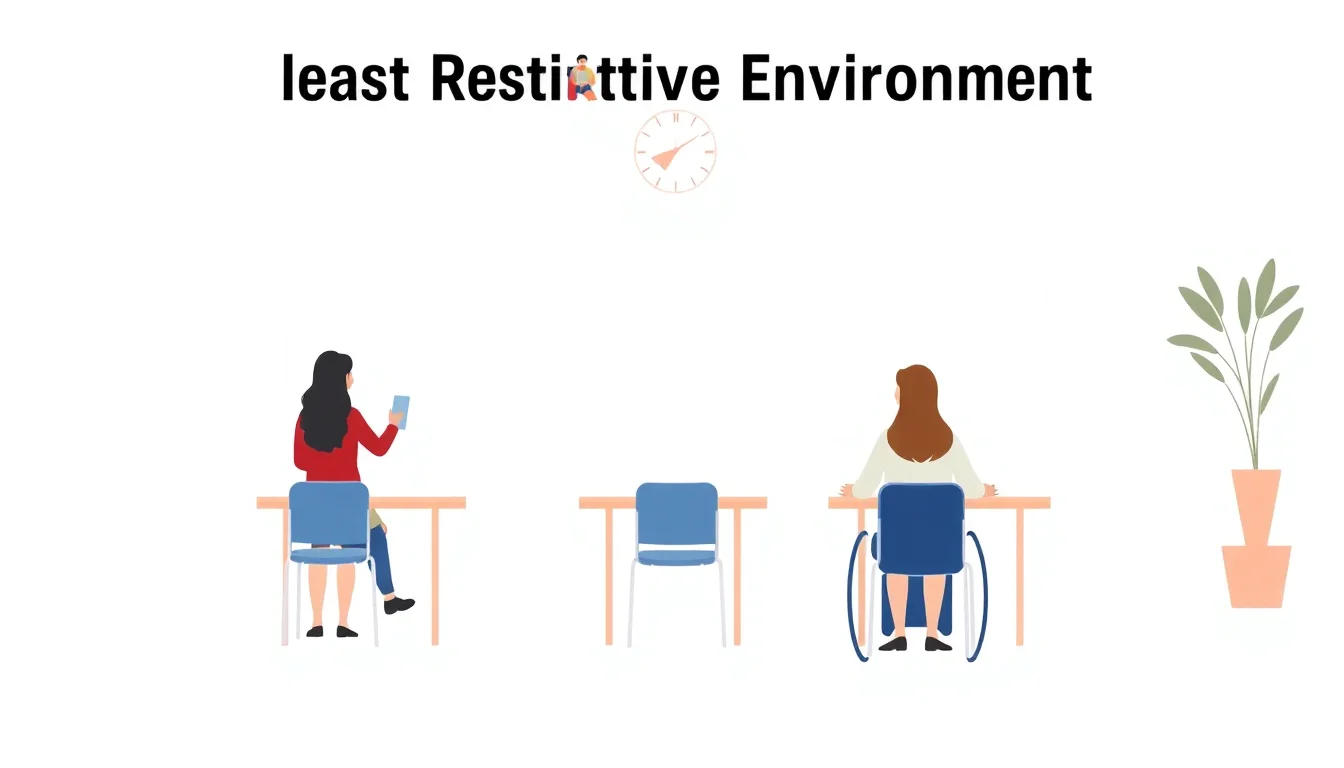
The Least Restrictive Environment (LRE) is a cornerstone principle in special education law, primarily originating from the Individuals with Disabilities Education Act (IDEA) in the United States. It mandates that students with disabilities must be educated with non-disabled peers to the greatest extent possible, with supplementary aids and services provided as needed. The core idea is to prevent inappropriate segregation and ensure that students receive an education that maximizes their potential while minimizing isolation. Determining the LRE involves a collaborative process, typically through an Individualized Education Program (IEP) team, which assesses a student's unique needs and the benefits of various educational settings. While the ideal is integration, LRE acknowledges that for some students, a more specialized setting might be necessary to meet their specific educational requirements, but this decision must be justified and regularly reviewed. The concept is a constant negotiation between inclusion and specialized support, aiming for the most beneficial educational outcome for each child.
🎵 Origins & History
The concept of the Least Restrictive Environment (LRE) has deep roots in the civil rights movement and the push for equal access to education for all children. Harriet Gibbs Marbury's legal work in the early 20th century challenged segregation in education. Franklin D. Roosevelt's advocacy influenced the broader societal shift towards inclusion. The Council for Exceptional Children (CEC) and the Disability Rights Education and Defense Fund (DREDF) have been instrumental in shaping policy and advocating for the rights of students with disabilities, including the robust implementation of LRE. The U.S. Department of Education plays a crucial role in interpreting and enforcing IDEA, issuing guidance and regulations that shape how LRE is understood and applied by states and local education agencies.
⚙️ How It Works
The practical application of LRE is determined by an Individualized Education Program (IEP) team, which includes parents, educators, and specialists. This team must consider a student's unique needs, strengths, and the potential benefits of various educational settings, ranging from general education classrooms with accommodations to specialized schools. The IEP decision must be reviewed annually, and the student's progress in the LRE must be continuously monitored.
📊 Key Facts & Numbers
In the United States, it is estimated that over 95% of students with disabilities spend at least some time in a general education classroom, with approximately 60% spending 80% or more of their school day there, according to National Center for Education Statistics (NCES) data from the 2019-2020 school year. Despite this high rate of inclusion, the exact interpretation and implementation of LRE vary significantly across school districts and states. Approximately 13% of all public school students, totaling over 7 million children, received special education services under IDEA in the 2020-2021 school year. While the majority are educated within their district's public schools, a small but significant percentage (around 2%) are placed in separate schools or residential facilities, often due to the severity of their needs or lack of appropriate services within their local district. The average per-pupil expenditure for special education services is considerably higher than for general education, with some estimates suggesting it can be 2.5 times greater, highlighting the resource intensity of providing appropriate LRE.
👥 Key People & Organizations
Key figures in the development and advocacy for LRE include Harriet Gibbs Marbury, whose legal work in the early 20th century challenged segregation in education, and Franklin D. Roosevelt, whose own experiences with disability and advocacy for those with disabilities indirectly influenced the broader societal shift towards inclusion. Organizations like the Council for Exceptional Children (CEC) and the Disability Rights Education and Defense Fund (DREDF) have been instrumental in shaping policy and advocating for the rights of students with disabilities, including the robust implementation of LRE. The U.S. Department of Education plays a crucial role in interpreting and enforcing IDEA, issuing guidance and regulations that shape how LRE is understood and applied by states and local education agencies. Legal scholars and advocates continue to push for more consistent and effective application of LRE principles across the nation.
🌍 Cultural Impact & Influence
The LRE principle has profoundly reshaped educational landscapes, moving away from the era of institutionalization and segregation towards greater inclusion. LRE has led to increased awareness and understanding of diverse learning needs within general education settings, prompting innovations in Universal Design for Learning (UDL) and differentiated instruction. The influence of LRE extends beyond K-12 education, informing practices in higher education and vocational training, promoting accessibility and support services. Culturally, it has contributed to a broader societal dialogue about disability rights, inclusion, and the dismantling of systemic barriers, impacting how communities perceive and integrate individuals with disabilities. The success of LRE is often measured by the social and academic integration of students, fostering a sense of belonging and reducing stigma.
⚡ Current State & Latest Developments
In the current educational climate, there is a growing emphasis on providing robust supports within general education settings, with a focus on evidence-based practices and early intervention. The COVID-19 pandemic highlighted both the challenges and opportunities for remote and hybrid learning models, prompting discussions about how these might be leveraged to support LRE for some students, while also raising concerns about potential regression in social-emotional development and access to specialized services. School districts are increasingly investing in professional development for general education teachers to equip them with the skills to effectively support students with diverse needs. Furthermore, there's a renewed focus on ensuring that placement decisions are truly individualized and not driven by convenience or resource limitations, with ongoing legal challenges addressing alleged violations of LRE mandates.
🤔 Controversies & Debates
The most persistent controversy surrounding LRE revolves around its interpretation and application. Critics argue that some school districts may prioritize cost-saving measures or administrative ease over a student's true educational needs, leading to inappropriate placements in general education settings without adequate support, or conversely, to unnecessary segregation. There's a tension between the ideal of full inclusion and the reality that some students require highly specialized environments to thrive. Parents often grapple with this, advocating for either more support in general education or access to specialized programs they believe are better suited to their child's needs. The debate also touches on the definition of 'appropriate' education and whether LRE should solely focus on academic progress or encompass social and emotional development. Some disability advocates argue that the current system often fails to provide the necessary resources to make LRE truly effective for all students.
🔮 Future Outlook & Predictions
Looking ahead, the future of LRE will likely be shaped by advancements in educational technology, a deeper understanding of neurodiversity, and evolving societal attitudes towards disability. We can anticipate a greater push for personalized learning pathways that can be delivered in various se
💡 Practical Applications
The practical application of LRE involves a collaborative process through an Individualized Education Program (IEP) team, which assesses a student's unique needs and the benefits of various educational settings. This includes considering supplementary aids and services, such as special education aides and assistive technology, to support the student in the least restrictive environment. The IEP team's decision is not static; it must be reviewed annually, and the student's progress in the LRE must be continuously monitored.
Key Facts
- Category
- philosophy
- Type
- topic