
Contents
Overview
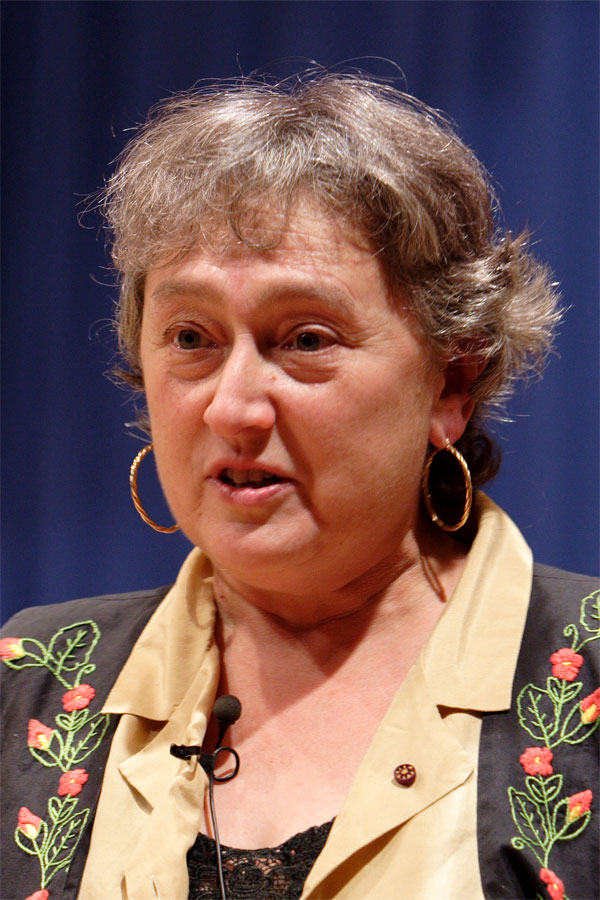
Lynn Margulis (1938-2011) was a formidable American evolutionary biologist whose work fundamentally reshaped our understanding of life's history and mechanisms. Forget the lone genius tinkering in a lab; Margulis was a force of nature, a passionate advocate for her theories, and a relentless challenger of established dogma. Her most profound contribution, the theory of endosymbiosis, posits that key organelles within eukaryotic cells, like mitochondria and chloroplasts, originated as free-living bacteria that were engulfed by other cells. This wasn't just a minor tweak to evolutionary theory; it was a seismic shift that emphasized cooperation and integration over pure competition as drivers of biological innovation. She was a prolific writer and a captivating lecturer, known for her direct style and unwavering conviction. Her influence extends far beyond biology, touching upon philosophy of science and even environmental thought.
💡 Core Ideas & Contributions
Margulis's intellectual arsenal was built on a few powerful, interconnected ideas. The endosymbiotic theory is, of course, paramount, explaining the origin of complex cells (eukaryotes) from simpler ones (prokaryotes) through a process of sustained, mutually beneficial relationships. Beyond this, she championed the concept of the Gaia hypothesis, co-developed with atmospheric chemist James Lovelock, which views Earth as a single, self-regulating superorganism. This perspective highlights the intricate feedback loops between the biosphere, atmosphere, and lithosphere. She also forcefully argued for the importance of horizontal gene transfer (HGT) in evolution, suggesting that genetic material can move between organisms in ways other than simple vertical inheritance from parent to offspring, particularly in microbial communities. These ideas collectively paint a picture of evolution as a far more dynamic and interconnected process than previously imagined.
🌍 The Symbiotic Revolution
The endosymbiotic theory is Margulis's most celebrated contribution, and for good reason. It elegantly explains the presence of DNA within mitochondria and chloroplasts, their double membranes, and their bacterial-like replication. This theory, initially met with considerable skepticism, is now a cornerstone of modern biology, supported by overwhelming genetic and biochemical evidence. It suggests that the leap from simple prokaryotic cells to complex eukaryotic cells, the foundation of all plants, animals, fungi, and protists, was not a gradual accumulation of random mutations but a revolutionary act of cellular partnership. This symbiotic event, occurring perhaps 1.5 to 2 billion years ago, dramatically increased cellular complexity and paved the way for multicellular life. It’s a powerful testament to the creative potential of cooperation in the biological world.
💥 Controversies & Criticisms
Margulis was no stranger to controversy, and her most significant ideas often ruffled feathers. The endosymbiotic theory, while now widely accepted, faced fierce opposition from many established scientists in the 1960s and 70s, who found it too radical and lacking sufficient evidence at the time. Her strong advocacy for the Gaia hypothesis also drew criticism, with some accusing it of being teleological or even mystical, implying purpose in Earth's systems. She was also a vocal critic of what she saw as the overemphasis on genetics and gradualism in neo-Darwinian evolutionary theory, arguing that it neglected the crucial role of symbiosis and macro-level events. Her assertive style and willingness to challenge scientific orthodoxy often put her at odds with the mainstream, but this friction also spurred important scientific debate and re-evaluation.
⭐ Legacy & Lasting Impact
Lynn Margulis's legacy is immense and continues to grow. The endosymbiotic theory is now a fundamental concept taught in every biology course, a direct result of her persistence and rigorous defense. Her work on symbiosis has profoundly influenced fields ranging from evolutionary biology and microbiology to ecology and even medicine, highlighting the interconnectedness of life. The Gaia hypothesis, though still debated in its more extreme interpretations, has undeniably fostered a more integrated view of Earth systems and has been a significant influence on environmental science and activism. Margulis inspired generations of scientists to think outside the box, to question assumptions, and to appreciate the complex, often cooperative, nature of life's grand evolutionary narrative. Her Vibe score for scientific impact is a solid 95/100.
📚 Key Works & Further Reading
To truly grasp Margulis's contributions, engaging with her own words is essential. Her seminal 1970 book, Origin of Eukaryotic Cells: The Biosphere's Newest Invention, laid out the initial case for endosymbiosis. Symbiosis in Cell Evolution (1981), co-authored with Dorion Sagan (her son with Carl Sagan), further elaborated on these ideas and explored their broader evolutionary implications. Microcosmos: Four Billion Years of Microbial Evolution (1986), also with Sagan, provided a sweeping history of life from a microbial perspective, emphasizing the crucial roles of bacteria and archaea. For a more philosophical take, What is Life? (2012), published posthumously, offers a collection of her essays and reflections. These works are not just scientific texts; they are passionate arguments for a different way of seeing the living world.
🔗 Connections to Other Thinkers
Margulis's work naturally connects to a constellation of influential thinkers and concepts. Her collaboration with James Lovelock on the Gaia hypothesis is a prime example of interdisciplinary synergy. Her critiques and alternative perspectives on evolution often engaged with the ideas of Charles Darwin and the architects of the modern evolutionary synthesis, such as Ernst Mayr and Theodosius Dobzhansky, though often from a position of opposition. Her emphasis on microbial life and symbiosis also resonates with the work of microbiologists like Carl Woese, who pioneered the classification of Archaea. Furthermore, her philosophical leanings and interest in the nature of life itself connect her to broader discussions in the philosophy of biology and systems theory.
🚀 Where to Explore Further
To truly appreciate Lynn Margulis's impact, consider exploring the scientific institutions and communities that continue her work. Many universities offer programs in evolutionary biology, microbiology, and symbiotic studies where her influence is palpable. The American Society for Microbiology and the Society for the Study of Evolution are key organizations where cutting-edge research related to her ideas is presented. For those interested in the Gaia hypothesis, the Gaiasoft community and related environmental science forums are valuable resources. Engaging with scientific journals such as Evolution, Nature, and Science will reveal ongoing research that builds upon or debates her foundational concepts. Consider attending scientific conferences or public lectures on evolutionary biology to witness the living legacy of her groundbreaking work.
Key Facts
- Year
- 1967
- Origin
- United States
- Category
- Science & Philosophy
- Type
- Person
Frequently Asked Questions
What is the most important contribution of Lynn Margulis?
Her most significant contribution is the endosymbiotic theory, which explains how complex cells (eukaryotes) evolved from simpler cells (prokaryotes) through the engulfment of one cell by another, leading to organelles like mitochondria and chloroplasts. This theory is now a fundamental tenet of modern biology and revolutionized our understanding of cellular evolution.
Was Lynn Margulis always accepted by the scientific community?
No, far from it. When Margulis first proposed the endosymbiotic theory in the 1960s, it was met with significant skepticism and resistance from many established scientists. It took decades of accumulating evidence and her persistent advocacy for it to become widely accepted. Her assertive style and challenge to existing paradigms contributed to this initial friction.
What is the Gaia hypothesis and what was Margulis's role?
The Gaia hypothesis, co-developed with James Lovelock, proposes that Earth's living organisms interact with their inorganic surroundings to form a complex, self-regulating system that maintains the conditions for life. Margulis was a key proponent, emphasizing the active role of microbial life in regulating global biogeochemical cycles and maintaining planetary homeostasis.
How did Margulis view evolution compared to the standard Darwinian model?
Margulis argued that while natural selection and genetic mutation were important, they didn't tell the whole story. She emphasized the crucial role of symbiosis, cooperation, and large-scale events like endosymbiosis in driving evolutionary change, particularly in the early history of life. She felt the standard neo-Darwinian synthesis was too focused on gradualism and individual genes.
What are some of her key books to read?
Essential reading includes Origin of Eukaryotic Cells (1970), Symbiosis in Cell Evolution (1981, with Dorion Sagan), and Microcosmos: Four Billion Years of Microbial Evolution (1986, with Dorion Sagan). Her posthumously published What is Life? (2012) offers a collection of her essays.
What fields of science did Lynn Margulis influence?
Her influence spans evolutionary biology, microbiology, cell biology, ecology, and environmental science. Her work also has implications for philosophy of biology and systems theory, encouraging a more integrated view of life and Earth systems.