
Contents
Overview
The lyre, an ancient stringed instrument, boasts a lineage stretching back millennia, deeply embedded in the myths and music of civilizations like Greece and Mesopotamia. Its characteristic U-shaped frame, two arms, and a crossbar from which strings are suspended, produce a resonant, often delicate sound. Historically associated with poetry, song, and divine inspiration, the lyre's influence can be traced through various cultures, evolving in form and function. While its prominence waned with the rise of more complex instruments, the lyre has experienced a resurgence in folk music, historical reenactments, and contemporary artistic expressions, offering a tangible connection to our sonic past.
🎶 What is a Lyre?
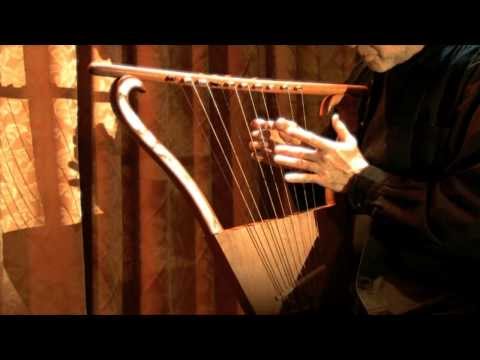
The lyre is an ancient stringed instrument, a member of the lute family, classified under Hornbostel–Sachs codes 321.21 and 321.22. It typically features a soundbox with two arms extending upwards, connected by a crossbar from which the strings are stretched. Unlike guitars or violins, the strings of a lyre are usually plucked, not bowed, and they are often of equal length, running from the soundbox to the crossbar. Its portability and relatively simple construction made it a popular instrument across many ancient civilizations, from Greece and Rome to Mesopotamia and Egypt.
📜 A Brief History of the Lyre
The lyre's origins stretch back millennia, with some of the earliest evidence found in Sumerian artifacts dating to around 2500 BCE. The ancient Greeks famously associated the lyre with Apollo, the god of music and poetry, making it a symbol of artistic expression and intellectual pursuit. The Roman Empire also adopted the lyre, integrating it into their musical traditions and performances. Its presence in religious ceremonies, epic poetry recitations, and domestic entertainment underscores its deep cultural significance throughout the ancient world, influencing countless musical traditions that followed.
🎻 Types of Lyres
Lyres come in various forms, reflecting their widespread adoption and adaptation. The Greek kithara, for instance, was a larger, more robust lyre often used by professional musicians, featuring a wooden soundbox and a more complex construction. In contrast, the Greek chelys was a smaller, simpler lyre often made from a tortoise shell, symbolizing its humble origins. Other variations include the Roman cithara and the ancient Egyptian lyres, each with distinct aesthetic and acoustic qualities, showcasing the instrument's diverse evolution across different cultures and eras.
🎵 How Lyres Are Played
Playing the lyre is an intimate experience, primarily involving plucking the strings with the fingers or a plectrum. The player typically holds the instrument upright, resting it on their lap or shoulder, and uses one hand to dampen strings they don't wish to sound while the other plucks the desired strings. This technique allows for both melodic playing and harmonic accompaniment, creating a rich and resonant sound. The simplicity of its design often lends itself to improvisation and expressive performance, making each rendition unique.
🌟 Lyre in Modern Culture
While not as ubiquitous as the guitar or piano, the lyre has experienced a resurgence in modern times, particularly within folk music, historical reenactment communities, and therapeutic music circles. Its ethereal sound is often sought after for its calming and meditative qualities, finding a place in ambient music and sound healing practices. Contemporary artisans and musicians are also exploring new tunings and playing techniques, breathing new life into this ancient instrument and ensuring its continued relevance in the 21st century.
💡 Learning to Play the Lyre
Embarking on the journey of learning the lyre is accessible to many, thanks to its intuitive design. Numerous online tutorials, workshops, and even dedicated lyre schools offer structured learning paths for beginners. Many modern lyres come with pre-set tunings, simplifying the initial setup. The instrument's relatively few strings and straightforward playing method make it an excellent choice for those new to string instruments, offering a rewarding and relatively quick learning curve for those eager to create beautiful music.
⚖️ Lyre vs. Other String Instruments
When comparing the lyre to other string instruments, its unique position becomes clear. Unlike the fretted neck of a guitar or lute, the lyre's strings are typically unfretted, offering a pure, open tone. Its soundbox construction and string arrangement differentiate it from the bowed strings of violins or cellos. While the harp shares the plucked string characteristic, the lyre's more compact frame and often simpler tuning make it a distinct instrument, offering a different tactile and sonic experience for musicians.
✨ Where to Find a Lyre
Acquiring a lyre today involves exploring a range of options, from handcrafted artisan instruments to more mass-produced models. Specialist musical instrument shops, particularly those focusing on folk or historical instruments, are excellent starting points. Online marketplaces and direct sales from luthiers also provide a wide selection. Prices can vary significantly, from a few hundred dollars for beginner models to several thousand for intricately crafted, professional-grade instruments, depending on materials, craftsmanship, and origin.
Key Facts
- Year
- -1400
- Origin
- Ancient Mesopotamia
- Category
- Musical Instruments
- Type
- Musical Instrument
Frequently Asked Questions
What is the difference between a lyre and a harp?
While both are plucked string instruments, the lyre typically has a soundbox and arms extending from it, with strings running from the soundbox to a crossbar. A harp, on the other hand, has a triangular frame with strings running perpendicular to the soundboard. The lyre is generally smaller and more portable than most harps.
Are lyres difficult to learn?
Lyres are generally considered easier to learn than many other string instruments, especially for beginners. Their straightforward tuning and playing method, which involves plucking, make them quite accessible. Many people find they can produce pleasing sounds relatively quickly.
What kind of music is typically played on a lyre?
Historically, lyres were used for accompanying epic poetry, hymns, and folk songs. Today, they are found in folk music, new-age music, and are used for meditative and therapeutic purposes. Their sound is often described as ethereal and calming.
Where can I buy a lyre?
You can find lyres from specialized musical instrument retailers, online marketplaces, and directly from luthiers who craft them. It's advisable to research different makers and models to find one that suits your budget and playing goals.
What are the main parts of a lyre?
A typical lyre consists of a soundbox (often a resonator), two arms that extend upwards from the soundbox, and a crossbar connecting the tops of the arms. Strings are stretched from the soundbox to the crossbar.
Are there different sizes of lyres?
Yes, lyres come in various sizes, from small, portable instruments suitable for children or travel, to larger, more elaborate kithara-style instruments used by professional musicians in ancient times. The size often influences the instrument's volume and tonal range.