
Contents
Overview
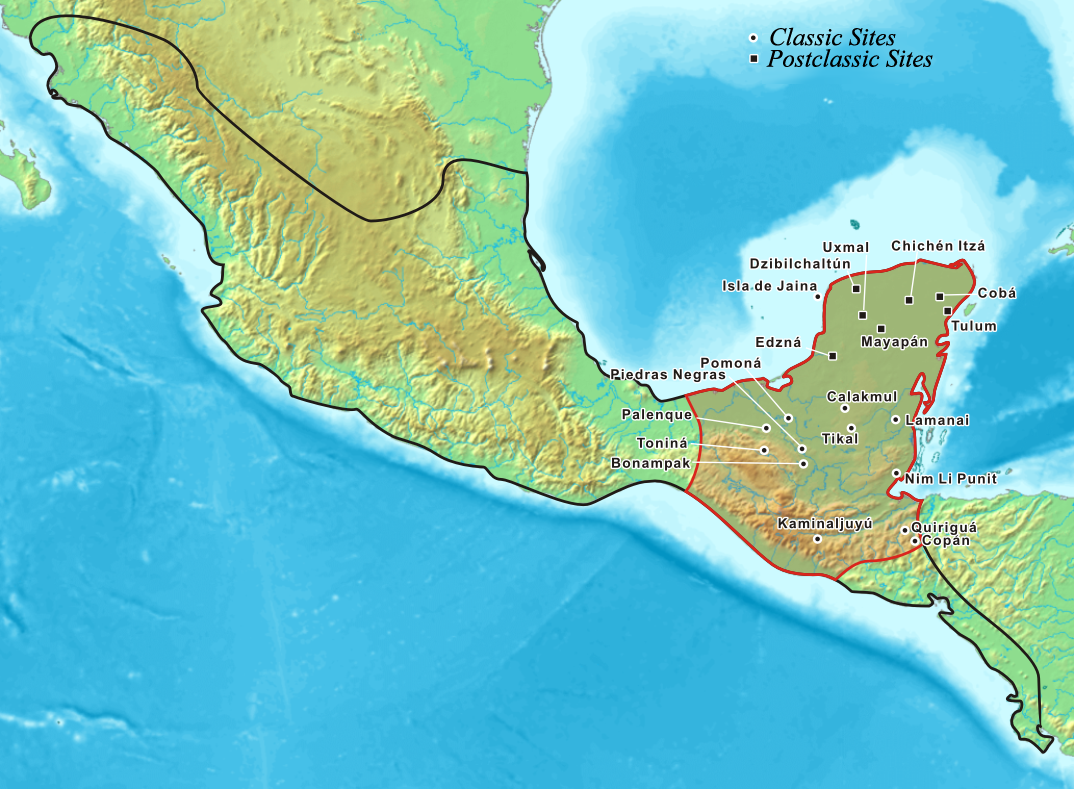
The Maya civilization's roots stretch back to the Middle Formative period, around 2000 BCE, with the development of sedentary agricultural communities in the Maya Region. Early settlements like Nakbe and El Mirador in the Petén Basin of Guatemala laid the groundwork for the Classic period (c. 250–900 CE), a golden age of city-state development. During this era, monumental centers such as Tikal, Palenque, and Copán rose to prominence, characterized by towering pyramids, elaborate palaces, and sophisticated urban planning. The civilization's trajectory was marked by periods of growth, intense political rivalries between city-states, and eventual decline, with many major centers being abandoned by the end of the Classic period. The Spanish conquest in the 16th century, beginning with the fall of Nojpetén in 1697, marked the end of Maya political independence, though Maya culture persisted.
⚙️ How It Worked: Society & Governance
Maya society was organized into a network of independent city-states, each ruled by a divine king, or k'uhul ajaw. These rulers were not merely political leaders but also religious intermediaries, responsible for maintaining cosmic order and performing sacred rituals. Society was stratified, with a noble class, priests, scribes, artisans, merchants, and a large agricultural labor force forming the base. Warfare between city-states was common, often for political dominance, tribute, and captives for sacrifice. Their complex understanding of astronomy and calendrics, particularly the Long Count calendar, dictated agricultural cycles, religious ceremonies, and political events, demonstrating a profound integration of science and governance.
📊 Key Facts & Numbers
The Maya civilization reached its zenith with an estimated population of over 10 million people at its peak. Their cities boasted impressive architectural feats, with some pyramids, like the Temple of Kukulkan at Chichen Itza, reaching heights of over 30 meters (98 feet). They developed a sophisticated vigesimal (base-20) number system that included the concept of zero, a remarkable achievement for its time. The Maya calendar system was incredibly accurate, with the Haab' calendar (365 days) and the Tzolk'in calendar (260 days) interlocking to form cycles, and the Long Count tracking vast periods of time. Their written records, inscribed on stelae, codices, and pottery, provide invaluable insights, with thousands of glyphs deciphered.
👥 Key Figures & Polities
While no single ruler unified the entire Maya realm, several powerful city-states and their leaders left indelible marks on history. Figures like K'inich Janaab' Pakal I of Palenque (ruled 615–683 CE), known for his elaborate tomb and architectural patronage, and Jasaw Chan Kʼawiil I of Tikal (ruled c. 682–734 CE), who oversaw significant construction and military victories, exemplify Classic Maya leadership. The city-state of Calakmul was a major rival to Tikal for centuries, engaging in prolonged political and military struggles. The post-Classic period saw the rise of centers like Mayapan and the aforementioned Chichen Itza, each with its own influential rulers and political structures.
🌍 Cultural Impact & Influence
The cultural legacy of the Maya is immense, influencing subsequent Mesoamerican cultures and continuing to resonate today. Their hieroglyphic script, art, and architectural styles have captivated scholars and the public alike. The Maya's mathematical and astronomical achievements, including their precise calendar systems, represent a pinnacle of pre-industrial scientific thought. Today, over six million Maya people, speaking more than twenty-eight distinct Mayan languages, maintain vibrant cultural traditions, weaving ancient heritage into contemporary life. Their descendants continue to be guardians of this rich intellectual and artistic tradition, influencing global understanding of ancient civilizations and indigenous resilience.
⚡ Current State & Latest Developments
In the 21st century, Maya descendants continue to thrive, actively preserving their languages and cultural practices. Archaeological research is ongoing, with new discoveries continually refining our understanding of Maya urbanism, social structures, and environmental interactions. For instance, advancements in LiDAR technology have revealed previously unknown settlements and agricultural systems hidden beneath the jungle canopy, suggesting Maya populations were larger and more interconnected than previously thought. Contemporary Maya communities are also increasingly engaged in political activism, advocating for land rights, cultural preservation, and self-determination in Mexico, Guatemala, and Belize.
🤔 Controversies & Debates
Debates persist regarding the precise causes of the Classic Maya collapse, with theories ranging from environmental degradation and drought to endemic warfare and social upheaval. The extent of centralized political control versus the autonomy of individual city-states is another area of ongoing discussion among scholars. Furthermore, the interpretation of Maya iconography and the decipherment of certain glyphs remain subjects of scholarly debate, highlighting the complexity of understanding their worldview. The legacy of colonialism also casts a long shadow, influencing how Maya history is studied and how contemporary Maya communities engage with their heritage and external powers.
🔮 Future Outlook & Predictions
The future of Maya civilization lies in the continued resilience and adaptation of its people. As technology advances, further archaeological insights are expected, potentially rewriting aspects of Maya history. The growing global recognition of indigenous rights and cultural heritage may lead to greater autonomy and resources for Maya communities to shape their own futures. The ongoing revitalization of Maya languages and traditions suggests a strong cultural continuity, ensuring that the Maya civilization, in its living form, will continue to evolve and contribute to the global cultural landscape for centuries to come.
💡 Practical Applications
The Maya civilization's advancements offer practical lessons and inspiration across various fields. Their sophisticated agricultural techniques, adapted to diverse environments, provide models for sustainable farming in challenging climates. Their understanding of astronomy and calendrics demonstrates the power of long-term observation and precise measurement, relevant to fields from navigation to climate science. The Maya's architectural engineering, particularly their ability to construct massive stone structures without metal tools or the wheel, continues to inspire awe and study in civil engineering and historical construction methods. Their complex societal organization and governance also offer case studies for understanding political dynamics in decentralized states.
Key Facts
- Category
- history
- Type
- concept