
Contents
- 🌎 Introduction to Merkel and Justin
- 👥 Leadership Styles: A Comparative Analysis
- 🌈 Policy Initiatives: Climate Change and Immigration
- 📊 Economic Policies: A Tale of Two Approaches
- 🌍 International Relations: Cooperation and Conflict
- 📰 Media Portrayal: The Making of Public Images
- 👫 Personal Relationships: A Glimpse into Private Lives
- 🏛️ Legacy and Impact: Assessing the Long-Term Effects
- 📢 Public Opinion: The People's Verdict on Merkel and Justin
- 🔮 Future Prospects: What's Next for These Global Leaders?
- Frequently Asked Questions
- Related Topics
Overview
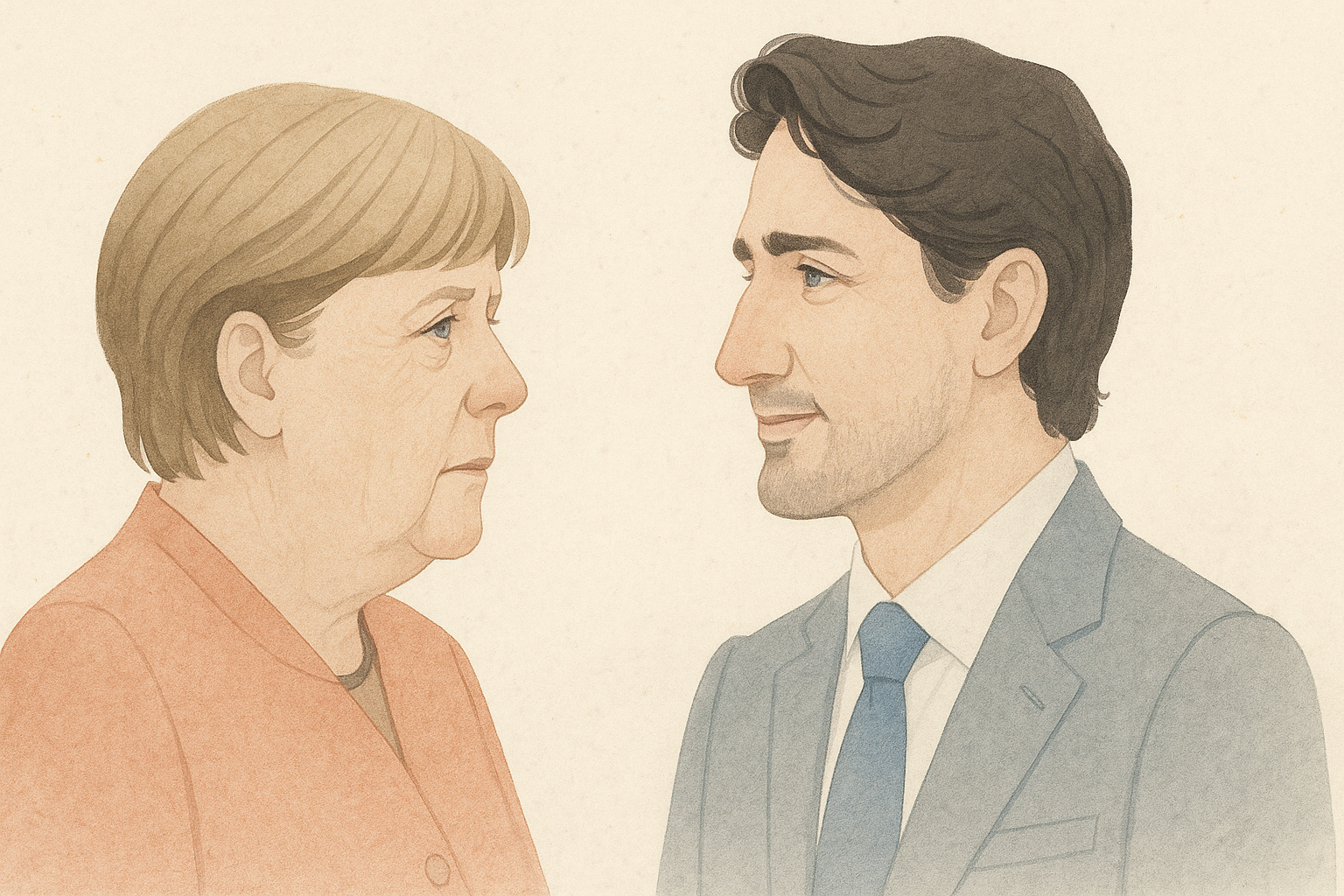
Angela Merkel, the former Chancellor of Germany, and Justin Trudeau, the Prime Minister of Canada, are two leaders who have made significant impacts on the global stage. Merkel's 16-year tenure was marked by her pragmatic approach to European politics, while Trudeau's leadership has been characterized by his charismatic charm and progressive policies. Despite their differences, both leaders have been instrumental in shaping the global conversation on issues like climate change, immigration, and economic inequality. With Merkel's departure from politics, Trudeau has become one of the most prominent liberal leaders in the world, and his relationship with Merkel has been seen as a key factor in shaping his approach to international diplomacy. As the world grapples with increasingly complex global challenges, the legacy of Merkel and the leadership of Trudeau will continue to be felt for years to come. The contrast between Merkel's no-nonsense approach and Trudeau's more emotive style has sparked interesting debates about the most effective way to lead in the 21st century, with some arguing that Merkel's style is more suited to the complexities of modern politics, while others see Trudeau's charisma as a necessary asset in building international coalitions.
🌎 Introduction to Merkel and Justin
The lives and careers of Angela Merkel and Justin Trudeau offer a fascinating study in contrasts. As the first female Chancellor of Germany, Merkel has been a dominant force in European politics, known for her pragmatic approach to governance. In contrast, Trudeau, the young and charismatic Prime Minister of Canada, has been hailed as a champion of progressive values. This article will explore the similarities and differences between these two leaders, examining their leadership styles, policy initiatives, and personal relationships. For more on Merkel's early life, see Angela Merkel's Biography. Trudeau's rise to power is also an interesting story, as discussed in Justin Trudeau's Career. The intersection of their policies and personalities can be seen in their approaches to Climate Change and Immigration Reform.
👥 Leadership Styles: A Comparative Analysis
Merkel and Trudeau have distinct leadership styles that reflect their unique personalities and backgrounds. Merkel is known for her analytical approach, often taking a cautious and deliberate stance on major issues. In contrast, Trudeau has been praised for his emotional intelligence and ability to connect with people from diverse backgrounds. As discussed in Leadership Styles in Politics, these approaches have their strengths and weaknesses. Merkel's style has been criticized for being too slow and reactive, while Trudeau's approach has been accused of being too impulsive and idealistic. For a deeper analysis of Merkel's leadership, see Merkel's Government. Trudeau's leadership style is also explored in Trudeau's Administration. The impact of their styles on International Relations and Domestic Policy is significant.
🌈 Policy Initiatives: Climate Change and Immigration
One of the most significant policy initiatives undertaken by Merkel and Trudeau has been their efforts to address climate change. Merkel has been a vocal advocate for reducing carbon emissions and transitioning to renewable energy sources, as outlined in the Paris Agreement. Trudeau has also made climate change a priority, introducing a national carbon pricing plan and investing in clean energy technologies. However, their approaches to immigration have differed significantly. Merkel's decision to open Germany's borders to refugees in 2015 was widely criticized, while Trudeau's government has been praised for its efforts to resettle Syrian refugees. For more on these policies, see Climate Change Policies and Immigration Reform. The role of European Union policies and United Nations agreements in shaping their approaches is also crucial.
📊 Economic Policies: A Tale of Two Approaches
The economic policies of Merkel and Trudeau have also been subject to scrutiny and debate. Merkel's government has been criticized for its austerity measures, which have been seen as exacerbating economic inequality in Germany. In contrast, Trudeau's government has pursued a more expansionary fiscal policy, investing in infrastructure and social programs. As discussed in Economic Policies, these approaches have their strengths and weaknesses. Merkel's policies have been praised for promoting fiscal discipline, while Trudeau's approach has been criticized for increasing the national debt. For a deeper analysis of their economic policies, see Merkel's Economic Policies and Trudeau's Economic Policies. The impact of Globalization and Trade Agreements on their economic policies is also significant.
🌍 International Relations: Cooperation and Conflict
Merkel and Trudeau have also had to navigate complex international relationships, including their interactions with other world leaders. Merkel's relationship with Russian President Vladimir Putin has been particularly contentious, with disagreements over Ukraine and energy policy. Trudeau has had to manage a delicate relationship with US President Donald Trump, navigating issues such as trade and border security. As discussed in International Relations, these relationships have significant implications for global stability and security. For more on Merkel's relationship with Putin, see Merkel and Putin. Trudeau's relationship with Trump is also explored in Trudeau and Trump. The role of NATO and G7 in shaping their international relationships is also crucial.
📰 Media Portrayal: The Making of Public Images
The media portrayal of Merkel and Trudeau has played a significant role in shaping their public images. Merkel has often been depicted as a pragmatic and stoic leader, while Trudeau has been portrayed as a charismatic and empathetic figure. However, these portrayals have also been subject to criticism and controversy. As discussed in Media Portrayal of Politicians, the media can both reflect and shape public opinion. For a deeper analysis of Merkel's media portrayal, see Merkel in the Media. Trudeau's media portrayal is also explored in Trudeau in the Media. The impact of Social Media on their public images is also significant.
👫 Personal Relationships: A Glimpse into Private Lives
Despite their public personas, Merkel and Trudeau are also private individuals with their own personal relationships and interests. Merkel has been known to be a private person, preferring to keep her personal life out of the spotlight. Trudeau, on the other hand, has been more open about his personal life, including his marriage and family. As discussed in Personal Relationships of Politicians, these relationships can have significant implications for their public lives. For more on Merkel's personal life, see Merkel's Personal Life. Trudeau's personal life is also explored in Trudeau's Personal Life. The role of Family and Friendships in shaping their personal relationships is also crucial.
🏛️ Legacy and Impact: Assessing the Long-Term Effects
As Merkel and Trudeau look to the future, their legacies and impact will be subject to assessment and debate. Merkel's leadership has been praised for its stability and pragmatism, while Trudeau's government has been credited with promoting progressive values and social justice. However, their policies and decisions have also been criticized and contested. As discussed in Legacy and Impact of Politicians, these assessments will have significant implications for their places in history. For a deeper analysis of Merkel's legacy, see Merkel's Legacy. Trudeau's legacy is also explored in Trudeau's Legacy. The role of Historical Context in shaping their legacies is also crucial.
📢 Public Opinion: The People's Verdict on Merkel and Justin
Public opinion has played a significant role in shaping the careers of Merkel and Trudeau. Both leaders have enjoyed high levels of popularity at various points in their careers, but they have also faced criticism and controversy. As discussed in Public Opinion and Politicians, public opinion can be both a source of strength and a source of vulnerability. For more on Merkel's public opinion, see Merkel's Public Opinion. Trudeau's public opinion is also explored in Trudeau's Public Opinion. The impact of Polls and Elections on their public opinion is also significant.
🔮 Future Prospects: What's Next for These Global Leaders?
As Merkel and Trudeau look to the future, their prospects and challenges will be subject to speculation and debate. Merkel's decision to step down as Chancellor has raised questions about her legacy and the future of German politics. Trudeau's government has been re-elected, but it faces significant challenges, including the COVID-19 pandemic and economic uncertainty. As discussed in Future Prospects of Politicians, these challenges and opportunities will have significant implications for their careers and the future of their countries. For a deeper analysis of Merkel's future prospects, see Merkel's Future. Trudeau's future prospects are also explored in Trudeau's Future. The role of Global Trends and Technological Advances in shaping their future prospects is also crucial.
Key Facts
- Year
- 2022
- Origin
- Vibepedia
- Category
- Politics
- Type
- Person
Frequently Asked Questions
What are the main differences between Merkel and Trudeau's leadership styles?
Merkel is known for her analytical and pragmatic approach, while Trudeau is praised for his emotional intelligence and ability to connect with people. Merkel's style has been criticized for being too slow and reactive, while Trudeau's approach has been accused of being too impulsive and idealistic. For more on their leadership styles, see Leadership Styles in Politics.
How have Merkel and Trudeau addressed climate change?
Both leaders have made climate change a priority, with Merkel advocating for reducing carbon emissions and transitioning to renewable energy sources, and Trudeau introducing a national carbon pricing plan and investing in clean energy technologies. For more on their climate change policies, see Climate Change Policies.
What are the main similarities and differences between Merkel and Trudeau's economic policies?
Merkel's government has been criticized for its austerity measures, while Trudeau's government has pursued a more expansionary fiscal policy. Merkel's policies have been praised for promoting fiscal discipline, while Trudeau's approach has been criticized for increasing the national debt. For a deeper analysis of their economic policies, see Economic Policies.
How have Merkel and Trudeau navigated international relationships?
Merkel has had a contentious relationship with Russian President Vladimir Putin, while Trudeau has had to manage a delicate relationship with US President Donald Trump. As discussed in International Relations, these relationships have significant implications for global stability and security. For more on their international relationships, see Merkel and Putin and Trudeau and Trump.
What is the significance of Merkel and Trudeau's personal relationships and interests?
Despite their public personas, Merkel and Trudeau are also private individuals with their own personal relationships and interests. Merkel has been known to be a private person, while Trudeau has been more open about his personal life. As discussed in Personal Relationships of Politicians, these relationships can have significant implications for their public lives. For more on their personal relationships, see Merkel's Personal Life and Trudeau's Personal Life.