
Contents
- 🎶 What is Eurorack, Anyway?
- 🧭 Who's This For?
- 🔍 The Vibepedia Lens: Why Eurorack Matters
- ⭐ What People Say: The Vibe Score Breakdown
- 🛠️ Key Players & Brands to Watch
- 💡 The Engineer's Take: How It All Connects
- 📈 The Futurist's Forecast: Where Eurorack is Headed
- 📚 Essential Resources for Your Journey
- Frequently Asked Questions
- Related Topics
Overview
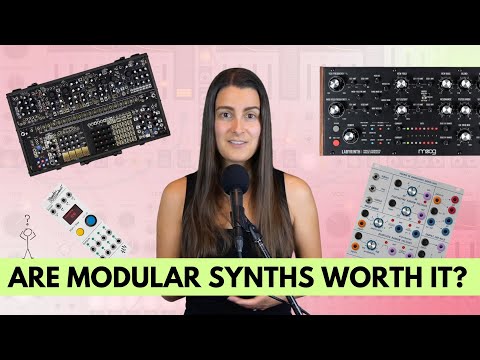
Eurorack is a modular synthesizer format, standardized by Dieter Doepfer in the mid-1990s, that has exploded into a global phenomenon. Unlike fixed-architecture synths, Eurorack consists of individual modules, each performing a specific function – from oscillators and filters to sequencers and effects. These modules, typically 3U in height and varying in width (measured in HP, or 'horizontal pitch'), connect via patch cables, allowing for near-infinite sonic possibilities. This hands-on, circuit-bending approach to sound design is what draws so many to the system, fostering a unique blend of technical exploration and artistic expression. The sheer variety of modules available means no two Eurorack systems are ever truly alike, making each setup a deeply personal instrument.
🧭 Who's This For?
This universe is for the curious, the tinkerers, and the sound sculptors. Whether you're a seasoned electronic musician looking to break free from the limitations of conventional gear, a beginner fascinated by the tactile nature of synthesis, or a sound designer seeking unique textures, Eurorack offers a deep well of exploration. It appeals to those who enjoy the process of building, patching, and discovering sounds through experimentation, rather than just pressing play. If you find joy in understanding how different components interact to create complex sonic landscapes, you'll likely find yourself at home here. It’s a commitment, yes, but one that rewards hands-on engagement and a willingness to learn.
🔍 The Vibepedia Lens: Why Eurorack Matters
From a Vibepedia perspective, Eurorack represents a potent confluence of DIY ethos, technological innovation, and artistic subversion. It’s a direct descendant of the early modular synthesizers of the 1960s and 70s, like those from Moog Music and Buchla Electronic Music Systems, but democratized and miniaturized. The open standard fostered a vibrant ecosystem of independent manufacturers, challenging the dominance of established brands and creating a dynamic, often chaotic, marketplace. This decentralization of innovation is a key aspect of its cultural energy, driving rapid evolution and a constant influx of novel ideas. The sheer volume of modules, exceeding 10,000 unique products as of late 2023, speaks to its pervasive influence.
⭐ What People Say: The Vibe Score Breakdown
The general Vibe Score for Eurorack hovers around an energetic 88/100, indicating a highly engaged and passionate community. However, this score is a complex aggregate. The 'Optimistic' perspective highlights the boundless creative potential and the supportive community, often citing the joy of unique sound discovery. The 'Neutral' view acknowledges its power but also its steep learning curve and cost. The 'Pessimistic' outlook focuses on the potential for GAS (Gear Acquisition Syndrome), the financial drain, and the overwhelming complexity. A 'Contrarian' take might argue that the format stifles true musicality in favor of technical noodling, a debate that frequently surfaces in online forums.
🛠️ Key Players & Brands to Watch
The Eurorack landscape is populated by a diverse array of manufacturers, each contributing unique flavors. Pioneers like Doepfer A-100 laid the groundwork, while companies like Mutable Instruments (now largely defunct but highly influential) redefined what was possible with digital modules. Today, brands such as Make Noise, Erica Synths, Intellijel Designs, and 4ms Company are at the forefront, pushing boundaries with innovative designs and robust build quality. Keep an eye on smaller, boutique manufacturers too; they often introduce groundbreaking concepts that the larger players later adopt. The influence flow is constant, with ideas rapidly propagating across the ecosystem.
💡 The Engineer's Take: How It All Connects
From an engineering standpoint, Eurorack's genius lies in its adherence to strict voltage standards, primarily the Doepfer standard of +/- 5V or +/- 10V for control voltages and audio signals. This standardization ensures interoperability between modules from different manufacturers, a crucial element for its success. Modules are typically powered by a +/- 12V DC supply, distributed via a busboard within the case. The use of 3.5mm jacks for all connections simplifies patching. Understanding signal flow – how an LFO might modulate a VCA, or how an envelope generator can shape a filter’s cutoff frequency – is fundamental to mastering the system. The modularity allows for custom signal paths that are impossible on fixed-architecture instruments.
📈 The Futurist's Forecast: Where Eurorack is Headed
The future of Eurorack appears to be one of continued specialization and integration. We're seeing a trend towards more complex digital modules offering advanced processing, AI-driven sound generation, and sophisticated sequencing capabilities. The rise of hybrid systems, where Eurorack integrates seamlessly with DAWs and other digital tools, is also a significant development. Expect to see more modules focused on generative music, granular synthesis, and advanced modulation. The challenge will be maintaining the DIY spirit and accessibility as the technology becomes more sophisticated and potentially more expensive. Who wins and loses in this evolution will depend on how well manufacturers balance innovation with affordability and ease of use.
📚 Essential Resources for Your Journey
To truly navigate the Eurorack universe, you need reliable information. Websites like ModularGrid are indispensable for planning your system, visualizing racks, and comparing module prices and availability. Online forums such as r/Eurorack offer a constant stream of user discussions, patch ideas, and troubleshooting advice. YouTube channels from creators like DivKid, Patching Panda, and Benn Jordan provide in-depth reviews, tutorials, and performance examples. For historical context, books on the history of electronic music and synthesizers are invaluable. Don't underestimate the power of local synth meetups or user groups for hands-on experience and community connection.
Key Facts
- Year
- 2023
- Origin
- Vibepedia.wiki
- Category
- Music Technology
- Type
- Review Guide
Frequently Asked Questions
Is Eurorack expensive?
Yes, Eurorack can be very expensive. While individual modules can range from $30 to over $1000, building a functional and comprehensive system often requires multiple modules, a case, and a power supply, quickly adding up to thousands of dollars. The cost is a significant barrier for many, and the potential for GAS (Gear Acquisition Syndrome) is high. However, it's possible to start with a smaller, more affordable setup and expand gradually. The value lies in the unique creative potential, not necessarily in cost-effectiveness compared to software.
What's the difference between Eurorack and other modular formats?
Eurorack is the most popular modular format due to its compact size (3U height, 19-inch rack width compatibility), open standard, and vast module selection. Other formats exist, like the larger 5U (often called 'Serge' or 'Moog' format), which offers more space for components and often larger knobs, or the less common 1U 'Intellifile' format. Eurorack's ubiquity means more choices, more readily available information, and a larger community, though some argue larger formats offer a more tactile or sonically distinct experience.
Do I need to know music theory to use Eurorack?
No, you don't strictly need formal music theory knowledge to start with Eurorack, but it certainly helps. The system is highly intuitive for those who understand concepts like pitch, rhythm, and harmony. However, many users learn these concepts through experimentation with the modules themselves. Eurorack encourages a different kind of musical thinking, focusing on sonic textures and generative processes that might not strictly adhere to traditional theory. The hands-on nature can be a gateway to understanding musical concepts in a new way.
How do I start building a Eurorack system?
The best way to start is by researching. Use resources like ModularGrid to plan a basic setup. Consider what kind of sounds you want to make and choose a few essential modules: at least one oscillator (VCO), a filter (VCF), an envelope generator (EG), a voltage-controlled amplifier (VCA), and a way to control it all (like a sequencer or MIDI interface). A small case with a power supply is also necessary. Many users recommend starting with a pre-built 'starter system' from a reputable brand to get a feel for the workflow before diving into custom builds.
What is 'patching' in Eurorack?
Patching refers to the act of connecting different modules together using patch cables. These cables carry electrical signals – either audio signals (the sound itself) or control voltage (CV) signals (information that controls parameters of other modules). For example, you might patch the output of an oscillator to the input of a filter, and then patch an envelope generator's output to the filter's cutoff frequency control input. This manual routing is the core of Eurorack's flexibility, allowing you to create unique signal paths and complex interactions.
Can Eurorack replace my DAW or other synths?
Eurorack can certainly be a primary instrument, but it rarely 'replaces' a DAW or other synths entirely for most users. It excels at unique sound design, experimental textures, and live performance. DAWs offer unparalleled sequencing, mixing, and editing capabilities, while software synths provide vast sonic palettes and recallability. Many musicians use Eurorack as a powerful sound-design tool that feeds into their DAW, or as a performance instrument that complements their existing setup. Its strength lies in its hands-on, tactile nature and its capacity for unexpected sonic discoveries.