
Contents
Overview
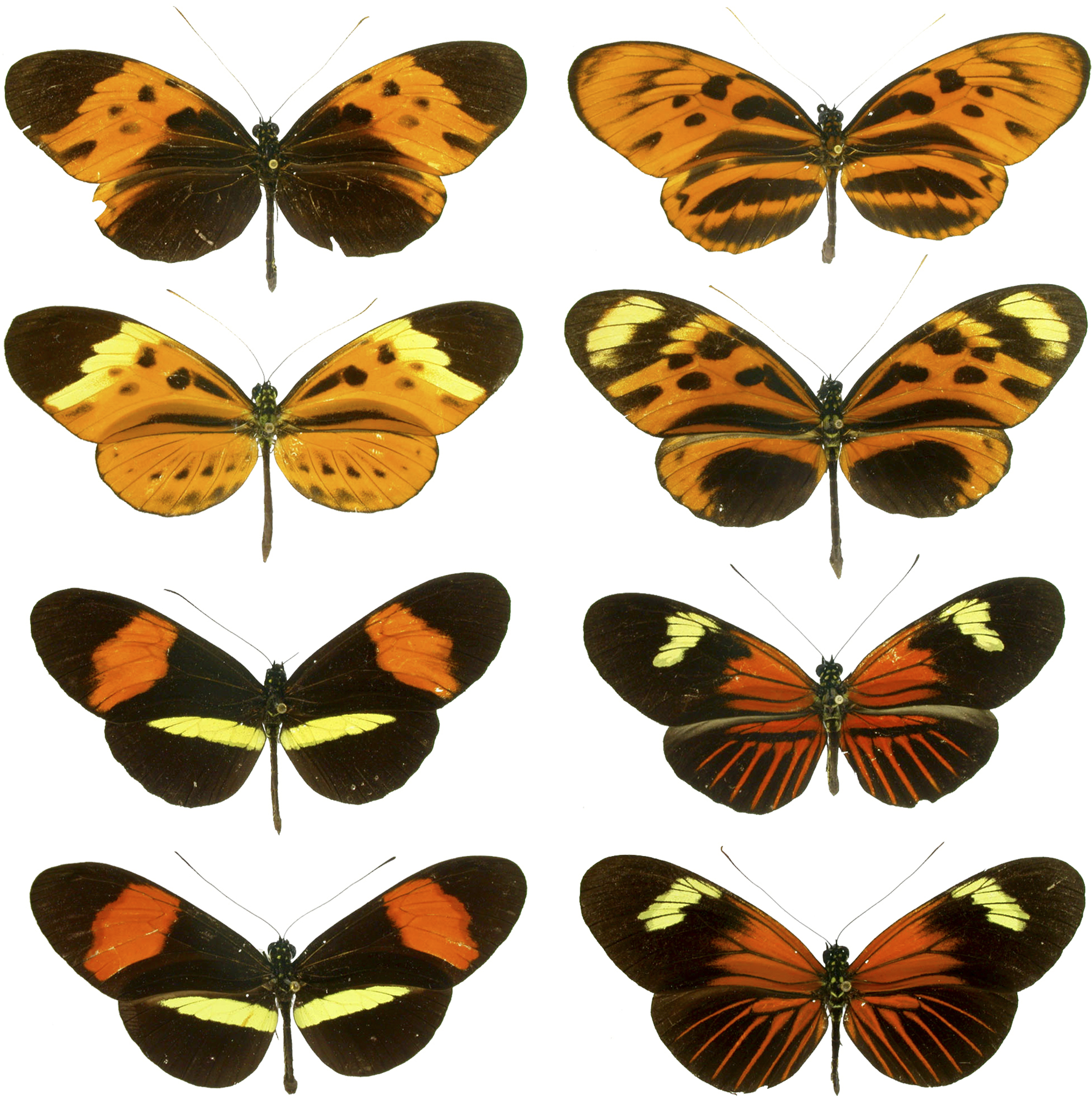
The concept of Müllerian mimicry was first articulated in 1878 by the German-Brazilian naturalist Fritz Müller. While observing the diverse butterfly populations in Brazil, Müller noticed that several species with potent chemical defenses, such as the Heliconius butterflies, shared remarkably similar wing patterns. Unlike the more commonly understood Batesian mimicry, where a harmless species mimics a dangerous one, Müller proposed that these defended species were actually mimicking each other. He argued that this shared appearance would accelerate predator learning, as a single negative experience with one species would deter predation on all others within the mimicry ring. Müller's groundbreaking insight was supported by a mathematical model demonstrating frequency-dependent selection, a novel application of quantitative methods to evolutionary biology at the time, predating much of evolutionary game theory. His work laid the foundation for understanding cooperative signaling in the natural world.
⚙️ How It Works
Müllerian mimicry operates on a principle of mutualistic advertising. Species involved in a Müllerian mimicry ring are typically unpalatable, venomous, or otherwise well-defended against predators. They evolve to display similar warning signals—often bright, contrasting colors like red, yellow, black, and white, or specific patterns. When a predator, such as a bird or primate, encounters one of these defended species and has an unpleasant experience (e.g., tasting something foul or being stung), it learns to associate that specific visual cue with danger. Crucially, because multiple species share this same cue, the predator generalizes this aversion to all individuals displaying it, regardless of their exact species. This shared learning process reduces the predation pressure on each individual species within the ring, as predators quickly learn to avoid the entire group. The effectiveness of the signal increases with the number of species participating, creating a powerful evolutionary feedback loop.
📊 Key Facts & Numbers
Studies on poison dart frogs in the genus Dendrobates have revealed mimicry rings. Brightly colored species, such as Dendrobates tinctorius and Dendrobates leucomelas, share similar aposematic patterns, despite variations in their alkaloid toxin profiles. The energetic cost of producing toxins can be significant, making shared signaling a highly efficient survival strategy, potentially saving millions of predator-prey encounters annually across ecosystems.
👥 Key People & Organizations
The naturalist Fritz Müller is the namesake and originator of the concept. His meticulous observations in Brazil provided the empirical basis for the theory. Later, evolutionary biologists like Philip J. Darlington Jr. extensively documented Müllerian mimicry in various insect groups, particularly beetles, in the mid-20th century. Researchers such as W. D. Hamilton contributed theoretical frameworks, exploring the game-theoretic aspects of cooperation in mimicry. The Smithsonian Institution has been a hub for research in this area, housing extensive collections and supporting field studies. Organizations like the Association for the Study of Animal Behaviour regularly publish findings on mimicry dynamics, fostering ongoing research into these complex evolutionary relationships.
🌍 Cultural Impact & Influence
Müllerian mimicry has permeated popular culture and scientific discourse as a prime example of evolutionary cooperation and the power of honest signaling. It's frequently cited in biology textbooks and documentaries as a testament to nature's ingenuity. The concept has inspired artistic interpretations, from the intricate patterns of Heliconius butterflies influencing textile designs to the visual language of superheroes whose costumes often employ bold, warning-like colors, echoing the principles of aposematism. Beyond biology, the idea of shared signals for collective benefit has been discussed in fields ranging from marketing (brand consistency) to social psychology (group identity formation). The elegance of this evolutionary solution highlights how even competing species can find common ground for mutual survival.
⚡ Current State & Latest Developments
Current research continues to refine our understanding of Müllerian mimicry, particularly concerning the genetic and molecular mechanisms driving signal convergence. Advances in genomics are allowing scientists to identify the specific genes responsible for producing warning pigments and patterns in species like Heliconius butterflies and poison dart frogs. Studies are also investigating the role of symbiosis and microbial communities in the production of chemical defenses, which are crucial for Müllerian mimicry. Furthermore, the impact of climate change on these delicate mimicry rings is a growing concern, as shifts in temperature and habitat could disrupt the co-evolutionary balance. Researchers are actively monitoring populations in regions like the Amazon rainforest for signs of disruption.
🤔 Controversies & Debates
One ongoing debate centers on the precise balance between mutualism and competition within mimicry rings. While all participants benefit from predator deterrence, there can be competition for resources like nectar or mates. Some researchers argue that the degree of mimicry might be influenced by the relative abundance of each species; if one species becomes overwhelmingly dominant, it might exert stronger selective pressure on others to conform to its signal, potentially leading to a form of exploitation rather than pure mutualism. Another point of discussion is the role of individual variation within a mimicry ring. While convergence is key, subtle differences might still allow predators to distinguish between species, leading to ongoing evolutionary arms races. The exact threshold for a signal to be considered 'honest' versus 'deceptive' also remains a subject of inquiry.
🔮 Future Outlook & Predictions
The future of Müllerian mimicry research will likely involve increasingly sophisticated computational modeling and field experiments. Scientists are exploring how mimicry rings might adapt to changing environments and the potential for novel mimicry complexes to emerge. The application of artificial intelligence in analyzing vast datasets of visual patterns could accelerate the discovery of new mimicry systems. Furthermore, understanding the genetic basis of these signals could have implications for conservation biology, perhaps informing strategies to protect vulnerable species by preserving their mimicry partners. As human activity continues to alter ecosystems, the resilience and adaptability of Müllerian mimicry will be a critical area of study, potentially revealing new insights into evolutionary processes under anthropogenic pressure.
💡 Practical Applications
While not directly applicable in the way a tool or technology is, the principles of Müllerian mimicry offer profound insights for various fields. In product design and branding, the concept underscores the power of consistent, clear signaling for recognition and trust. In epidemiology, the idea of a shared warning signal reducing the spread of 'danger' (disease) has conceptual parallels. In security systems, the notion of multiple layers of defense reinforcing a single alert could be inspired by this biological strategy. Even in negotiation theory, under
Key Facts
- Category
- nature
- Type
- topic