
Contents
Overview
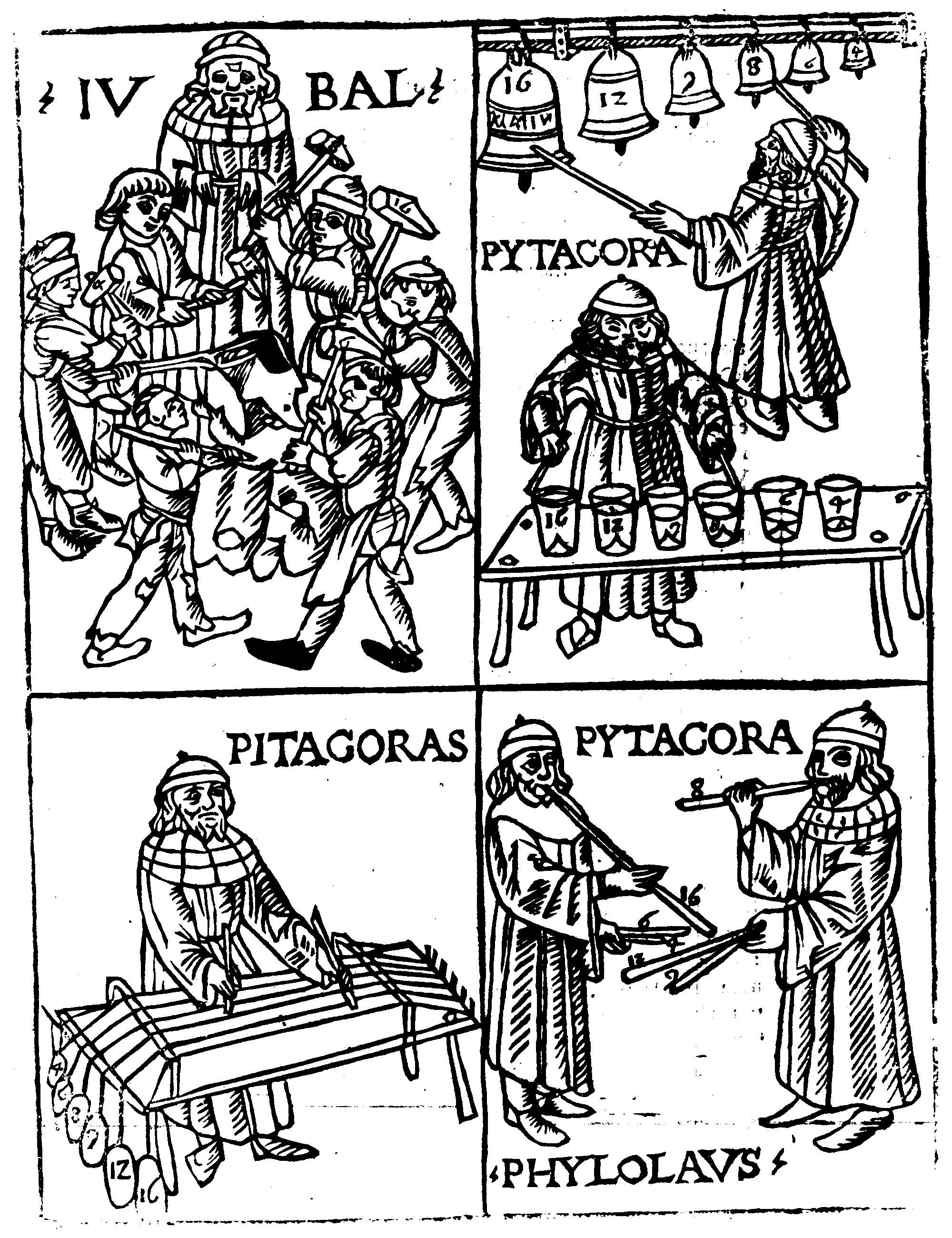
The roots of music theory stretch back to ancient civilizations. Philosophers like Pythagoras explored the mathematical relationships between musical intervals, laying the groundwork for Western harmonic concepts through his studies of string lengths and the diatonic scale. Later, thinkers in the medieval period, such as Boethius, codified these ideas, distinguishing between theoretical and practical music. The Renaissance saw a significant shift with the development of polyphony and more complex harmonic structures, documented by theorists like Gioseffo Zarlino. The Baroque era, with composers like J.S. Bach, further solidified principles of counterpoint and tonal harmony, while the Classical and Romantic periods, exemplified by Mozart and Beethoven, expanded melodic and harmonic vocabularies. The 20th century brought radical departures, with composers like Arnold Schoenberg developing atonality and serialism, challenging established theoretical frameworks.
⚙️ How It Works
At its core, music theory deconstructs music into its fundamental components. Pitch is organized into scales and modes, defining the intervallic relationships within a given musical system, such as the major scale or minor scale. Rhythm is governed by time signatures and note values, dictating the duration and accentuation of sounds. Harmony explores the simultaneous sounding of pitches, forming chords and progressions, with functional harmony describing the relationships between chords in tonal music. Melody is the linear succession of pitches, often shaped by scales and rhythmic patterns. Form refers to the overall structure of a musical piece, from simple binary form to complex sonata form. These elements are not isolated but interact dynamically, creating the rich sonic experiences we perceive, as explored in works by theorists like Henry Cowell and George Russell.
📊 Key Facts & Numbers
The diatonic scale, comprising seven notes, is the foundation for the vast majority of Western music. In jazz, the chromatic scale and its 12 semitones are paramount, with complex chord voicings often featuring extensions up to the 13th. The concept of temperament, particularly equal temperament, which divides the octave into 12 equal semitones, is used in over 95% of modern keyboard instruments. The circle of fifths, a visual representation of key relationships, is a cornerstone for understanding tonal modulation. Even in non-Western traditions, such as Indian ragas or Indonesian gamelan, intricate systems of pitch and rhythm are meticulously documented, often involving microtonal divisions not present in Western systems.
👥 Key People & Organizations
Key figures in music theory span millennia and cultures. Pythagoras is credited with early investigations into the mathematical basis of musical intervals. Claudius Ptolemy refined Greek musical theory. In the medieval era, Boethius was instrumental in transmitting Greek musical ideas. Jean-Philippe Rameau revolutionized harmonic theory in the Baroque period with his treatise 'Treatise on Harmony'. Heinz Klöstermaier was a prominent scholar of comparative music theory. Organizations like the American Musicological Society and the Royal Musical Association foster academic discourse, while institutions like the Juilliard School and the Berklee College of Music integrate theoretical training into their performance and composition programs. Online platforms like musictheory.net and Teoria.com now provide accessible educational resources to millions.
🌍 Cultural Impact & Influence
Music theory fundamentals have profoundly shaped global musical landscapes. Western tonal harmony, codified by theorists like Rameau and composers like J.S. Bach, influenced everything from classical symphonies to early rock and roll. The study of modes has seen a resurgence in genres like folk music and film scores, offering alternatives to standard major/minor tonality. Concepts from jazz theory, such as modal jazz and advanced chord progressions, have permeated contemporary R&B, hip-hop, and pop music, often through the work of innovators like Miles Davis and Herbie Hancock. The theoretical underpinnings of electronic music, including synthesis techniques and algorithmic composition, are increasingly studied, impacting genres from techno to ambient soundscapes. Even non-Western theoretical systems, like the maqam system in Arabic music or the tal system in Indian classical music, are gaining wider recognition and influence through global collaboration and digital dissemination.
⚡ Current State & Latest Developments
In 2024, music theory fundamentals are experiencing a dynamic evolution driven by technology and globalization. Online learning platforms like Coursera and Skillshare offer courses reaching millions, democratizing access to theoretical knowledge previously confined to conservatories. The rise of Digital Audio Workstations (DAWs) like Ableton Live and Logic Pro has blurred the lines between composition and theory, allowing for real-time experimentation with complex harmonies and rhythms. AI-powered music generation tools, such as Amper Music and AIVA, are beginning to incorporate theoretical principles, raising questions about authorship and creativity. Furthermore, increased cross-cultural exchange, facilitated by platforms like YouTube and SoundCloud, exposes musicians to a wider array of theoretical systems, leading to hybrid musical forms and innovative theoretical interpretations, as seen in the work of contemporary artists like Jacob Collier.
🤔 Controversies & Debates
The teaching and application of music theory fundamentals are not without controversy. A persistent debate centers on the perceived divide between 'academic' or 'classical' theory and the intuitive, often uncodified, theoretical practices of popular musicians. Critics argue that traditional theory, heavily focused on Western tonal music, fails to adequately describe or analyze genres like jazz, hip-hop, or non-Western musics, leading to a 'canonization' that marginalizes diverse musical practices. The emphasis on prescriptive rules in some pedagogical approaches is also questioned, with many advocating for more descriptive methods that analyze how music is used rather than how it should be used. The role of ear training versus theoretical knowledge is another point of contention, with some educators prioritizing aural skills over abstract concepts, a stance often championed by figures like Paul Barton. The increasing influence of AI in music creation also sparks debate about the future of theoretical study and human creativity.
🔮 Future Outlook & Predictions
The future of music theory fundamentals will likely be shaped by several key trends. The integration of AI in music analysis and composition will continue to grow, potentially leading to n
Key Facts
- Category
- culture
- Type
- topic