
Contents
Overview
The genesis of Neste traces back to 1948, established by the Finnish state as Neste Oy to secure the nation's energy supply in the post-war era. Initially focused on oil refining and distribution, the company played a crucial role in Finland's industrialization and modernization. Its early years were marked by expansion within Finland, establishing a network of gas stations and refineries. In 1968, Neste began producing lubricants, and by the 1970s, it was exploring international markets. A significant shift occurred in 2005 when the company was rebranded from Neste Oil to Neste Corporation, signaling a broader scope beyond just oil. This was further underscored by its acquisition of Fortum's oil refining business in 2004, solidifying its position in the Nordic market. The company's trajectory took a dramatic turn in the 2010s with a strategic commitment to renewable fuels, a move that has redefined its identity and global standing.
⚙️ How It Works
Neste operates a dual business model, encompassing both traditional oil refining and the production of renewable fuels. Its oil refining segment processes crude oil into various petroleum products like gasoline, diesel, and jet fuel, utilizing advanced refining technologies. However, its most significant innovation lies in its renewable products division. Neste is a world leader in producing renewable diesel (also known as HVO, or Hydrotreated Vegetable Oil) and sustainable aviation fuel (SAF). These fuels are manufactured from a variety of renewable feedstocks, including used cooking oil, animal fats, and vegetable oils. The company employs a proprietary NEXBTL (Next Generation Biomass to Liquids) technology, which efficiently converts these raw materials into high-quality, low-emission fuels that can directly replace or be blended with conventional fossil fuels. This process involves hydrotreating, where hydrogen is used to remove oxygen and impurities from the feedstock, resulting in a clean-burning fuel.
📊 Key Facts & Numbers
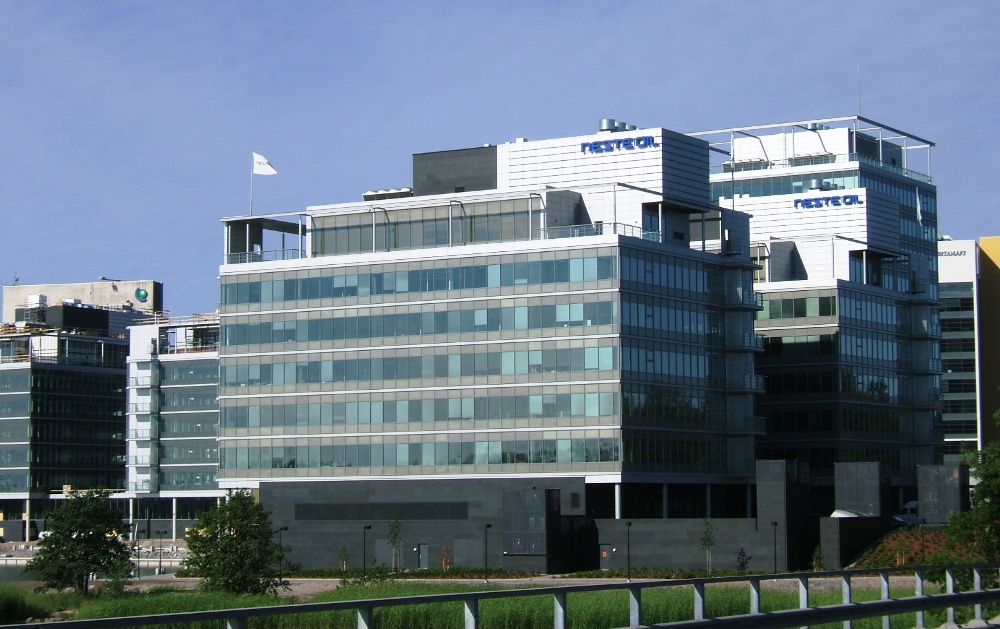
As of 2023, Neste employs over 5,000 individuals across 14 countries, with its headquarters in Espoo, Finland. The Finnish state, through the Prime Minister's Office, remains the largest shareholder, holding approximately 35.91% of the company's shares as of 2022. In 2021, Neste ranked as the third-largest company in Finland by revenue. The company's renewable diesel production capacity is substantial, with plans to expand its facilities, including a new plant in Rotterdam, Netherlands, aiming for a total renewable product capacity of 4.5 million tons per year by the end of 2023. Neste's renewable fuels reduce greenhouse gas emissions by up to 90% compared to fossil fuels over their lifecycle. The company's market capitalization fluctuates but consistently places it among the leading European energy firms.
👥 Key People & Organizations
Key figures driving Neste's transformation include Matti Lievonen, who served as CEO from 2004 to 2018 and was instrumental in steering the company towards renewable fuels. His successor, Peter Vanacker, continued this strategic direction, overseeing significant expansion in renewable production capacity. The Finnish government, as the primary shareholder, exerts significant influence through its representation on the board and its long-term energy policy objectives. Key partners and customers in the renewable fuels sector include global oil companies like Shell, ExxonMobil, and Chevron, as well as airlines such as Finnair and Lufthansa, who are increasingly adopting SAF. The company's research and development efforts are supported by numerous academic institutions and technology partners.
🌍 Cultural Impact & Influence
Neste's cultural impact is primarily felt through its pioneering role in the energy transition and the promotion of a circular economy. By transforming waste streams like used cooking oil into valuable fuels, Neste embodies the principles of sustainability and resource efficiency, influencing consumer and corporate attitudes towards environmental responsibility. Its commitment to reducing greenhouse gas emissions has positioned it as a thought leader in the fight against climate change, encouraging other industries to adopt similar practices. The company's brand has become synonymous with innovation in green energy, influencing public perception of the oil and gas sector's potential for transformation. Neste's success has also inspired other nations and corporations to invest in renewable fuel technologies and infrastructure.
⚡ Current State & Latest Developments
In 2024, Neste continues its aggressive expansion in renewable fuels. The company is focused on scaling up its production capacity for renewable diesel and SAF, with significant investments in its Porvoo refinery in Finland and its Martensville refinery in the United States. Neste has also been actively exploring new feedstock sources and advanced recycling technologies to further enhance the sustainability of its products. A key development is the ongoing integration of chemical recycling of plastics into its operations, aiming to create a truly circular economy for plastics. The company is also navigating evolving regulatory landscapes, particularly in Europe and North America, which are increasingly mandating the use of renewable fuels. Neste's strategic partnerships with major corporations across various sectors remain crucial for market penetration and product adoption.
🤔 Controversies & Debates
Neste faces considerable debate and scrutiny regarding its sustainability claims and business practices. While lauded for its renewable fuel production, critics question the sustainability of certain feedstocks, particularly palm oil derivatives, which can be linked to deforestation and land-use change. Although Neste has committed to using only sustainably sourced palm oil and has phased out its use in favor of waste and residue feedstocks, past controversies linger. Furthermore, the company's continued involvement in traditional oil refining, even as it champions renewables, draws criticism from environmental groups who advocate for a complete divestment from fossil fuels. The economic viability and scalability of renewable fuels compared to fossil fuels also remain a subject of ongoing discussion and analysis.
🔮 Future Outlook & Predictions
The future for Neste appears heavily weighted towards renewable solutions. The company aims to become a global leader in renewable and circular solutions by 2030, significantly expanding its renewable product portfolio and exploring new avenues like renewable chemicals and materials. Neste is investing heavily in chemical recycling technologies to process hard-to-recycle plastics, further embedding itself in the circular economy. Expansion into new geographic markets and the development of next-generation biofuels and synthetic fuels are also on the horizon. The company anticipates that regulatory pressures and growing consumer demand for sustainable products will continue to drive its growth, potentially positioning it as a key player in a post-fossil fuel energy landscape. However, competition from other renewable fuel producers and the pace of technological advancement will be critical factors.
💡 Practical Applications
Neste's renewable fuels have wide-ranging practical applications. Its renewable diesel is used in heavy-duty transport, including trucks, buses, and construction machinery, offering a direct 'drop-in' solution to reduce emissions without requiring engine modifications. Sustainable aviation fuel (SAF) is being adopted by airlines worldwide to decarbonize air travel, with Neste being a major supplier. The company's products are also finding use in the marine sector, helping to reduce emissions from shipping. Beyond fuels, Neste is developing renewable polymers and chemicals derived from its processes, which can be used in the manufacturing of plastics, packaging, and other consumer goods, contributing to a more circular economy. These applications are crucial for industries seeking to meet ambitious climate targets and reduce their environmental footprint.
Key Facts
- Category
- technology
- Type
- topic