
Contents
Overview
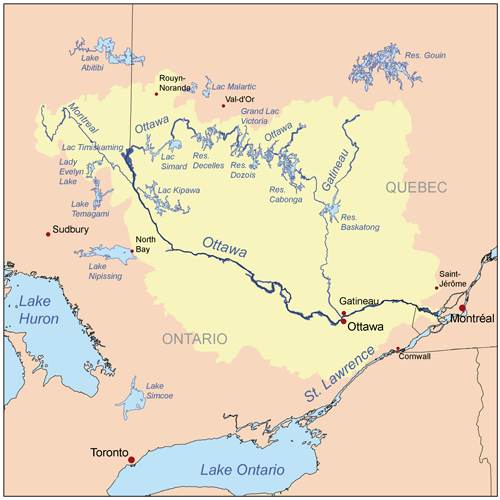
The Ottawa River, known to the Algonquin as Kichi-Sìbì or 'Great River,' is a pivotal waterway in Eastern Canada, flowing through both Ontario and Quebec and forming the provincial border for much of its course. As the longest river in Quebec and a principal tributary of the St. Lawrence River, it has been a critical artery for trade, transportation, and settlement since pre-colonial times, earning its name from the Algonquin word for 'to trade.' The river is a significant source of hydroelectric power, managed by entities like Hydro-Québec and Ontario Power Generation. Its watershed supports diverse ecosystems and a significant human population, making its health and management a continuous concern for communities along its banks.
🎵 Origins & History
The Ottawa River's story is etched in millennia of Indigenous history, particularly for the Algonquin First Nations who have long considered it the Kichi-Sìbì, or 'Great River.' Its strategic importance as a trade route, connecting the Great Lakes to the St. Lawrence River and beyond, was recognized early by European explorers and fur traders. The construction of canals and locks, such as the Rideau Canal system, further enhanced its navigability, transforming it from a natural artery into a managed transportation network. Settlements like Ottawa and Gatineau developed along its banks.
⚙️ How It Works
The Ottawa River's hydrological system is a complex interplay of natural flow and human engineering. Originating in the Laurentian Mountains of Quebec, it meanders southwest before emptying into the St. Lawrence River near Montreal. The Rapides-des-Cœurs Dam and the Carillon Dam are located on the Ottawa River. These facilities regulate water flow, control flooding, and provide a significant portion of the electricity for both provinces, fundamentally altering the river's natural dynamics.
📊 Key Facts & Numbers
The Ottawa River is the longest river in Quebec and the third-longest in Ontario. Its watershed covers an expansive area. The river's power potential has been harnessed through a series of dams and hydroelectric generating stations, providing substantial power to Ontario and Quebec.
👥 Key People & Organizations
The management and stewardship of the Ottawa River involve a confluence of governmental bodies, Indigenous communities, and environmental organizations. Key provincial entities include Hydro-Québec and Ontario Power Generation, responsible for hydroelectric infrastructure and power generation. The Ottawa Riverkeeper is a prominent environmental non-profit dedicated to protecting the river's health through advocacy, education, and monitoring. Indigenous communities, such as the Algonquin Anishinaabeg Nation Tribal Council, continue to assert their historical rights and advocate for responsible stewardship of their ancestral lands and waters. Federal agencies like Environment and Climate Change Canada also play a role in water quality and conservation efforts.
🌍 Cultural Impact & Influence
The Ottawa River has profoundly shaped the cultural identity of Eastern Canada. It served as a central highway for Indigenous peoples for millennia, influencing their settlement patterns and economies. For European settlers, it was the lifeblood of the logging industry, immortalized in folk songs and stories of river drivers. The river valley is home to significant historical sites and cultural landmarks, including the Canadian Museum of History in Gatineau, which overlooks the confluence of the Ottawa and Gatineau Rivers. Its scenic beauty has inspired countless artists and photographers, contributing to the region's aesthetic appeal. The river's presence is deeply woven into the fabric of life for communities in Ottawa, Gatineau, and numerous smaller towns, influencing everything from recreation to local folklore.
⚡ Current State & Latest Developments
In recent years, the Ottawa River has been the focus of intensified efforts to address water quality and ecological health. Concerns over pollution from agricultural runoff, industrial discharge, and urban wastewater remain significant challenges, prompting initiatives like the Ottawa Riverkeeper's ongoing monitoring programs and advocacy for stricter regulations. The ongoing operation and potential upgrades to hydroelectric dams by Hydro-Québec and Ontario Power Generation continue to be a subject of discussion, particularly regarding their impact on fish habitats and riverine ecosystems. Climate change is also emerging as a critical factor, with potential impacts on water levels, flow rates, and the frequency of extreme weather events, necessitating adaptive management strategies.
🤔 Controversies & Debates
The management of the Ottawa River is not without its controversies, primarily centering on environmental concerns and resource allocation. Debates frequently arise regarding the impact of hydroelectric dams on fish populations and riverine ecosystems, with groups like the Ottawa Riverkeeper advocating for improved fish passage and habitat restoration. Water quality remains a persistent issue, with ongoing debates about the sources and mitigation of pollutants from agricultural, industrial, and municipal sources. Indigenous rights and co-management of the river are also areas of contention, as First Nations assert their historical and treaty rights to the watershed. Furthermore, the balance between energy production by Hydro-Québec and Ontario Power Generation and the preservation of the river's natural state is a continuous point of discussion.
🔮 Future Outlook & Predictions
The future of the Ottawa River will likely be shaped by the escalating impacts of climate change and the ongoing pursuit of sustainable resource management. Projections suggest potential shifts in precipitation patterns and snowmelt, which could alter the river's flow regimes and increase the risk of both floods and droughts, posing challenges for Hydro-Québec and Ontario Power Generation's dam operations. Increased focus on ecological restoration and biodiversity conservation is anticipated, driven by organizations like the Ottawa Riverkeeper and Indigenous communities seeking to revitalize the river's health. The development of new, less impactful renewable energy sources and innovative wastewater treatment technologies could also play a role in mitigating pollution and ensuring the long-term vitality of this critical waterway.
💡 Practical Applications
The Ottawa River serves multiple practical functions, central to the economies and daily lives of millions. Its most significant application is as a massive source of hydroelectric power, generated by numerous dams operated by Hydro-Québec and Ontario Power Generation, providing electricity to Ontario and Quebec. The river is also a crucial transportation corridor, particularly for commercial shipping and recreational boating, with systems like the Rideau Canal facilitating passage. Its waters are a vital source for municipal drinking water for cities like Ottawa and Gatineau, necessitating stringent water quality management. Furthermore, the river supports significant recreational activities, including fishing, kayaking, and tourism, contributing substantially to the regional economy.
Key Facts
- Category
- nature
- Type
- topic