
Contents
- 🎵 Origins & History
- ⚙️ How It Works
- 📊 Key Facts & Numbers
- 👥 Key People & Organizations
- 🌍 Cultural Impact & Influence
- ⚡ Current State & Latest Developments
- 🤔 Controversies & Debates
- 🔮 Future Outlook & Predictions
- 💡 Practical Applications
- 📚 Related Topics & Deeper Reading
- Frequently Asked Questions
- References
- Related Topics
Overview
The study of planetary atmospheres traces its roots back to early astronomical observations, but the modern scientific understanding began to coalesce in the late 19th and early 20th centuries with advancements in spectroscopy. Early astronomers like William Huggins used spectral analysis to infer the composition of celestial bodies, laying the groundwork for understanding what gases might constitute distant worlds. The formalization of atmospheric science, particularly for Earth, was heavily influenced by meteorologists and geophysicists such as Carl Sagan, who famously applied Earth-based atmospheric principles to infer the conditions on Venus and Mars. The space age, commencing with the launch of Sputnik 1 in 1957, revolutionized the field by enabling direct measurements. Missions like Mariner to Venus and Mars, and later the Pioneer and Voyager probes to the outer planets, provided unprecedented data, transforming our view from speculative inference to empirical science. The discovery of Venus's runaway greenhouse effect by Dorothy Hodgkinson and Charles Hard Townes in the 1960s, using radar astronomy, was a pivotal moment, highlighting the dramatic potential of atmospheric composition.
⚙️ How It Works
Planetary atmospheres are formed through a combination of primordial accretion during a planet's formation and subsequent outgassing from the planet's interior, a process known as secondary atmosphere formation. Gravity is the primary force retaining these gases, with higher mass and lower temperature generally favoring a more substantial and enduring atmosphere. External factors like stellar wind, solar radiation, and impacts from asteroids and comets also play crucial roles in shaping atmospheric composition and density. For instance, a planet's magnetic field, or lack thereof, significantly impacts atmospheric retention by deflecting charged solar particles that can strip away lighter gases. Photochemical reactions, driven by stellar energy, can transform atmospheric constituents, creating complex molecules and altering the atmospheric profile over geological timescales. The presence of liquid water on a planet's surface can also profoundly influence its atmosphere through processes like evaporation and the formation of oceans, as seen on Earth.
📊 Key Facts & Numbers
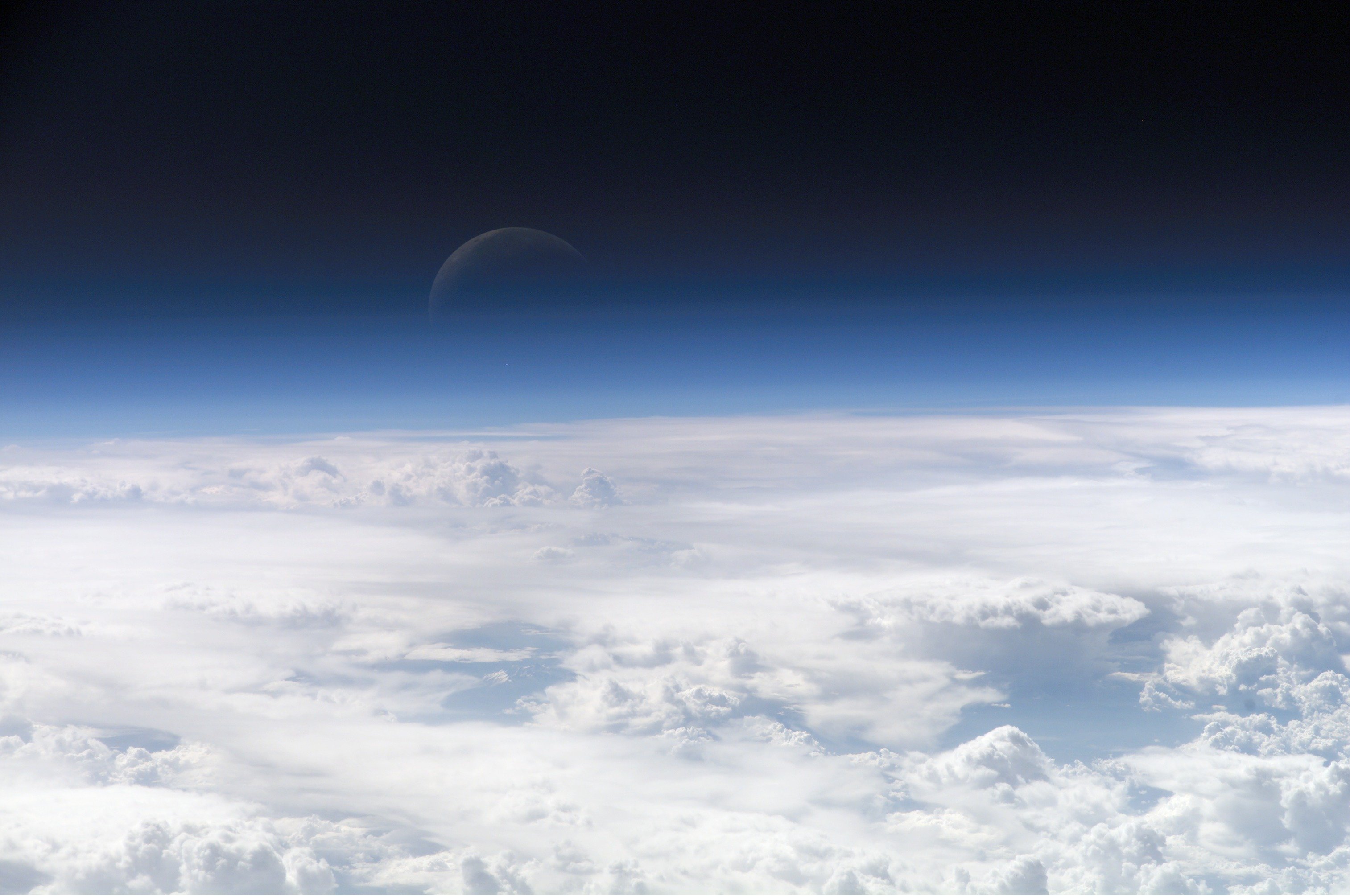
The atmospheres of our solar system's planets exhibit staggering diversity. Earth's atmosphere, a unique nitrogen-oxygen mix (78% N₂, 21% O₂), maintains a surface pressure of approximately 101.3 kilopascals (kPa) and supports life. In stark contrast, Venus boasts an atmosphere over 90 times denser than Earth's, dominated by carbon dioxide (96.5%) and resulting in surface temperatures exceeding 460°C (860°F). Mars has a thin atmosphere, less than 1% of Earth's pressure, composed mainly of carbon dioxide (95.3%). The gas giants present another extreme: Jupiter's atmosphere is 90% hydrogen and 10% helium, with a pressure at the cloud tops of about 100 kPa, while Saturn's is similarly composed but less dense. Uranus and Neptune, the ice giants, have atmospheres rich in hydrogen, helium, and methane, contributing to their blue hues. Even moons can possess atmospheres, such as Titan, Saturn's largest moon, which has a dense nitrogen atmosphere with a surface pressure 1.5 times that of Earth.
👥 Key People & Organizations
Key figures in the study of planetary atmospheres span centuries and disciplines. Galileo Galilei's early telescopic observations hinted at atmospheric phenomena on other planets. Later, Christiaan Huygens accurately described Saturn's rings and speculated about atmospheres. James Clerk Maxwell's work on the kinetic theory of gases provided a theoretical foundation for understanding atmospheric behavior. In the 20th century, Svante Arrhenius explored the role of carbon dioxide in planetary temperatures, a concept now central to understanding Venus and Earth's climate change. Vera Rubin's work on galactic rotation indirectly informed our understanding of the dynamics within massive atmospheres. Today, organizations like NASA, the European Space Agency (ESA), and the Japan Aerospace Exploration Agency (JAXA) lead major atmospheric research missions, employing thousands of scientists and engineers, including prominent figures like Andrew Ingersoll and David Grinspoon, who continue to push the boundaries of our knowledge.
🌍 Cultural Impact & Influence
Planetary atmospheres have captivated the human imagination for millennia, influencing mythology, philosophy, and art. The visible features of planets, such as Jupiter's Great Red Spot or Saturn's rings (which are surrounded by a tenuous atmosphere), have been subjects of wonder and scientific inquiry. Science fiction has extensively explored the implications of alien atmospheres, from the breathable air of Star Trek's Federation worlds to the toxic miasma of Dune's Arrakis. The discovery of exoplanet atmospheres, particularly those of TRAPPIST-1 planets, has fueled speculation about extraterrestrial life and the diversity of planetary conditions beyond our solar system. The ongoing debate about climate change on Earth is deeply intertwined with our understanding of planetary atmospheric physics, drawing parallels and contrasts with phenomena observed on Venus and Mars. This has led to a growing public awareness and engagement with atmospheric science, often driven by stunning imagery from space probes and the profound existential questions they raise.
⚡ Current State & Latest Developments
Current research in planetary atmospheres is intensely focused on exoplanets and the search for biosignatures. The James Webb Space Telescope (JWST) is revolutionizing this field, providing unprecedented detail on the atmospheric composition of exoplanets, detecting molecules like water, methane, and carbon dioxide. Missions like NASA's MOXIE instrument on the Perseverance rover are actively demonstrating the feasibility of generating oxygen from the Martian atmosphere, a critical step for future human exploration. Scientists are also refining atmospheric models to better understand phenomena like atmospheric escape, cloud formation on distant worlds, and the complex dynamics of super-Earths and mini-Neptunes. The study of Earth's own atmosphere continues, with a focus on improving climate models and understanding the impacts of anthropogenic emissions, drawing on lessons learned from studying other planets' atmospheric histories. The recent detection of phosphine in Venus's atmosphere by researchers at MIT (though debated) highlights the ongoing potential for surprising discoveries even within our own solar system.
🤔 Controversies & Debates
Significant controversies persist in planetary atmospheric science. The detection of phosphine on Venus in 2020, initially hailed as potential evidence for life, remains highly debated, with subsequent studies questioning the data's interpretation and the chemical pathways involved. The exact mechanisms driving the atmospheric circulation on Jupiter and Saturn, particularly the longevity and behavior of storms like the Great Red Spot, are still subjects of active research and model refinement. Furthermore, the long-term habitability of exoplanets hinges on understanding the stability and evolution of their atmospheres, a complex predictive challenge. The role of atmospheric dynamics in the formation and evolution of planetary systems themselves is another area where consensus is still developing, with ongoing discussions about how early atmospheric conditions influence a planet's ultimate fate. The interpretation of remote sensing data, especially for exoplanets, often involves significant uncertainties, leading to differing conclusions among research groups.
🔮 Future Outlook & Predictions
The future of planetary atmosphere research is inextricably linked to the exploration of exoplanets and the continued characterization of our own solar system. The next generation of telescopes, both ground-based and space-borne, will offer even greater sensitivity to detect trace gases and potential biosignatures in exoplanet atmospheres. Missions to the outer planets, such as NASA's Dragonfly to Titan and potential future missions to Uranus and Neptune, promise to unveil new details about their unique atmospheric compositions and dynamics. Advanced climate modeling, incorporating machine learning and AI, will enable more accurate predictions of atmospheric evolution under various conditions, including the impact of stellar activity and internal planetary processes. The long-term goal of establishing human outposts on Mars necessitates a deep understanding of its atmosphere for resource utilization (e.g., oxygen production) and protection from radiation. The potential for discovering life, or evidence of past life, in the atmospheres of ocean worlds like Europa or Enceladus remains a tantalizing prospect driving future exploration.
💡 Practical Applications
Understanding planetary atmospheres has direct practical applications, primarily in the context of Earth's climate and space exploration. Detailed atmospheric models, informed by studies of other planets, are essential for predicting Earth's climate change and developing mitigation strategies. For space missions, knowledge of atmospheric composition and density is critical for designing entry, descent, and landing systems (EDL) for probes and future human missions, such as those planned for Mars. The ability to extract resources from alien atmospheres, like generating oxygen on Mars using MOXIE, is a key enabler for long-duration human presence beyond Earth. Furthermore, studying atmospheric phenomena on other planets can provide insights into fundamental physics and chemistry, potentially leading to unforeseen technological advancements. The remote sensing techniques developed for planetary atmospheres also find applications in terrestrial environmental monitoring.
Key Facts
- Year
- Ongoing
- Origin
- Earth
- Category
- science
- Type
- concept
Frequently Asked Questions
What is a planetary atmosphere and how is it held in place?
A planetary atmosphere is a layer of gases surrounding a celestial body, such as a planet or moon, held in place by the body's gravitational pull. The strength of this gravity, influenced by the object's mass and density, determines how effectively it can retain its gaseous envelope. Factors like temperature also play a role; colder bodies can hold onto lighter gases more easily than warmer ones. The Sun's solar wind can also strip away atmospheres, a process mitigated by a planet's magnetic field, as seen with Earth and Mars.
Why are planetary atmospheres so different from each other?
The diversity in planetary atmospheres stems from a complex interplay of formation history, planetary mass, distance from the star, geological activity, and the presence of a magnetic field. For instance, Venus's proximity to the Sun and lack of a strong magnetic field led to a runaway greenhouse effect, creating its dense, scorching atmosphere. Mars, being smaller and further from the Sun, lost much of its early atmosphere due to lower gravity and solar wind stripping. The gas giants like Jupiter formed in colder regions of the solar system, accreting vast amounts of hydrogen and helium, while terrestrial planets like Earth developed thinner atmospheres through outgassing and biological processes. Each planet's unique evolutionary path dictates its atmospheric composition and pressure.
How do scientists study atmospheres on other planets?
Scientists employ a variety of methods to study planetary atmospheres. Remote sensing, using telescopes like the Hubble Space Telescope and the James Webb Space Telescope, analyzes the light that passes through or is reflected by an atmosphere to determine its chemical composition, temperature, and cloud structure. Space probes, such as Cassini to Saturn and Curiosity on Mars, conduct in-situ measurements using spectrometers, mass spectrometers, and other instruments. Entry probes, like the Huygens probe that landed on Titan, descend through the atmosphere, providing direct data on pressure, temperature, and wind speed. Atmospheric models, developed using data from these sources, help interpret observations and predict atmospheric behavior.
What is a 'runaway greenhouse effect' and how does it relate to planetary atmospheres?
A runaway greenhouse effect occurs when atmospheric gases, primarily carbon dioxide, trap so much heat from a star that the planet's surface temperature rises uncontrollably, leading to a drastic and irreversible change in atmospheric conditions. This process is believed to have occurred on Venus, transforming it into an inferno with surface temperatures exceeding 460°C (860°F). On Earth, while greenhouse gases like methane and CO₂ contribute to warming, our planet's distance from the Sun, presence of liquid water, and biological processes have so far prevented a runaway scenario, though concerns about anthropogenic climate change highlight the potential for significant atmospheric shifts.
Can we find signs of life in planetary atmospheres?
Yes, scientists actively search for 'biosignatures' in planetary atmospheres, which are gases or combinations of gases that are unlikely to exist without biological processes. For example, the simultaneous presence of oxygen and methane in significant quantities on Earth is a strong biosignature, as these gases react with each other and require constant replenishment by life. Researchers are using advanced telescopes like the JWST to analyze the atmospheres of exoplanets for such indicators. While no definitive biosignatures have been confirmed on other planets yet, the detection of molecules like phosphine on Venus (though debated) has fueled excitement and further research into potential extraterrestrial life.
How does studying other planets' atmospheres help us understand Earth's?
Studying other planets' atmospheres provides invaluable comparative context for understanding Earth's own atmospheric processes and climate. By observing planets with vastly different conditions—like the extreme greenhouse effect on Venus or the thin, cold atmosphere of Mars—scientists can test and refine atmospheric models. This helps identify the critical factors that make a planet habitable or inhospitable. For instance, understanding how Venus lost its water and developed its dense CO₂ atmosphere offers stark warnings about the potential consequences of unchecked greenhouse gas accumulation on Earth. Conversely, studying the atmospheric dynamics of gas giants like Jupiter can inform our understanding of large-scale weather patterns and energy transport.
What are the biggest challenges in studying exoplanet atmospheres?
The primary challenge in studying exoplanet atmospheres is their immense distance, making direct observation incredibly difficult. Exoplanets are typically detected indirectly, and their atmospheres are studied by analyzing faint light signals that have passed through them. This requires extremely sensitive instruments, like the JWST, and sophisticated data analysis techniques to disentangle the atmospheric signal from the star's light. Distinguishing between potential biosignatures and abiotic chemical processes is another major hurdle, as many gases can be produced by non-biological means. Furthermore, the diversity of exoplanet types means that atmospheric models must be adapted and developed for a wide range of conditions, from hot Jupiters to rocky super-Earths.