
Contents
Overview
The precise genesis of poker is a subject of much debate, but its lineage can be traced through several ancient card games. The earliest known precursor is likely the Persian game As-Nas, which involved bluffing and betting with a 25-card deck. By the early 19th century, a game resembling modern poker, often called 'Poque' or 'Pochspiel,' emerged in German communities, and its variations were brought to North America by French and Spanish settlers. The game truly took root along the Mississippi River. The introduction of the 52-card deck and the development of draw poker and stud poker variants in the mid-19th century solidified its structure, paving the way for its widespread adoption and evolution into the diverse forms played today.
⚙️ How It Works
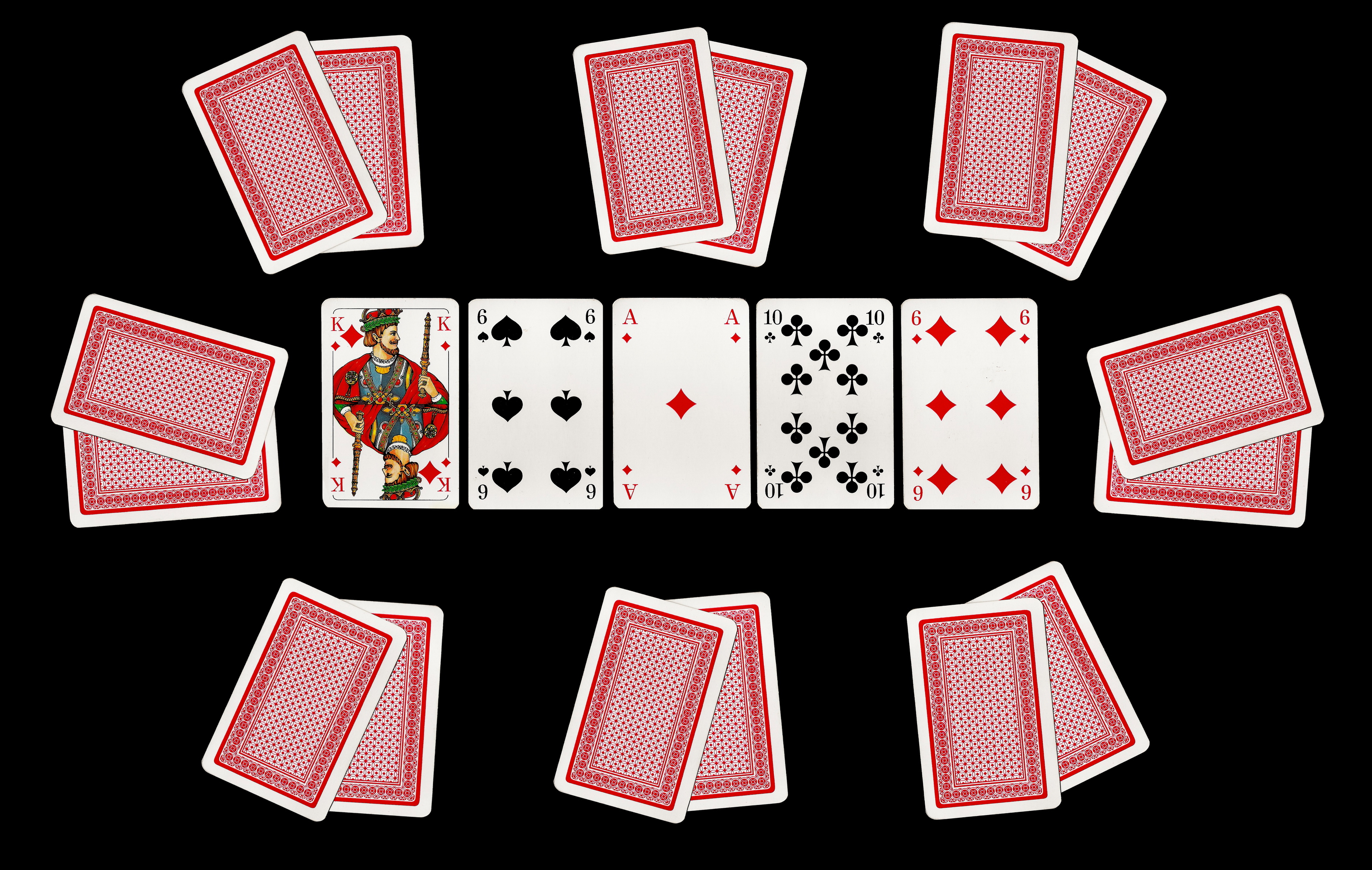
At its heart, poker is a game of incomplete information where players bet on the relative strength of their hands. Players are dealt a set number of cards, some face down and some face up, depending on the specific variant (e.g., Texas Hold'em, Seven-Card Stud). The game proceeds through multiple betting rounds, initiated by a forced bet (an ante or a blind). Players then have the option to 'call' (match the current bet), 'raise' (increase the bet), or 'fold' (discard their hand and forfeit the current pot). The objective is to win the pot, either by having the best hand at the showdown or by convincing all other players to fold. Hand rankings, from high card to royal flush, are universally standardized, though the specific betting structures and card distributions vary widely across different poker variants.
📊 Key Facts & Numbers
Poker's global reach is staggering, with an estimated 100 million players worldwide. The World Series of Poker (WSOP), first held in 1970, has awarded over $3.8 billion in prize money to date. In 2023, the WSOP Main Event alone saw a record-breaking 10,043 entrants, with the winner taking home $12.1 million. Online poker platforms like partypoker and 888poker facilitate millions of hands daily, generating billions in revenue annually; for instance, the global online poker market was valued at approximately $70 billion in 2022. Professional poker players can earn millions annually, with top earners like Justin Bonomo having career live tournament winnings exceeding $60 million.
👥 Key People & Organizations
Numerous figures have shaped poker's landscape. Early pioneers like Johnny Moss, the first three-time WSOP Main Event champion, and Doyle Brunson, author of the seminal 'Super/System,' laid the groundwork for professional play. More recently, players like Daniel Negreanu and Phil Ivey have become household names, known for their exceptional skill and charisma. Organizations such as the Poker Players Alliance advocate for players' rights, while major tournament organizers like Caesars Entertainment (owner of the WSOP) and partypoker LIVE drive the competitive scene. The rise of online poker also saw the emergence of influential platforms like The Stars Group (parent company of PokerStars).
🌍 Cultural Impact & Influence
Poker's cultural footprint extends far beyond the felt. It has been a recurring theme in literature, film, and television, from classic Westerns depicting saloon games to modern dramas like 'Rounders' (1998) and the acclaimed series 'The Sopranos.' The game's inherent drama—the bluff, the bad beat, the triumphant win—makes it a compelling narrative device. Poker has also influenced economic and game theory studies, with concepts like expected value and game theory optimal (GTO) strategies being rigorously analyzed. The 'poker face' has become a common idiom, signifying emotional control and inscrutability in any high-stakes situation. Its association with risk-taking and strategic thinking has also permeated popular culture, influencing everything from advertising to political commentary.
⚡ Current State & Latest Developments
The poker world is in a constant state of flux, driven by technological advancements and evolving player demographics. The proliferation of online poker, particularly in regulated markets across the United States and Europe, continues to grow, with platforms like BetMGM Poker and WSOP.com expanding their offerings. Live tournament circuits, such as the European Poker Tour (EPT) and the World Poker Tour (WPT), are experiencing a resurgence post-pandemic, attracting record numbers of participants. Innovations in poker software, including AI-driven training tools and advanced hand tracking, are also becoming more sophisticated, influencing how players learn and strategize. The integration of cryptocurrencies into poker platforms is another emerging trend, offering new payment methods and potentially altering the economic landscape of the game.
🤔 Controversies & Debates
Poker is not without its controversies. The legality of online poker remains a contentious issue in many jurisdictions, particularly in the United States, where the Wire Act and state-by-state regulations create a complex legal environment. Cheating, both online (e.g., collusion, bots) and live (e.g., chip dumping, marked cards), is a persistent concern, leading to stringent security measures and ongoing debates about detection and enforcement. The addictive nature of gambling, including poker, also raises significant ethical questions, prompting calls for stricter responsible gaming measures and increased player protection. Furthermore, the increasing sophistication of AI in poker sparks debate about the future of human versus machine play and the very definition of skill in the game.
🔮 Future Outlook & Predictions
The future of poker appears to be a blend of technological integration and continued accessibility. AI development will likely continue to push the boundaries of optimal strategy, potentially leading to new training methodologies for human players. The expansion of regulated online poker markets globally is expected, bringing more players into the fold and increasing tournament prize pools. We may also see further integration of augmented reality (AR) and virtual reality (VR) technologies, offering more immersive live and online poker experiences. The growth of poker as a spectator sport, amplified by streaming platforms like Twitch.tv, suggests a sustained interest in high-level play and the personalities that drive it. The challenge will be balancing innovation with player protection and maintaining the game's integrity.
💡 Practical Applications
Poker's principles of probability, risk assessment, and strategic decision-making have practical applications beyond the card table. In business, understanding concepts like bluffing, reading opponents, and managing risk is crucial for negotiations, investments, and strategic planning. Economists and mathematicians use poker as a model for studying game theory, decision-making under uncertainty, and the dynamics of markets. In psychology, poker is used to study cognitive biases, emotional regulation, and personality traits. Furthermore, the skills honed in poker—patience, discipline, analytical thinking, and the ability to adapt to changing circumstances—are transferable to many professional and personal endeavors, from software development to project management.
Key Facts
- Category
- culture
- Type
- topic