
Contents
Overview
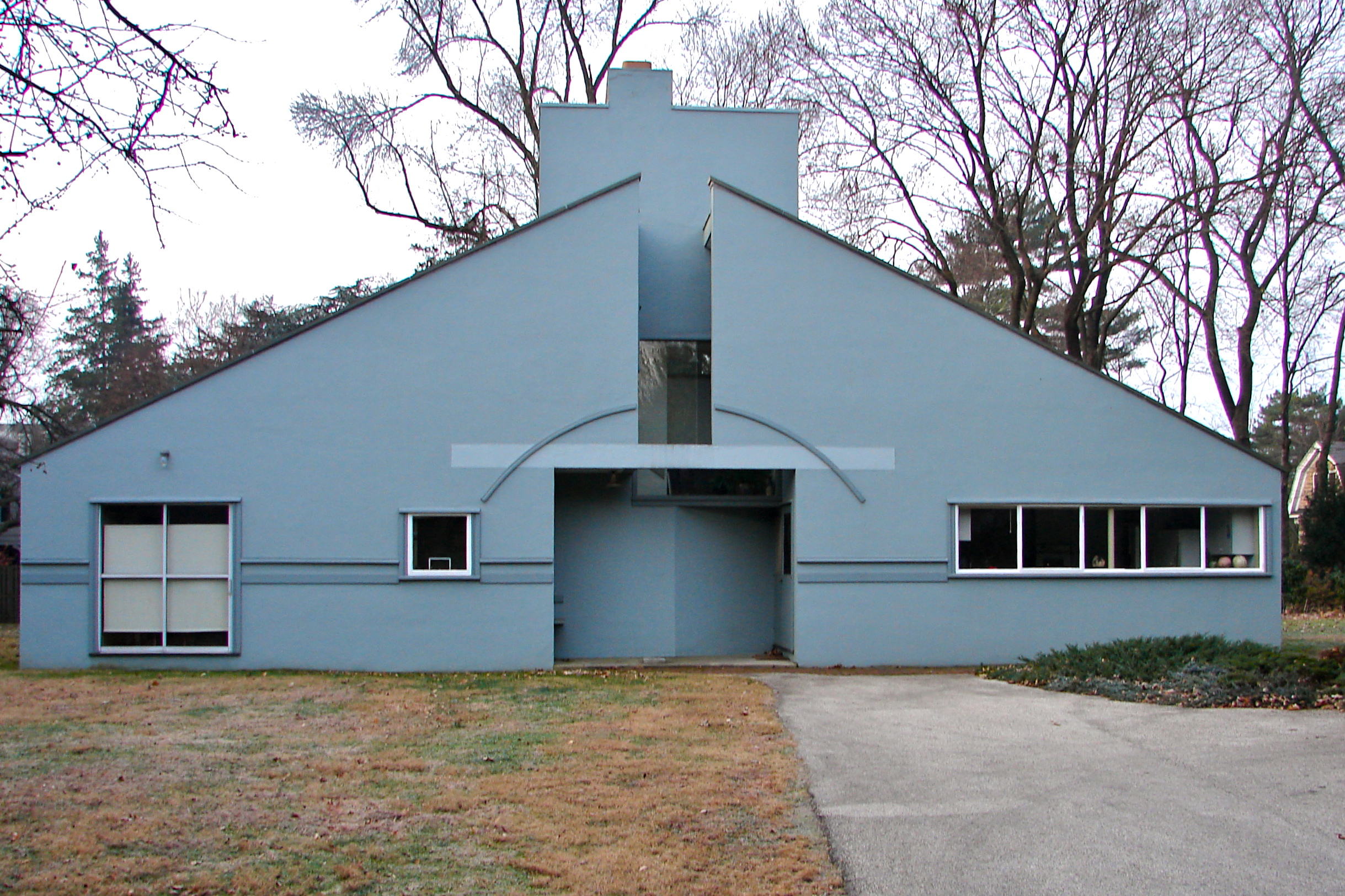
The seeds of Postmodern architecture were sown in the mid-20th century as a reaction against the perceived sterile functionalism and universalizing tendencies of Modernism. While the International Style, heavily promoted by figures like Philip Johnson and Henry-Russell Hitchcock, dominated post-war design with its emphasis on clean lines and lack of ornamentation, a growing dissatisfaction began to surface. Architectural theorist Robert Venturi articulated this dissent in his seminal 1966 book, Complexity and Contradiction in Architecture, arguing for a more nuanced and inclusive approach that embraced "messy vitality" over simplistic purity. This was further developed by Denise Scott Brown and Venturi in their 1972 manifesto, Learning from Las Vegas, which famously advocated for learning from the vernacular and even the kitsch of commercial strips, directly challenging the modernist disdain for popular culture and historical styles. Early proponents like Piero Portaluppi and Gualtiero Galmanini in Italy also experimented with historical allusions and decorative elements, laying groundwork for the movement's eventual explosion in the 1980s.
⚙️ How It Works
Postmodern architecture operates by deliberately subverting and reinterpreting modernist principles. Instead of adhering to strict functionalism, it often employs historical styles, ornamentation, and symbolic elements in a playful, ironic, or even contradictory manner. This can manifest as the juxtaposition of disparate materials, the use of exaggerated forms, or the incorporation of classical motifs like columns and pediments in unexpected ways, as seen in Michael Graves's Portland Building. Architects often engage in a form of "pasticomedy," referencing past architectural languages without necessarily adhering to their original structural or symbolic logic. This approach allows for buildings that are not only functional but also communicative, capable of conveying multiple meanings and engaging the viewer on an emotional and intellectual level, moving beyond the purely utilitarian concerns of their modernist predecessors.
📊 Key Facts & Numbers
Postmodern architecture saw its peak influence between the 1980s and 1990s, with thousands of significant buildings constructed globally. For instance, the AT&T Building (now 550 Madison Avenue) in New York, designed by Philip Johnson and completed in 1984, famously features a broken pediment, a direct nod to historical styles. The Piazza d'Italia in New Orleans, designed by Charles Moore and completed in 1978, is a vibrant public space utilizing a collage of classical architectural elements in brightly colored stainless steel and neon, attracting over 100,000 visitors annually. By the late 1990s, an estimated 70% of new commercial buildings in the United States incorporated at least some postmodern design elements, reflecting its widespread adoption and commercial success.
👥 Key People & Organizations
Key figures instrumental in shaping Postmodern architecture include Robert Venturi and Denise Scott Brown, whose theoretical writings provided the intellectual framework for the movement. Philip Johnson, initially a proponent of the International Style, famously pivoted to postmodernism with his design for the AT&T Building. Michael Graves became a leading figure with commissions like the Portland Building (1982) and the Denver Public Library (1995). Charles Moore is celebrated for his whimsical and historically evocative designs, such as the Piazza d'Italia and the Chiat/Day Building. Other influential architects include Terry Farrell, Aldric Becker, and Robert Stern, who further developed and popularized the style through their built works and writings. Organizations like the Museum of Modern Art played a crucial role in disseminating these ideas through exhibitions and publications.
🌍 Cultural Impact & Influence
The cultural impact of Postmodern architecture is profound, extending beyond the built environment to influence broader aesthetic sensibilities. It democratized architectural discourse by embracing popular culture and historical references, making buildings more accessible and relatable to the general public. This led to a surge in visually eclectic and often controversial designs that sparked widespread debate and media attention, a stark contrast to the often-impersonal nature of modernist structures. Postmodernism's embrace of irony and pastiche also found resonance in other art forms, contributing to a broader cultural shift towards self-awareness and commentary. Its influence can be seen in the revival of decorative elements and historical styles in subsequent architectural movements, demonstrating its lasting imprint on how we perceive and interact with our surroundings.
⚡ Current State & Latest Developments
While the peak of Postmodern architecture's dominance waned by the early 2000s, its influence persists, and a re-evaluation of its contributions is underway. Many buildings once criticized for their perceived excesses are now being recognized for their historical significance and unique character, leading to preservation efforts and adaptive reuse projects. Contemporary architects, while often moving towards new aesthetic paradigms like Neo-futurism or Deconstructivism, still engage with postmodern ideas of context, symbolism, and historical dialogue. The ongoing debate about the legacy of postmodernism, particularly concerning its commercialization and perceived superficiality, continues to shape architectural discourse, ensuring its relevance in understanding the evolution of design thinking in the late 20th and early 21st centuries.
🤔 Controversies & Debates
The primary controversy surrounding Postmodern architecture centers on its perceived departure from modernist ideals of truth to materials, functionalism, and social purpose. Critics often derided its use of historical pastiche and applied ornament as superficial, dishonest, and lacking genuine innovation. The commercial success of postmodernism also led to accusations of pandering to developers and a dilution of architectural integrity, with many buildings seen as prioritizing flashy aesthetics over substantive design. Furthermore, the movement's embrace of irony and ambiguity was sometimes interpreted as a lack of seriousness or a failure to address pressing social and environmental issues. This led to a significant backlash, with many architects and critics advocating for a return to more rigorous and socially conscious design principles, fueling a vigorous debate that continues to this day.
🔮 Future Outlook & Predictions
The future of Postmodern architecture lies less in the construction of entirely new postmodernist structures and more in the critical re-engagement with its principles. As the initial backlash subsides, there's a growing appreciation for the movement's embrace of context, historical dialogue, and the communicative power of design. Future developments may see architects selectively drawing from postmodernism's toolkit—its willingness to engage with popular culture, its use of symbolic forms, and its playful approach to materials—while integrating these with contemporary concerns like sustainability and digital fabrication. The ongoing preservation and adaptive reuse of significant postmodern buildings suggest a lasting impact, ensuring that its lessons, both positive and negative, will continue to inform architectural education and practice for decades to come, potentially influencing new hybrid styles that blend historical resonance with future-forward innovation.
💡 Practical Applications
Postmodern architecture's principles have found application in a wide array of building types, demonstrating its versatility beyond monumental structures. Its emphasis on context and historical reference has been particularly useful in urban infill projects and renovations, where new buildings need to harmonize with existing streetscapes, such as in the revitalization of historic districts. The use of symbolic elements and vibrant colors has also been applied to public buildings like libraries, museums, and ci
Key Facts
- Category
- aesthetics
- Type
- topic