
Contents
- 📊 Origins & History
- 📈 How It Works
- 📊 Key Facts & Numbers
- 👥 Key People & Organizations
- 🌍 Cultural Impact & Influence
- ⚡ Current State & Latest Developments
- 🤔 Controversies & Debates
- 🔮 Future Outlook & Predictions
- 💡 Practical Applications
- 📚 Related Topics & Deeper Reading
- Frequently Asked Questions
- References
- Related Topics
Overview
The price to earnings ratio, also known as P/E ratio, is a widely used metric for evaluating the value of a company's stock. It is calculated by dividing the company's share price by its earnings per share, providing insight into whether a company is overvalued or undervalued. With a formula of P/E = Share Price / Earnings per Share, this ratio is essential for investors, analysts, and financial professionals to assess a company's performance and make informed decisions. For instance, a company like Apple Inc. with a high P/E ratio may indicate strong growth prospects, while a company like General Motors with a lower P/E ratio may suggest undervaluation. The P/E ratio is also influenced by industry trends, with sectors like technology and healthcare often having higher P/E ratios due to their growth potential. As of 2024, the average P/E ratio for the S&P 500 index is around 22, with companies like Amazon.com and Microsoft having P/E ratios above 30. Understanding the P/E ratio is crucial for investors to navigate the complex world of finance and make data-driven decisions, as seen in the investments of Warren Buffett and Carl Icahn.
📊 Origins & History
The concept of the price to earnings ratio has been around for decades, with its origins dating back to the early 20th century. The first recorded use of the P/E ratio was by Benjamin Graham, a renowned investor and economist, who used it to evaluate the value of companies. Since then, the P/E ratio has become a widely accepted metric in the finance industry, with companies like Google and Facebook using it to assess their stock performance. The P/E ratio is also influenced by the work of John Bogle, the founder of Vanguard, who advocated for index fund investing and emphasized the importance of understanding the P/E ratio.
📈 How It Works
The P/E ratio is calculated by dividing the company's share price by its earnings per share. This ratio provides insight into whether a company is overvalued or undervalued, with a higher P/E ratio indicating strong growth prospects and a lower P/E ratio suggesting undervaluation. For example, a company like Tesla with a high P/E ratio may indicate strong growth prospects, while a company like Ford Motor with a lower P/E ratio may suggest undervaluation. The P/E ratio is also influenced by industry trends, with sectors like renewable energy and biotechnology often having higher P/E ratios due to their growth potential.
📊 Key Facts & Numbers
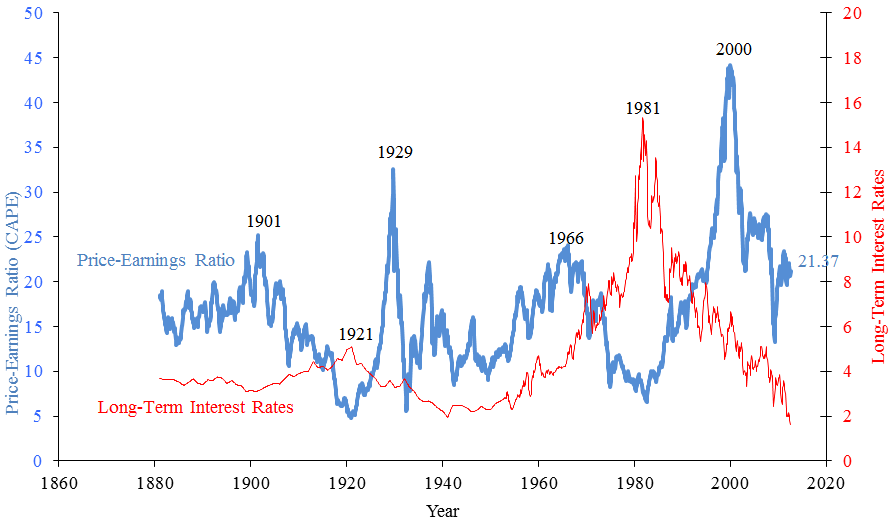
The P/E ratio is a widely used metric, with an average P/E ratio for the S&P 500 index of around 22. Companies like Amazon.com and Microsoft have P/E ratios above 30, indicating strong growth prospects. The P/E ratio is also influenced by the economy, with recessions and expansions affecting the ratio. For instance, during the 2008 financial crisis, the P/E ratio for the S&P 500 index dropped to around 12, while during the 2020 COVID-19 pandemic, the P/E ratio for the index rose to around 25. Investors like Warren Buffett and Carl Icahn use the P/E ratio to make informed decisions, with Buffett's Berkshire Hathaway having a P/E ratio of around 20.
👥 Key People & Organizations
Key people and organizations have played a significant role in shaping the concept of the P/E ratio. Benjamin Graham is often credited with developing the concept, while John Bogle has been a strong advocate for its use. Companies like Google and Facebook use the P/E ratio to assess their stock performance, while investors like Warren Buffett and Carl Icahn use it to make informed decisions. The P/E ratio is also influenced by the work of Burton Malkiel, a renowned economist who has written extensively on the topic of valuation and the P/E ratio.
🌍 Cultural Impact & Influence
The P/E ratio has had a significant cultural impact, with its use becoming widespread in the finance industry. The ratio is often used in financial news and analysis, with companies like CNBC and Bloomberg providing P/E ratio data for publicly traded companies. The P/E ratio is also used in academic research, with studies examining its effectiveness in predicting stock performance. For instance, a study by Harvard University found that the P/E ratio is a significant predictor of stock returns, while a study by Stanford University found that the P/E ratio is influenced by industry trends and economic conditions.
⚡ Current State & Latest Developments
As of 2024, the P/E ratio remains a widely used metric in the finance industry. The average P/E ratio for the S&P 500 index is around 22, with companies like Amazon.com and Microsoft having P/E ratios above 30. The P/E ratio is also influenced by the COVID-19 pandemic, with the ratio rising to around 25 in 2020. Investors like Warren Buffett and Carl Icahn continue to use the P/E ratio to make informed decisions, with Buffett's Berkshire Hathaway having a P/E ratio of around 20. The P/E ratio is also used by companies like BlackRock and Vanguard to assess their investment portfolios.
🤔 Controversies & Debates
The P/E ratio is not without its controversies and debates. Some critics argue that the ratio is overly simplistic and does not take into account other important factors such as debt and cash flow. Others argue that the ratio is influenced by industry trends and economic conditions, making it less reliable. For example, a study by Yale University found that the P/E ratio is not a significant predictor of stock returns in certain industries. Despite these controversies, the P/E ratio remains a widely used metric in the finance industry, with companies like Google and Facebook using it to assess their stock performance.
🔮 Future Outlook & Predictions
The future outlook for the P/E ratio is uncertain, with some predicting that it will continue to be a widely used metric in the finance industry. Others predict that the ratio will become less relevant as new metrics and technologies emerge. For instance, the use of artificial intelligence and machine learning in finance may lead to the development of new valuation metrics that replace the P/E ratio. However, the P/E ratio is likely to remain an important tool for investors and analysts, with its use continuing to evolve and adapt to changing market conditions. As noted by Ray Dalio, the founder of Bridgewater Associates, the P/E ratio is a key component of a comprehensive investment strategy.
💡 Practical Applications
The P/E ratio has a number of practical applications, including its use in stock valuation and portfolio management. Investors like Warren Buffett and Carl Icahn use the P/E ratio to make informed decisions, while companies like Google and Facebook use it to assess their stock performance. The P/E ratio is also used in academic research, with studies examining its effectiveness in predicting stock performance. For example, a study by University of Chicago found that the P/E ratio is a significant predictor of stock returns, while a study by Massachusetts Institute of Technology found that the P/E ratio is influenced by industry trends and economic conditions.
Key Facts
- Year
- 2024
- Origin
- United States
- Category
- finance
- Type
- concept
Frequently Asked Questions
What is the P/E ratio and how is it calculated?
The P/E ratio is a metric used to evaluate the value of a company's stock. It is calculated by dividing the company's share price by its earnings per share. For example, if a company's share price is $100 and its earnings per share is $10, the P/E ratio would be 10. The P/E ratio is influenced by industry trends and economic conditions, with sectors like technology and healthcare often having higher P/E ratios due to their growth potential.
What is the average P/E ratio for the S&P 500 index?
The average P/E ratio for the S&P 500 index is around 22. However, this number can fluctuate depending on market conditions and industry trends. For instance, during the 2008 financial crisis, the P/E ratio for the S&P 500 index dropped to around 12, while during the 2020 COVID-19 pandemic, the P/E ratio for the index rose to around 25.
How is the P/E ratio used in investment analysis?
The P/E ratio is used in investment analysis to evaluate the value of a company's stock and make informed decisions. Investors like Warren Buffett and Carl Icahn use the P/E ratio to assess the potential for growth and undervaluation. For example, a company with a high P/E ratio may indicate strong growth prospects, while a company with a low P/E ratio may suggest undervaluation.
What are the limitations of the P/E ratio?
The P/E ratio has several limitations, including its simplicity and lack of consideration for other important factors such as debt and cash flow. Additionally, the P/E ratio is influenced by industry trends and economic conditions, making it less reliable in certain situations. For instance, a study by Yale University found that the P/E ratio is not a significant predictor of stock returns in certain industries.
How has the P/E ratio evolved over time?
The P/E ratio has evolved over time, with its use becoming more widespread in the finance industry. The ratio has been influenced by industry trends and economic conditions, with sectors like technology and healthcare often having higher P/E ratios due to their growth potential. The P/E ratio has also been affected by the COVID-19 pandemic, with the ratio rising to around 25 in 2020.
What are the future prospects for the P/E ratio?
The future prospects for the P/E ratio are uncertain, with some predicting that it will continue to be a widely used metric in the finance industry. Others predict that the ratio will become less relevant as new metrics and technologies emerge. However, the P/E ratio is likely to remain an important tool for investors and analysts, with its use continuing to evolve and adapt to changing market conditions.
How is the P/E ratio related to other concepts in finance?
The P/E ratio is related to a number of other concepts in finance, including stock valuation, portfolio management, and investment analysis. Other relevant topics include dividend yield, return on equity, and debt to equity. The P/E ratio is also influenced by industry trends and economic conditions, with sectors like technology and healthcare often having higher P/E ratios due to their growth potential.