
Contents
Overview
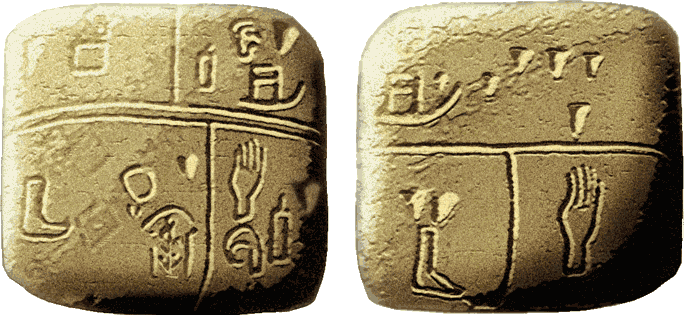
The genesis of proto-writing stretches back to the early Neolithic period. These early symbolic systems, such as the Jiahu symbols found in China, predate Mesopotamian cuneiform and Egyptian hieroglyphs by thousands of years. While the exact nature and purpose of these marks remain subjects of scholarly debate, they clearly represent an intentional effort to record information visually. Cave paintings and personal adornments bearing symbolic meaning may be precursors to proto-writing, indicating a long-standing human impulse for symbolic representation. The transition from purely aesthetic or ritualistic symbols to those carrying specific, albeit limited, informational content marks a crucial evolutionary step in human cognition and social organization, paving the way for more complex communication technologies.
⚙️ How It Works
Proto-writing systems function by employing symbols that represent specific concepts, objects, or ideas, rather than the sounds of a spoken language. These symbols can be ideographic, where a symbol directly depicts the concept it represents (e.g., a drawing of the sun for 'sun'), or mnemonic, serving as memory aids for specific information, such as counts of goods or ritualistic sequences. Unlike true writing, which possesses grammatical structure and can express any thought a speaker can articulate, proto-writing is typically limited in scope. For instance, the Vinča symbols, found on artifacts from the Vinča culture in southeastern Europe, appear to be primarily religious or ritualistic, conveying limited messages rather than narrative or complex discourse. The development of these systems demonstrates an early capacity for abstract thought and the desire to externalize and preserve information beyond the immediate spoken word.
📊 Key Facts & Numbers
Evidence suggests proto-writing systems emerged independently across various cultures. The Jiahu symbols from China represent some of the earliest known symbolic inscriptions. In southeastern Europe, the Vinča culture produced artifacts bearing symbols, suggesting widespread use. The Indus Valley Civilization also utilized a script that is still undeciphered but is widely considered a form of proto-writing or an early stage of true writing, appearing on thousands of seals. These systems often involve a limited vocabulary of symbols. The longevity of some proto-writing traditions, spanning over a thousand years, underscores their functional importance in these early societies.
👥 Key People & Organizations
While proto-writing is a broad category encompassing many cultures, specific individuals and organizations are instrumental in its study. Archaeologists like David W. Pankenier have extensively researched early Chinese symbols, including the Jiahu inscriptions, proposing theories about their potential linguistic significance. Scholars of European prehistory, such as Marija Gimbutas, have cataloged and analyzed the Vinča symbols, though her interpretations have faced scrutiny. Institutions like the Institute of Archaeology in London and various universities globally house departments dedicated to Near Eastern, European, and East Asian archaeology, where artifacts bearing proto-writing are excavated, preserved, and studied. The ongoing work of epigraphers and paleolinguists, often affiliated with academic institutions, is crucial for deciphering the limited information these ancient marks convey and understanding their place in the evolution of human communication.
🌍 Cultural Impact & Influence
The cultural impact of proto-writing lies in its foundational role for all subsequent written communication. These early symbolic systems represent a monumental leap in human cognitive abilities, enabling the externalization of thought and the preservation of information beyond oral tradition. They facilitated early forms of record-keeping, religious expression, and social organization. The development of proto-writing fostered abstract thinking and laid the conceptual groundwork for the invention of true writing systems, which would go on to underpin the development of complex civilizations, literature, law, and science. The very idea of encoding meaning into visual marks, however rudimentary, is a cultural innovation that fundamentally reshaped human history and the transmission of knowledge across generations, influencing everything from early trade networks to the development of complex religious iconography.
⚡ Current State & Latest Developments
The study of proto-writing is an ongoing archaeological and linguistic endeavor. Advancements in radiocarbon dating continue to refine the timelines of early symbolic systems. Ongoing excavations in regions like the Balkans and East Asia frequently unearth new artifacts bearing potential proto-writing. While no new 'proto-writing' systems are emerging in the traditional sense, the digital age has seen the proliferation of new symbolic languages and visual communication methods, from emojis to complex data visualization, which echo the conceptual lineage of proto-writing. The interpretation of ancient symbols remains a dynamic field, with new theories and evidence constantly challenging existing understandings of early human communication.
🤔 Controversies & Debates
A significant controversy surrounding proto-writing centers on its classification: when does a symbolic system cross the threshold into true writing? Scholars debate whether certain systems, like the Vinča or Jiahu symbols, were merely mnemonic devices or proto-writing, or if they possessed a rudimentary linguistic structure that could be considered early writing. The lack of a clear, universally agreed-upon definition for 'true writing' fuels this debate. Some argue that any system capable of recording language, even partially, qualifies, while others insist on grammatical completeness and phonetic representation. The interpretation of the Indus script also remains highly contentious, with some researchers asserting it is a fully developed writing system and others classifying it as proto-writing or even a non-linguistic symbolic system. The scarcity of context and the limited nature of the artifacts further complicate definitive classification.
🔮 Future Outlook & Predictions
The future of proto-writing research will likely involve more sophisticated analytical techniques, including advanced imaging, material science, and computational linguistics, to analyze existing artifacts. As new archaeological discoveries are made, particularly in regions with less explored Neolithic histories, our understanding of the global spread and diversity of proto-writing systems will undoubtedly expand. Future research may also shed more light on the cognitive processes that led to the development of these systems, potentially revealing deeper insights into the evolution of human language and abstract thought. The ongoing quest to understand these ancient marks will continue to inform our appreciation of the long and complex journey from simple symbols to the sophisticated writing systems that define modern civilization.
💡 Practical Applications
While proto-writing itself is not directly applied in modern contexts, its legacy is evident in various practical applications of symbolic communication. The principles of using visual marks to convey information are fundamental to modern signage, iconography, and user interface design. For example, traffic signs use universally understood symbols to communicate rules and warnings, much like early ideograms. The development of standardized symbols in fields like mathematics, chemistry, and computing (e.g., circuit diagrams, chemical formulas) can be seen as a continuation of the proto-writing impulse to create concise, unambiguous visual representations of complex ideas. Even the humble emoji, used in digital communication, represents a modern form of ideographic communication, conveying emotion and simple concepts efficiently.
Key Facts
- Category
- history
- Type
- topic