
Contents
Overview
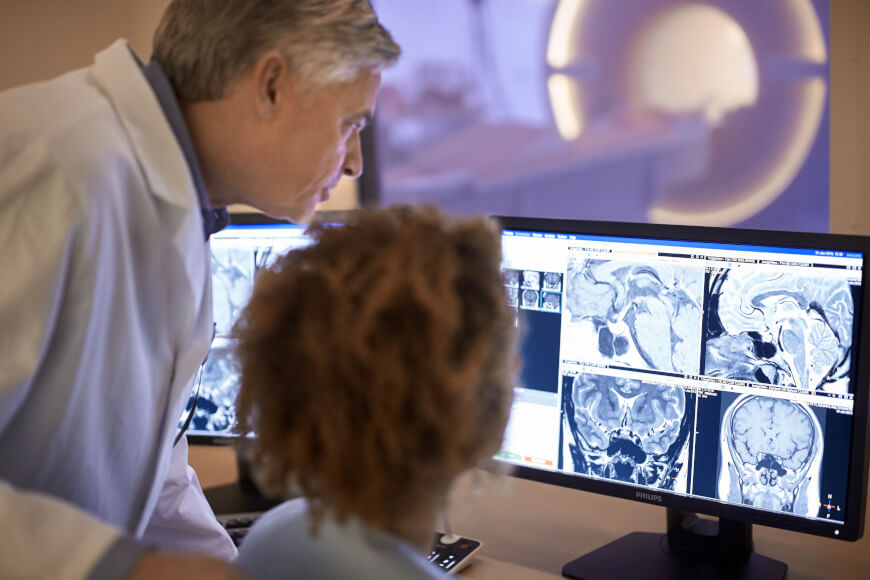
Radiology is the medical specialty dedicated to diagnosing and treating diseases and injuries through the interpretation of medical imaging. Originating with radiography, it has evolved dramatically to encompass a wide array of technologies, including ultrasonography, magnetic resonance imaging (MRI), computed tomography (CT), and nuclear medicine techniques like positron emission tomography (PET). These modalities allow physicians to visualize internal structures without invasive surgery, guiding everything from initial diagnosis to minimally invasive interventional procedures. The field is underpinned by sophisticated physics and engineering, with the interpretation of these complex images falling to highly trained radiologists. Its impact on modern medicine is profound, enabling earlier detection, more precise treatment planning, and improved patient outcomes across virtually all medical disciplines.
🎵 Origins & History
The genesis of radiology is inextricably linked to the serendipitous discovery of X-rays. Early pioneers like Marie Curie and her husband Pierre Curie further explored radioactivity, laying groundwork that would eventually lead to nuclear medicine imaging. The Radiological Society of North America (RSNA) publishes the journal Radiology, solidifying the specialty. The mid-20th century saw the development of CT scanning and MRI, dramatically expanding the diagnostic toolkit beyond ionizing radiation.
⚙️ How It Works
Radiology operates by employing various physical principles to generate images of the body's internal structures. Radiography and CT utilize ionizing electromagnetic radiation, where different tissues absorb radiation to varying degrees, creating contrast on detectors. Ultrasonography employs high-frequency sound waves; the echoes reflected back from tissues are processed to form images, offering real-time visualization without radiation. MRI uses powerful magnetic fields and radio waves to manipulate the alignment of atomic nuclei (primarily hydrogen protons) within the body, detecting the signals emitted as they return to their normal state to create highly detailed cross-sectional images. Nuclear medicine techniques, such as PET and SPECT, involve administering small amounts of radioactive tracers that accumulate in specific organs or tissues; the emitted radiation is then detected and used to assess physiological function rather than just anatomy. Interventional radiology leverages these imaging modalities to guide minimally invasive procedures, like angioplasty or biopsies, using catheters and needles inserted through small incisions.
📊 Key Facts & Numbers
The global medical imaging market is a key indicator of radiology's reach. The field of artificial intelligence is now being integrated into radiology workflows.
👥 Key People & Organizations
Key figures in radiology's development include Wilhelm Röntgen, the discoverer of X-rays, and Marie Curie, a pioneer in radioactivity research. Modern radiology is shaped by organizations like the Radiological Society of North America (RSNA), which publishes the influential journal Radiology and hosts one of the largest medical conferences globally. The American College of Radiology (ACR) sets standards and advocates for the specialty in the United States. Leading manufacturers of imaging equipment, such as Siemens Healthineers, GE Healthcare, and Philips Healthcare, drive technological innovation. Prominent academic institutions like Johns Hopkins Medicine and the Massachusetts General Hospital are at the forefront of research and training in advanced imaging techniques and interventional radiology.
🌍 Cultural Impact & Influence
Radiology has fundamentally reshaped patient care and medical understanding, moving medicine from a largely empirical practice to one guided by direct visualization. Its cultural penetration is evident in its frequent depiction in media, often as a high-tech diagnostic tool that provides definitive answers, as seen in countless medical dramas. The ability to see inside the body non-invasively has demystified many conditions and reduced the need for exploratory surgeries, impacting patient anxiety and recovery times. Furthermore, radiology has become a critical component in fields beyond medicine, with similar imaging principles applied in materials science for non-destructive testing and in security for baggage screening. The visual language of radiology, from X-ray silhouettes to MRI cross-sections, has become a recognizable part of the modern scientific aesthetic.
⚡ Current State & Latest Developments
The current landscape of radiology is characterized by rapid technological advancement and evolving practice models. The integration of AI is perhaps the most significant ongoing development, with AI tools assisting in image analysis, workflow optimization, and even preliminary report generation, promising increased efficiency and accuracy. There's a growing emphasis on radiomics, which involves extracting quantitative data from medical images to predict treatment response and patient outcomes. Interventional radiology continues to expand its scope, offering less invasive alternatives to traditional surgery for a widening range of conditions, from treating vascular diseases to managing cancer. Furthermore, the development of novel imaging agents and techniques, such as photon-counting CT and advanced functional MRI sequences, promises even greater diagnostic precision. The COVID-19 pandemic also highlighted the critical role of chest CT scans in diagnosing and monitoring respiratory illnesses.
🤔 Controversies & Debates
One of the most persistent controversies in radiology revolves around radiation exposure. While modern machines are designed to minimize dose, cumulative exposure from multiple imaging studies, particularly in pediatric patients, remains a concern, leading to ongoing research into dose reduction techniques and the development of non-ionizing modalities. The increasing reliance on AI in image interpretation also sparks debate regarding accountability, potential biases in algorithms, and the future role of the human radiologist. Questions persist about equitable access to advanced imaging technologies globally, with significant disparities existing between high-income and low-income countries. Furthermore, the interpretation of incidental findings—abnormalities discovered incidentally on scans performed for other reasons—presents a challenge, balancing the risk of missing a serious condition against the potential for over-diagnosis and unnecessary follow-up procedures.
🔮 Future Outlook & Predictions
The future of radiology is poised for further integration with AI, potentially leading to fully automated image analysis and diagnostic reporting for common conditions, freeing up radiologists for more complex cases and interventional procedures. Advances in MRI technology, such as ultra-high-field scanners and novel contras
Key Facts
- Category
- science
- Type
- topic