
Contents
Overview
The genesis of Reformed Christianity can be traced to the early 16th century, with pivotal moments in Zurich under Ulrich Zwingli beginning around 1519, and more famously in Geneva under John Calvin from the 1540s. Zwingli's reforms, initiated in Zurich, predated Calvin's major works but shared a commitment to biblical authority and a rejection of Roman Catholic practices. Calvin, however, systematized these ideas in his seminal work, Institutes of the Christian Religion, first published in 1536. His influence spread rapidly through his writings, sermons, and the establishment of theological training centers, attracting scholars and reformers from across Europe. The Peace of Augsburg in 1555, while primarily addressing Lutheranism, set a precedent for religious division, and the subsequent Wars of Religion across Europe often saw Reformed and Catholic forces clashing. The Synod of Dort (1618-1619) was a crucial event, solidifying Reformed doctrine against Arminianism and articulating the famous Five Points of Calvinism.
⚙️ How It Works
At its core, Reformed theology is characterized by its emphasis on the absolute sovereignty of God in all things, including salvation. This is often summarized by the theological framework known as TULIP, representing Total Depravity, Unconditional Election, Limited Atonement, Irresistible Grace, and Perseverance of the Saints. Covenant theology is another foundational element, viewing biblical history as a series of covenants (e.g., the Covenant of Works, Covenant of Grace) between God and humanity, mediated through figures like Noah, Abraham, and Moses, ultimately fulfilled in Jesus Christ. Worship in Reformed churches typically emphasizes preaching, prayer, and the sacraments (Baptism and the Lord's Supper), often with a deliberate simplicity that eschews elaborate rituals or imagery, reflecting a desire to avoid idolatry and focus on God's Word. Church governance can vary, with Presbyterian polity (rule by elders), Congregational polity (autonomy of local churches), and some episcopal structures existing within the broader Reformed tradition.
📊 Key Facts & Numbers
Reformed Christianity boasts a global following. The Presbyterian Church (USA) alone has approximately 1.2 million members, while the Reformed Church in America counts around 190,000 adherents. Globally, estimates for all Reformed denominations combined range from 75 to 100 million people. The John Calvin's Institutes of the Christian Religion has seen over 100 editions and translations since its first publication in 1536, demonstrating its enduring reach. The Synod of Dort in 1618-1619 involved delegates from over 20 different Reformed churches, illustrating the early international scope of the movement. The Reformed Ecumenical Council (now the World Communion of Reformed Churches) represents over 80 million people across more than 100 member churches worldwide.
👥 Key People & Organizations
Beyond John Calvin and Ulrich Zwingli, key figures include Theodore Beza, Calvin's successor in Geneva, who further developed Reformed theology and championed its spread. In Scotland, John Knox was instrumental in establishing the Church of Scotland along Reformed lines. Later theologians like Herman Ridderbos and Karl Barth significantly influenced 20th-century Reformed thought, though Barth's neo-orthodoxy diverged from some classical tenets. Major organizations include the World Communion of Reformed Churches (WCRC), a global ecumenical body representing a vast number of Reformed churches. Denominational bodies like the Presbyterian Church in America (PCA), the United Reformed Church in the UK, and the Dutch Reformed Church (now part of the Protestant Church in the Netherlands) are significant institutional expressions of the tradition.
🌍 Cultural Impact & Influence
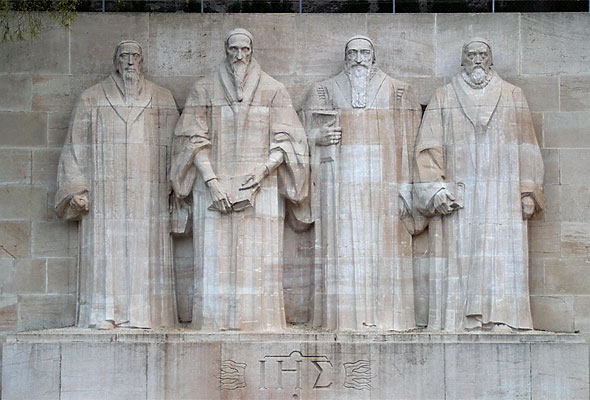
Reformed Christianity has profoundly shaped Western culture, particularly in areas influenced by John Calvin's thought, such as Geneva, Scotland, the Netherlands, and parts of North America. The emphasis on diligent work, thrift, and education, sometimes termed the "Protestant work ethic" by sociologist Max Weber, is often linked to Reformed values. This has had a discernible impact on economic development and capitalist enterprise in these regions. Theologically, Reformed thought has influenced numerous other Christian traditions, including aspects of Methodism and Baptism. Its intellectual rigor has also contributed to philosophical discourse, particularly in areas of ethics, law, and political theory, with concepts like the separation of church and state and the right of resistance against tyranny finding early proponents within Reformed circles. The Reformation Wall in Geneva stands as a monumental testament to the movement's historical significance.
⚡ Current State & Latest Developments
In the contemporary landscape, Reformed Christianity continues to be a vibrant and diverse tradition. The World Communion of Reformed Churches actively engages in ecumenical dialogue and global mission initiatives. Within North America, denominations like the Presbyterian Church (USA) and the Cumberland Presbyterian Church navigate evolving social issues, while more conservative bodies such as the Presbyterian Church in America (PCA) and the Associate Reformed Presbyterian Church maintain traditional theological stances. There's also a notable resurgence of interest in classical Reformed theology among younger evangelicals, often referred to as the Young, Restless, and Reformed movement, which emphasizes robust theological education and a return to historical confessions like the Westminster Confession of Faith. Digital platforms and online seminaries have also become crucial for disseminating Reformed teachings globally.
🤔 Controversies & Debates
Reformed Christianity is not without its controversies. The Five Points of Calvinism themselves have been a subject of intense debate for centuries, particularly the doctrines of unconditional election and limited atonement, which critics argue can lead to fatalism or a diminished view of God's love for all. The relationship between divine sovereignty and human free will remains a perennial theological tension. Debates also arise concerning the interpretation of scripture, particularly on issues of gender roles in ministry, sexuality, and social justice. The historical association of some Reformed groups with colonialism and the slave trade in certain regions, such as the Dutch Reformed Church in South Africa's apartheid era, continues to be a point of historical reckoning and theological critique. The extent to which Reformed theology should adapt to modern scientific understanding, particularly regarding creation accounts, also sparks ongoing discussion.
🔮 Future Outlook & Predictions
The future of Reformed Christianity appears poised for continued theological engagement and global expansion, albeit with internal diversification. The Young, Restless, and Reformed movement suggests a sustained interest in deep theological study, potentially leading to new intellectual contributions and a strengthening of confessional identity among younger generations. Ecumenical efforts through bodies like the World Communion of Reformed Churches are likely to continue shaping interdenominational relations and global mission strategies. The ongoing dialogue between traditional Reformed doctrines and contemporary societal challenges will undoubtedly lead to further theological development and adaptation within the tradition.
💡 Practical Applications
Reformed theology has significantly influenced ethical frameworks, emphasizing principles of justice, stewardship, and the pursuit of holiness in daily life. This has practical implications for personal conduct, family life, and societal engagement. The Reformed emphasis on education has led to the establishment of numerous schools, colleges, and seminaries dedicated to rigorous intellectual and theological training. In governance, the concept of "sphere sovereignty," which posits that different areas of life (family, church, state, economy) have God-ordained authority, has influenced political thought and the development of civil society in various regions. The practice of regular congregational meetings for decision-making in some Reformed traditions also reflects a commitment to participatory governance.
Key Facts
- Category
- movements
- Type
- topic