
Contents
Overview
The seeds of the Reign of Terror were sown in the tumultuous early years of the French Revolution. While some historians pinpoint its start to the establishment of the Revolutionary Tribunal on March 10, 1793, or the Law of Suspects on September 17, 1793, others trace its origins to the September Massacres of 1792 or even the initial revolutionary fervor of July 1789. The creation of the First French Republic in September 1792, coupled with escalating internal revolts (Federalist revolts) and external threats from European monarchies, created an atmosphere ripe for radical measures. The Committee of Public Safety, formed in April 1793, gradually consolidated power, becoming the de facto executive government tasked with defending the revolution at any cost. This body, initially intended to oversee the war effort, evolved into the primary instrument of revolutionary justice and repression.
⚙️ How It Worked
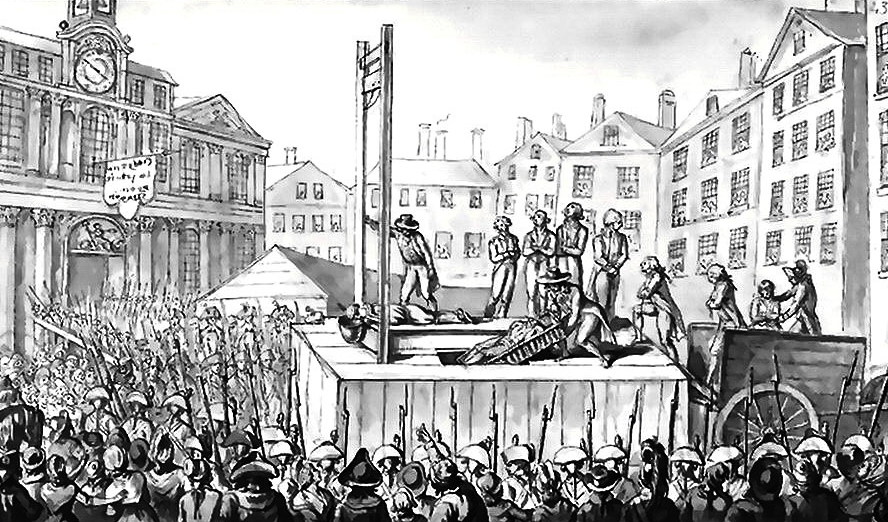
The machinery of the Terror operated through a network of revolutionary committees and tribunals. The Committee of Public Safety set policy, while the Paris Commune enforced it. Accusations of "counter-revolutionary activity" or "treason" were sufficient to bring individuals before the Revolutionary Tribunal. This court, established in March 1793, operated with limited due process, often denying defendants legal counsel and relying on flimsy evidence or mere suspicion. The infamous Law of Suspects (September 17, 1793) broadened the definition of "suspect" to include anyone who could not prove their civic loyalty, effectively making dissent a capital offense. The guillotine, a symbol of revolutionary efficiency and equality in death, became the primary instrument of execution, though other methods like mass drownings in Nantes also occurred.
📊 Key Facts & Numbers
Estimates suggest that between 16,000 and 40,000 people were officially executed during the Reign of Terror, with tens of thousands more dying in prison or through extrajudicial killings. The department of Vendée alone saw an estimated 100,000 deaths due to the War in the Vendée, a brutal civil conflict intertwined with the Terror. In Paris, approximately 2,600 people were guillotined between June 1794 (when the Great Terror began) and July 1794. The Law of Suspects led to the arrest of over 300,000 individuals across France. The cost of maintaining the revolutionary government and its armies during this period was astronomical, straining the already fragile French economy.
👥 Key People & Organizations
Key figures driving the Reign of Terror included Maximilien Robespierre, the dominant voice on the Committee of Public Safety, who advocated for "virtue and terror." Georges Danton, initially a powerful revolutionary figure, eventually fell victim to the Terror himself, executed in April 1794. Louis Antoine de Saint-Just, a close ally of Robespierre, was instrumental in implementing the Terror's policies. Jean-Paul Marat, though assassinated in July 1793 before the peak of the Terror, was a fervent propagandist for revolutionary violence. The Committee of Public Safety itself was the central organization, composed of twelve members who rotated, but Robespierre, Saint-Just, and Georges Couthon formed a powerful triumvirate. The National Convention served as the legislative body, often rubber-stamping the Committee's decisions.
🌍 Cultural Impact & Influence
The Reign of Terror left an indelible mark on the collective memory of the French Revolution and political thought worldwide. It became a cautionary tale about the dangers of unchecked revolutionary zeal and the potential for idealism to devolve into tyranny. The concept of "revolutionary terror" has been debated and emulated, influencing subsequent revolutionary movements and authoritarian regimes, from the Bolshevik Revolution in Russia to various 20th-century dictatorships. The image of the guillotine and the figure of Maximilien Robespierre remain potent symbols of radical political upheaval and state-sponsored violence. The Terror also fueled a significant backlash, contributing to the rise of more moderate political factions and influencing the development of liberal democratic thought that sought to balance liberty with order.
⚡ Current State & Latest Developments
While the Reign of Terror as a distinct historical period concluded with the Thermidorian Reaction in July 1794, its legacy continues to be debated and reinterpreted. Contemporary discussions often revolve around the necessity of extreme measures in times of crisis, the definition of political legitimacy, and the ethical boundaries of state power. Historians continue to analyze newly discovered documents and perspectives, refining our understanding of the motivations and consequences of the Terror. The ongoing study of political science and sociology frequently references the Terror as a case study in state formation, revolutionary dynamics, and the psychology of mass violence. The debate over whether the Terror was an aberration or an intrinsic part of revolutionary processes remains active.
🤔 Controversies & Debates
The Reign of Terror is one of the most controversial aspects of the French Revolution. A central debate is whether the Terror was a necessary evil to save the revolution from internal and external threats, as argued by proponents like Robespierre, or an inexcusable descent into barbarism that betrayed the revolution's ideals of liberty and fraternity. Critics point to the vast number of victims, many of whom were ordinary citizens or political opponents rather than genuine threats, and the suspension of basic legal rights. The extent to which Maximilien Robespierre was solely responsible versus being a product of the revolutionary circumstances is another major point of contention. Furthermore, the comparison of the Terror to later totalitarian regimes, such as Stalinism or Maoism, remains a contentious issue, with some historians emphasizing parallels in state control and violence, while others highlight crucial differences in ideology and context.
🔮 Future Outlook & Predictions
The future outlook for understanding the Reign of Terror involves continued scholarly debate and the potential for new historical discoveries. Advances in digital humanities and archival research may uncover previously unknown details about the lives and deaths of its victims and perpetrators. The ongoing relevance of the Terror lies in its enduring questions about the relationship between state power, revolutionary change, and human rights. As societies grapple with political instability, extremism, and the use of state-sanctioned violence, the lessons of the Terror—both cautionary and analytical—will likely remain pertinent. Future interpretations may also be shaped by evolving global political landscapes and the emergence of new theoretical frameworks for understanding historical violence and social upheaval.
💡 Practical Applications
While the Reign of Terror itself is a historical event, its principles and methods have found echoes in various practical applications and theoretical frameworks. The concept of "revolutionary justice" and the use of state-sponsored fear as a tool of political control have been studied and, in some cases, replicated by subsequent regimes. The Committee of Public Safety's model of centralized executive power during a crisis has informed discussions on emergency governance. The guillotine's design, intended for efficient and egalitarian execution, represents a practical application of engineering principles to a grim task. Furthermore, the Terror's impact on legal theory and political philosophy continues to inform debates on due process, the limits of state authority, and the definition of citizenship in times of conflict. The study of the Terror provides a stark case study for crisis management and the potential pitfalls of radical political transformation.
Key Facts
- Category
- history
- Type
- topic