
Contents
Overview
The story of Rickettsia rickettsii begins in the late 19th century, a period of burgeoning scientific inquiry into infectious diseases. It was first identified in 1896 by Dr. Howard Taylor Ricketts, an American pathologist, who was investigating a severe fever outbreak in the Bitterroot Valley of Montana. Tragically, Ricketts himself succumbed to RMSF in 1910, a stark reminder of the dangers inherent in studying such potent pathogens. His pioneering work, alongside that of other researchers like Stanislaus von Prowazek (who also died from typhus, another rickettsial disease), laid the groundwork for understanding these tick-borne agents. The bacterium was officially named Rickettsia rickettsii in his honor, cementing his legacy in microbiology. Early efforts focused on identifying the tick vectors, primarily the American dog tick (Dermacentor variabilis) and the Rocky Mountain wood tick (Dermacentor andersoni), and understanding the transmission cycle, a critical step in developing public health interventions.
⚙️ How It Works
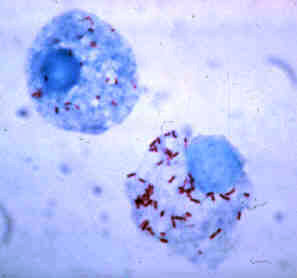
At its core, Rickettsia rickettsii is a master of intracellular parasitism. Its obligate intracellular nature means it cannot replicate outside of a host cell. This bacterium possesses a significantly reduced genome, a consequence of its reliance on host cell machinery for essential metabolic processes. It functions as an organo-heterotroph. A key adaptation is its ability to shuttle host-derived sugars directly into its own tricarboxylic acid (TCA) cycle for energy production, a process facilitated by specialized membrane proteins. The bacterium's outer membrane is studded with proteins, such as the outer membrane protein A (OmpA) and outer membrane protein B (OmpB), which are crucial for host cell attachment and invasion, and are also targets for antibiotic therapies. A polysaccharide capsule further aids in adherence and provides a defense against the host's immune system, specifically resisting phagocytosis by immune cells.
📊 Key Facts & Numbers
Globally, rickettsial diseases affect millions, with RMSF being the most severe form in the Americas. The geographic distribution of R. rickettsii is extensive, with established endemic areas across North, Central, and South America. Tick populations carrying the bacterium can be found in diverse habitats, from wooded areas and grasslands to urban parks, increasing the potential for human exposure. The incubation period for RMSF is typically 5 to 14 days after a tick bite, with symptoms often appearing suddenly.
👥 Key People & Organizations
The scientific community has been shaped by numerous individuals and institutions dedicated to understanding Rickettsia rickettsii. Dr. Howard Taylor Ricketts, the bacteriologist for whom the genus is named, made the initial groundbreaking discoveries in the early 20th century, tragically at the cost of his own life. His contemporary, Stanislaus von Prowazek, also contributed significantly to early rickettsial research before his death. More recently, researchers like Dr. David Walker at the University of Texas Medical Branch (UTMB) have been instrumental in advancing our understanding of RMSF pathogenesis and treatment. The Centers for Disease Control and Prevention (CDC) in Atlanta, Georgia, plays a crucial role in surveillance, diagnosis, and public health guidance related to RMSF and other tick-borne diseases. Academic institutions such as UTMB, UCSD, and UNC Chapel Hill host leading research labs focused on rickettsial diseases, often collaborating with organizations like the Rocky Mountain Laboratories (part of the National Institute of Allergy and Infectious Diseases, NIAID).
🌍 Cultural Impact & Influence
The impact of Rickettsia rickettsii on public consciousness and health practices is significant, particularly in regions where RMSF is endemic. The disease has spurred the development of public health campaigns aimed at tick bite prevention, emphasizing the use of repellents, protective clothing, and prompt tick removal. The fear of contracting RMSF has influenced outdoor recreational activities and lifestyle choices in affected areas. Culturally, the disease has been depicted in literature and media, often highlighting its sudden onset and severe consequences, contributing to a broader awareness of the risks associated with tick-borne illnesses. The scientific understanding of R. rickettsii has also influenced the development of diagnostic tools and antimicrobial therapies, impacting veterinary medicine as well as human health, as the bacterium can infect domestic animals like dogs, which often serve as a reservoir.
⚡ Current State & Latest Developments
As of 2024, the landscape of Rickettsia rickettsii research and public health management is dynamic. Ongoing efforts focus on improving diagnostic speed and accuracy, as early detection is critical for effective treatment. The development of novel diagnostic platforms, including molecular assays and improved serological tests, continues to be a priority for organizations like the CDC. Researchers are also investigating the genetic factors that contribute to the varying virulence of different R. rickettsii strains, aiming to predict disease severity and tailor treatment. Furthermore, concerns about antibiotic resistance and the emergence of new tick vectors or geographic ranges for the bacterium necessitate continuous surveillance and adaptive public health strategies. The recent emergence of novel spotted fever group rickettsioses, such as Rickettsia parkeri rickettsiosis, also broadens the scope of research beyond classical RMSF.
🤔 Controversies & Debates
Several controversies and debates surround Rickettsia rickettsii. One persistent issue is the challenge of accurate and timely diagnosis. Symptoms of RMSF can mimic those of other febrile illnesses, leading to delayed or incorrect diagnoses, which can have dire consequences. This diagnostic challenge has fueled debate over the sensitivity and specificity of current diagnostic tests, particularly in the early stages of infection. Another area of contention involves the precise geographic range and prevalence of specific R. rickettsii strains, as well as the role of various tick species beyond the primary vectors in transmission. Furthermore, the optimal antibiotic treatment duration and the potential for developing resistance remain subjects of ongoing clinical discussion and research, with some advocating for shorter treatment courses based on emerging evidence. The economic impact of RMSF, including healthcare costs and lost productivity, also sparks debate regarding resource allocation for prevention and control.
🔮 Future Outlook & Predictions
The future outlook for managing Rickettsia rickettsii and RMSF is cautiously optimistic, driven by advancements in several key areas. Continued research into the bacterium's genomics and proteomics promises to uncover new therapeutic targets and diagnostic markers. The development of more rapid and point-of-care diagnostic tools could significantly improve patient outcomes by enabling earlier treatment initiation. Furthermore, exploring alternative or adjunctive therapies to doxycycline, particularly for severe cases or in situations of potential resistance, is a critical area of focus. Public health initiatives will likely emphasize enhanced surveillance systems, including tick population monitoring and geographic mapping of R. rickettsii strains, to better predict and respond to outbreaks. The potential for developing a vaccine, though historically challenging due to the bacterium's intracellular nature and the complexity of immune responses, remains a long-term aspiration for some researchers, building on lessons learned from other intracellular pathoge
💡 Practical Applications
Practical applications stemming from the study of Rickettsia rickettsii are primarily focused on public health and clinical medicine. The development of effective diagnostic tests, ranging from serological assays to molecular detection methods, allows for timely identification of infections, which is crucial for initiating prompt treatment. Understanding the bacterium's mechanisms of invasion and survival within host cells has informed the selection of appropriate antibiotics, such as doxycycline, and guided research into potential new therapeutic targets. Public health campaigns promoting tick bite prevention strategies are a direct application of knowledge about R. rickettsii transmission. Furthermore, the study of its genetic makeup and virulence factors contributes to ongoing efforts to track the evolution of antibiotic resistance and monitor the geographic spread of the pathogen and its vectors, aiding in risk assessment and resource allocation for disease control.
Key Facts
- Category
- science
- Type
- topic