
Contents
Overview
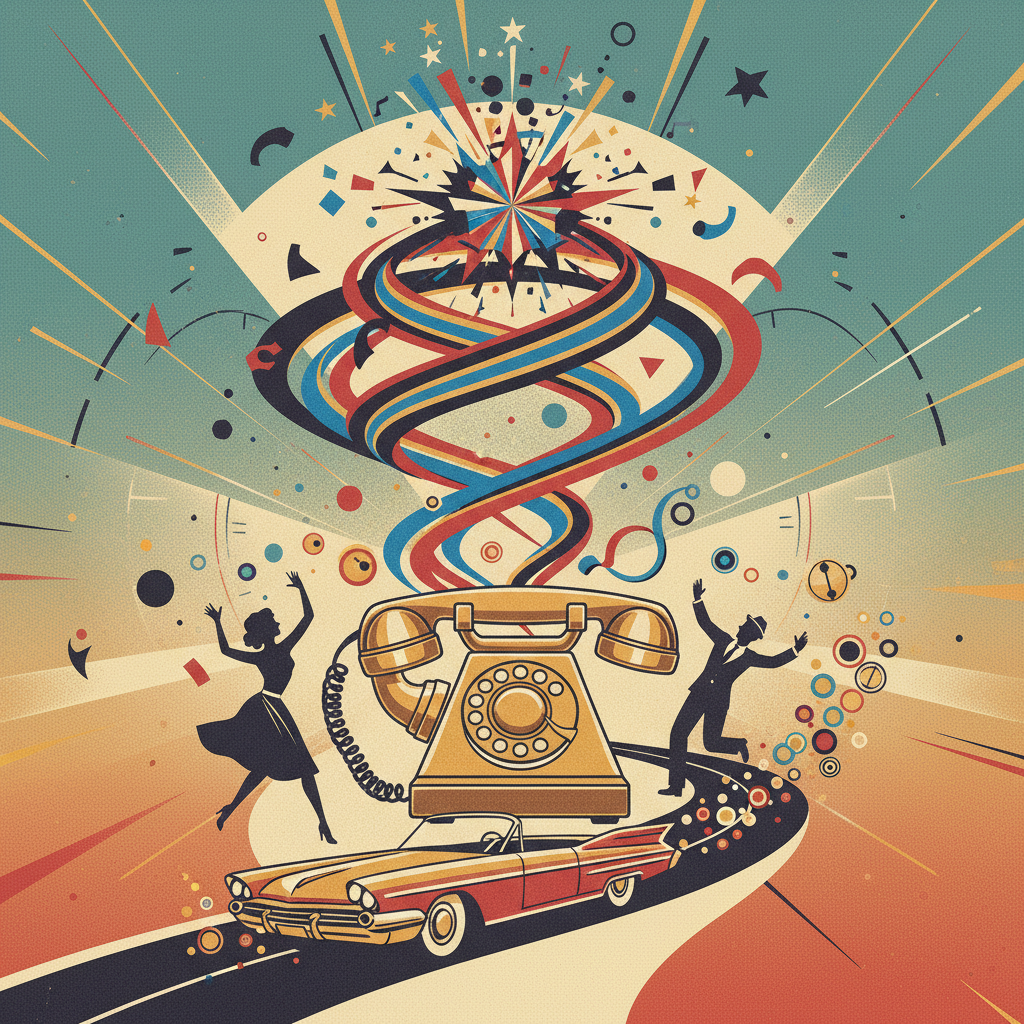
The phrase "ring-a-ding-ding" has its roots in imitative sounds, mimicking the ringing of a bell. Its earliest known use dates back to the mid-1700s, as evidenced in texts like "Gypsy Laddie." Over time, it evolved beyond a mere onomatopoeia to encompass a broader range of meanings. By the mid-20th century, particularly in the 1950s and early 1960s, "ring-a-ding" became strongly associated with the charismatic style of the Rat Pack, especially Frank Sinatra. This era cemented its image as a descriptor for something exciting, stylish, and excellent, often used as an exclamation of approval or delight, much like how one might react to a favorite song playing on the radio, as discussed on platforms like HiNative.
⚙️ How It Works
While "ring-a-ding-ding" can be used as an interjection to express positive affirmation, it also functions as an adjective and noun. As an adjective, it describes something as perfect, ideal, or excellent, as seen in its use to describe a "ring-a-ding movie" or a "ring-a-ding kid." Its imitative nature also lends itself to describing sounds, such as the sound a dirt bike makes or even the sound of a fox, as humorously depicted on Urban Dictionary. The Oxford English Dictionary notes its use in contexts related to bell-ringing and music, highlighting its versatile, though often context-dependent, application.
🌍 Cultural Impact
The cultural impact of "ring-a-ding-ding" is largely tied to the mid-20th century's "cool" aesthetic, heavily influenced by figures like Frank Sinatra and the Rat Pack. Sinatra's 1961 album, "Ring-a-Ding-Ding!," further popularized the phrase, solidifying its association with a sophisticated and upbeat lifestyle. This era's embrace of the term contributed to its widespread use in popular culture, appearing in films and music. While its peak popularity has passed, the phrase still evokes a nostalgic sense of mid-century glamour and excitement, a vibe that resonates with certain aesthetics and cultural revivals, much like the enduring appeal of classic rock and roll.
🔮 Legacy & Future
Though considered dated slang by many, "ring-a-ding-ding" continues to hold a place in the lexicon, often used with a sense of irony or nostalgic affection. Its association with Frank Sinatra and the Rat Pack ensures its continued recognition, appearing in discussions about vintage culture and music. While not as prevalent as contemporary slang found on platforms like Reddit or TikTok, the phrase occasionally resurfaces in media or casual conversation, reminding us of a bygone era of stylish exuberance. Its legacy lies in its ability to instantly conjure a specific mood and time, a testament to the enduring power of catchy, evocative phrases in language and culture.
Key Facts
- Year
- mid-1700s onwards
- Origin
- English
- Category
- slang
- Type
- term
Frequently Asked Questions
What does 'ring-a-ding-ding' literally mean?
Literally, 'ring-a-ding-ding' is an onomatopoeic phrase that imitates the sound of a bell ringing. Its earliest documented use is in this imitative sense.
When was 'ring-a-ding-ding' most popular?
The phrase saw its peak popularity in the 1950s and early 1960s, largely due to its association with Frank Sinatra and the Rat Pack, and the release of Sinatra's album of the same name.
Can 'ring-a-ding-ding' be used today?
While considered dated slang, 'ring-a-ding-ding' can still be used, often with a sense of nostalgia, irony, or to evoke a specific vintage charm. It's less common in everyday conversation compared to contemporary slang.
What kind of things would be described as 'ring-a-ding-ding'?
Anything considered excellent, ideal, exciting, or stylish could be described as 'ring-a-ding-ding.' This could range from a party to an outfit to a general feeling of great satisfaction.
Is 'ring-a-ding-ding' related to any specific music genres?
It is most closely associated with the vocal jazz and traditional pop music of the mid-20th century, particularly the style of Frank Sinatra and his contemporaries. The song 'Ring-a-Ding-Ding!' by Frank Sinatra is a prime example.