
Contents
Overview
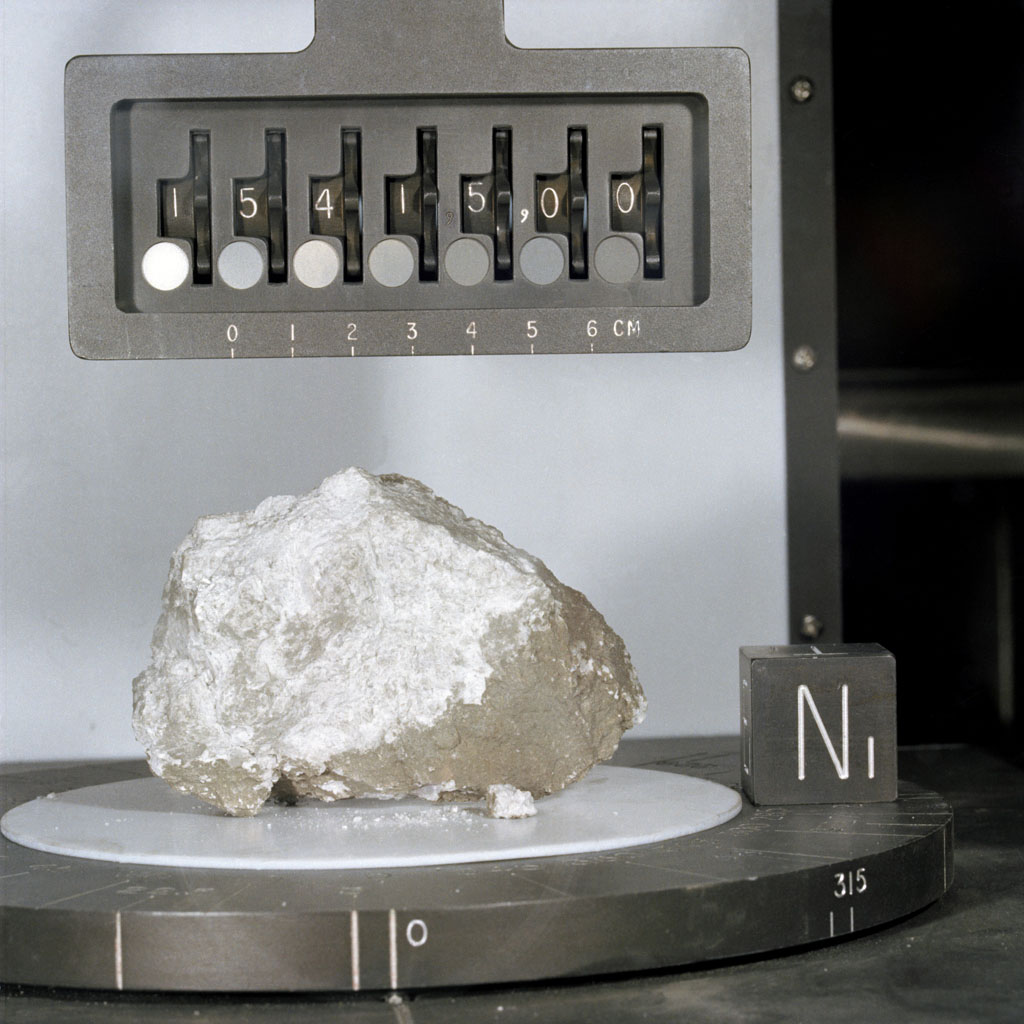
The concept of bringing extraterrestrial material back to Earth for study predates spaceflight, fueled by a desire to understand our cosmic neighbors. Early inspirations can be found in science fiction, but the practical groundwork began with the dawn of the space age. The Soviet Union's Luna 16 mission in 1970 marked the first successful robotic sample return from the Moon, paving the way for subsequent Soviet and American lunar sample return efforts. These early missions, primarily focused on lunar geology, established the fundamental engineering challenges of collection, ascent from a celestial body, and Earth re-entry. The Apollo program also brought back hundreds of kilograms of lunar samples, though these were crewed missions. The scope expanded beyond the Moon with missions like Stardust in 1999, which targeted comet Wild 2, demonstrating the feasibility of collecting cometary dust. The Genesis mission (2001-2004) further pushed boundaries by collecting solar wind particles, showcasing the diverse targets for sample return.
⚙️ How It Works
Sample return missions typically involve a multi-stage process. First, a spacecraft must reach its target body, whether it's an asteroid, comet, or moon. Once in proximity, a collection mechanism is deployed. This can range from a drill or scoop for solid surfaces, like those used by Hayabusa2 on Ryugu, to specialized collectors for capturing dust or gas particles, as employed by the Stardust mission for comet Wild 2. After collection, the sample is sealed within a return capsule. The spacecraft then initiates an Earth-return trajectory. The critical final phase involves the capsule's atmospheric re-entry, often requiring robust heat shields to survive the extreme temperatures, followed by a parachute-assisted landing or splashdown, similar to the capsules used in the Apollo program and Soyuz missions. The retrieved samples are then transported to specialized clean laboratories for analysis, such as those at NASA's Johnson Space Center.
📊 Key Facts & Numbers
As of April 2026, over 382 kilograms of lunar samples have been returned to Earth by various missions, including the Soviet Luna series and NASA's Apollo missions. The Hayabusa mission returned approximately 1.5 milligrams of material from asteroid Itokawa in 2010. Its successor, Hayabusa2, successfully delivered about 5.4 grams of material from asteroid Ryugu in 2020. The OSIRIS-REx mission returned an estimated 60 grams of material from asteroid Bennu in 2023. The Stardust mission collected about 1 milligram of cometary dust from Wild 2. The Genesis mission returned approximately 280 grams of solar wind particles. The Mars Sample Return campaign, a joint effort between NASA and the ESA, aims to bring back the first Martian samples, with an estimated return mass yet to be determined but potentially in the range of hundreds of grams.
👥 Key People & Organizations
Key figures in sample return include Gerard K. O'Neill, whose early visions of space colonization implicitly involved resource utilization, and Carl Sagan, who championed the scientific value of extraterrestrial samples. Mission leads like Makoto Yoshikawa, mission manager for Hayabusa2, and Thomas H. Zurbuchen, former Associate Administrator for the Science Mission Directorate at NASA, have been instrumental in driving these complex endeavors. Organizations such as NASA, the JAXA, and the ESA are the primary governmental bodies spearheading these missions. Private entities like SpaceX are also exploring capabilities that could support future sample return, particularly for Mars. The Planetary Society has been a vocal advocate for sample return missions, particularly for Mars.
🌍 Cultural Impact & Influence
Sample return missions have profoundly shaped our understanding of the solar system's history and the potential for life beyond Earth. The analysis of lunar samples from the Apollo program revolutionized our understanding of the Moon's formation and geological evolution, confirming the giant-impact hypothesis. Asteroid samples from Itokawa and Ryugu have provided direct evidence of the composition of primitive solar system bodies, offering clues about the delivery of water and organic molecules to early Earth. Cometary dust from Wild 2 revealed insights into the primordial materials from the outer solar system. The cultural impact is also significant, inspiring public imagination and fostering a sense of cosmic connection, as seen in the widespread fascination with the returned samples and the ongoing Mars Sample Return campaign.
⚡ Current State & Latest Developments
The current landscape of sample return is dynamic, with several high-profile missions underway or in advanced planning. NASA and ESA's ambitious Mars Sample Return campaign is progressing, with the Perseverance rover having collected and cached numerous samples for eventual retrieval. NASA's OSIRIS-REx mission successfully returned samples from Bennu in September 2023, and analysis is ongoing. Japan's MMX mission is slated to launch in 2026, aiming to return samples from Phobos, one of Mars' moons. There is also growing interest in sample return missions to Venus, potentially targeting its atmosphere or surface, and further exploration of icy moons like Europa and Enceladus, though these are more long-term prospects. The development of more efficient and cost-effective return vehicles is a key focus.
🤔 Controversies & Debates
The primary controversy surrounding sample return missions revolves around planetary protection. The potential risk, however small, of introducing extraterrestrial biological agents to Earth's biosphere, or conversely, contaminating pristine extraterrestrial environments with terrestrial microbes, is a significant concern. This led to stringent containment protocols for missions like OSIRIS-REx and Hayabusa2, and is a major consideration for the Mars Sample Return campaign. Critics argue that the scientific benefits might not always outweigh the perceived risks, especially for missions targeting potentially habitable environments. Conversely, proponents emphasize that rigorous scientific protocols and containment procedures, developed over decades by organizations like the COSPAR, effectively mitigate these risks, and that the scientific imperative to study these samples on Earth is paramount.
🔮 Future Outlook & Predictions
The future of sample return is poised for significant expansion and diversification. The Mars Sample Return campaign represents the next major leap, aiming to bring back samples from a potentially habitable world. Beyond Mars, missions to icy moons like Europa and Enceladus are being seriously considered, which would require even more advanced containment due to the potential for extant life. The private sector is also likely to play a larger role, with companies potentially offering sample return services for asteroids or even the Moon. Advances in miniaturization and autonomous systems could enable more frequent and targeted sample collection. The ultimate goal for some is to enable human-led sample return missions to more distant destinations, such as the moons of Jupiter and Saturn, or even exoplanets, though such endeavors remain in the realm of very long-term speculation.
💡 Practical Applications
Sample return missions have direct practical applications in several fields. The returned extraterrestrial materials serve as invaluable ground truth for calibrating remote sensing instruments used on orbiters and rovers, improving the accuracy of planetary science conducted from afar. Studying the co
Key Facts
- Category
- technology
- Type
- topic