
Contents
Overview
Science fiction literature is a genre of speculative fiction that broadly uses science and technology, either existing or imagined, as a primary element of plot, theme, or setting. It probes the potential consequences of scientific and technological advancements, exploring themes ranging from space exploration and alien encounters to artificial intelligence, dystopian societies, and the very nature of humanity. Originating in the early 20th century, it has evolved dramatically, encompassing subgenres like hard SF, which prioritizes scientific accuracy, and space opera, which favors grand adventure. With a global readership numbering in the hundreds of millions, science fiction literature continues to shape cultural discourse, inspire innovation, and challenge our understanding of the universe and our place within it. Its influence is evident across media, from film and television to video games and art, making it a vital and dynamic force in contemporary culture.
🎵 Origins & History
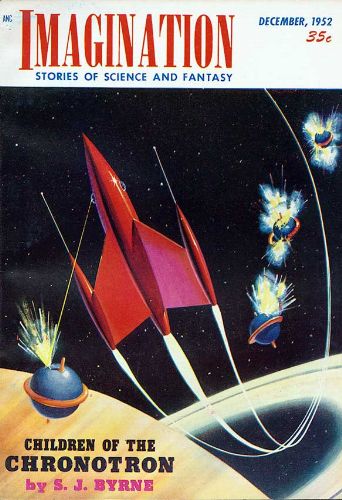
The roots of science fiction literature can be traced back to early speculative tales, but its formal emergence is often credited to the pulp magazine era. Precursors like Mary Shelley's Frankenstein, which explored the ethical implications of scientific creation, and Jules Verne's adventure narratives like Twenty Thousand Leagues Under the Seas, which detailed advanced submersible technology, laid crucial groundwork. Hugo Gernsback dedicated his magazine Amazing Stories to stories rooted in plausible scientific principles. This era saw the rise of foundational authors like E. E. 'Doc' Smith, whose space operas defined galactic adventure, and Kurt Vonnegut's early works, which began to blend social commentary with futuristic settings. The genre rapidly diversified, moving beyond mere technological marvels to explore profound philosophical and societal questions.
⚙️ How It Works
Science fiction literature operates by extrapolating from current scientific understanding and technological trends to imagine future possibilities, often presenting them in narrative form. It functions by creating worlds that are recognizably derived from our own, yet altered by specific scientific or technological premises. For instance, Isaac Asimov's Foundation series explores the concept of psychohistory, a fictional science predicting mass human behavior, while Arthur C. Clarke's 2001: A Space Odyssey meticulously details the mechanics of space travel and artificial intelligence. The genre relies on internal consistency, even when dealing with fantastical elements, to maintain reader engagement. This often involves detailed world-building, the creation of plausible alien biologies, or the logical progression of technological development, as seen in Robert Heinlein's detailed depictions of future societies.
📊 Key Facts & Numbers
The science fiction literature market is substantial. The Hugo Awards and Nebula Awards are among the most prestigious honors, with thousands of submissions vying for recognition each year. The genre has seen a significant increase in readership. The robust economic ecosystem for authors, publishers, and agents supports top authors who earn millions annually from their works.
👥 Key People & Organizations
Key figures in science fiction literature are legion, spanning decades and continents. Early pioneers include H. G. Wells, whose works like The War of the Worlds introduced alien invasion tropes, and Aldous Huxley, whose Brave New World offered a chilling vision of social engineering. The 'Golden Age' was dominated by John W. Campbell Jr.'s editorial influence at Astounding Science Fiction, nurturing talents like Robert Heinlein, Isaac Asimov, and A. E. van Vogt. Later, authors like Ursula K. Le Guin brought sophisticated anthropological and sociological depth, while Philip K. Dick explored themes of reality and identity. Major publishing houses like Tor Books and Ace Books have been instrumental in disseminating the genre, alongside influential magazines such as Analog Science Fiction and Fact and The Magazine of Fantasy & Science Fiction.
🌍 Cultural Impact & Influence
Science fiction literature has profoundly shaped global culture, influencing not only other literary genres but also film, television, art, and technology. The visual language of space travel, alien life, and futuristic cities, as depicted in countless novels, has been directly translated to the screen in blockbusters like Star Wars and Blade Runner. Concepts first explored in SF literature, such as the internet, virtual reality, and artificial intelligence, have become integral to modern life, often inspiring the very engineers and scientists who develop them. The genre's persistent questioning of societal norms and technological progress has fostered critical thinking and public discourse on issues ranging from environmentalism to bioethics, making it a powerful engine for cultural evolution. Its narratives have also provided a framework for understanding complex scientific ideas for a mass audience.
⚡ Current State & Latest Developments
The current landscape of science fiction literature is characterized by immense diversity and a growing global reach. While traditional publishers continue to release new works, the rise of self-publishing platforms like Amazon Kindle Direct Publishing has democratized access for authors, leading to an explosion of new voices and subgenres. There's a notable surge in 'cli-fi' (climate fiction), addressing environmental crises, and a continued exploration of transhumanism and post-human themes. International science fiction, particularly from East Asia and Africa, is gaining significant traction in Western markets, challenging established narratives and offering fresh perspectives. Major literary awards continue to recognize a broad spectrum of SF, from hard SF to social SF, reflecting the genre's ongoing vitality and adaptability. The integration of speculative concepts into mainstream discourse means SF literature is more relevant than ever.
🤔 Controversies & Debates
The definition and boundaries of science fiction literature have been a perennial source of debate. Critics often argue about what constitutes 'true' SF versus fantasy or speculative fiction, particularly concerning the emphasis on scientific plausibility. The 'hard SF' versus 'soft SF' distinction highlights this tension, with some valuing rigorous scientific accuracy above all else, while others prioritize sociological or psychological exploration. Another controversy revolves around representation; for decades, the genre was dominated by white male authors, leading to ongoing discussions and efforts to amplify diverse voices and perspectives, particularly those of women and people of color. The commercialization of SF also sparks debate, with some lamenting a perceived decline in literary quality in favor of more formulaic, action-oriented narratives aimed at broader appeal.
🔮 Future Outlook & Predictions
The future of science fiction literature appears poised for continued innovation and expansion. We can anticipate a deeper integration of emerging scientific fields, such as quantum computing, advanced genetic engineering, and neurotechnology, into narrative frameworks. The genre will likely become even more globalized, with non-Western SF traditions influencing and merging with established Western tropes, leading to richer, more varied storytelling. Expect a continued focus on existential threats, including climate change, pandemics, and artificial general intelligence, as authors grapple with humanity's most pressing challenges. Furthermore, the increasing sophistication of AI tools may lead to new forms of collaborative writing or even AI-generated narratives, posing fascinating questions about authorship and creativity. The genre's core function—to explore 'what if'—ensures its enduring relevance.
💡 Practical Applications
Science fiction literature has direct practical applications, primarily in inspiring innovation and fostering critical thinking. Many scientists, engineers, and entrepreneurs cite SF novels as a source of inspiration for their work; for example, Star Trek's communicator is often credited with influencing the developmen
Key Facts
- Category
- culture
- Type
- topic