
Contents
Overview
The concept of soil density, while not formally codified until the advent of modern soil science, has roots stretching back to ancient agricultural practices. Early farmers intuitively understood that different soils behaved differently, with some being more "heavy" or "light," affecting crop growth. The formalization of soil science in the late 19th and early 20th centuries, particularly with the work of figures like Viktor Kovda, began to quantify these properties. Early agricultural experiments started measuring soil characteristics, laying the groundwork for density measurements. The development of standardized methods for soil analysis solidified density as a key parameter.
⚙️ How It Works
Soil density is primarily understood through two distinct measures: bulk density and particle density. Bulk density (ρb) is the mass of dry soil per unit of total volume, including pore space. It's calculated as the mass of a soil sample divided by its total volume. This metric is highly variable, influenced by soil texture, structure, organic matter content, and compaction. Particle density (ρp), on the other hand, refers to the mass of solid soil particles per unit volume of those particles, excluding pore space. It's a more intrinsic property, largely determined by the mineralogy of the soil. The relationship between these two is crucial: a lower bulk density relative to particle density indicates a more porous soil, facilitating better air and water movement, while a higher bulk density suggests compaction.
📊 Key Facts & Numbers
The average bulk density of mineral topsoil typically falls within a certain range. Particle density, representing the density of the mineral components, is remarkably consistent. The pore space, the volume of air and water within the soil, can constitute a significant portion of the total soil volume in healthy soils.
👥 Key People & Organizations
Key figures in soil science have significantly contributed to our understanding of soil density. Hans Jenny extensively studied soil properties and their development, including density. J.A. Powell and his colleagues at the USDA Agricultural Research Service have conducted extensive research on soil compaction and its effects on soil physical properties, including density, particularly in agricultural contexts. Organizations like the International Union of Soil Sciences (IUSS) play a crucial role in standardizing measurements and disseminating research on soil properties, including density, globally. The American Society of Agronomy also hosts numerous researchers focused on soil physics and management.
🌍 Cultural Impact & Influence
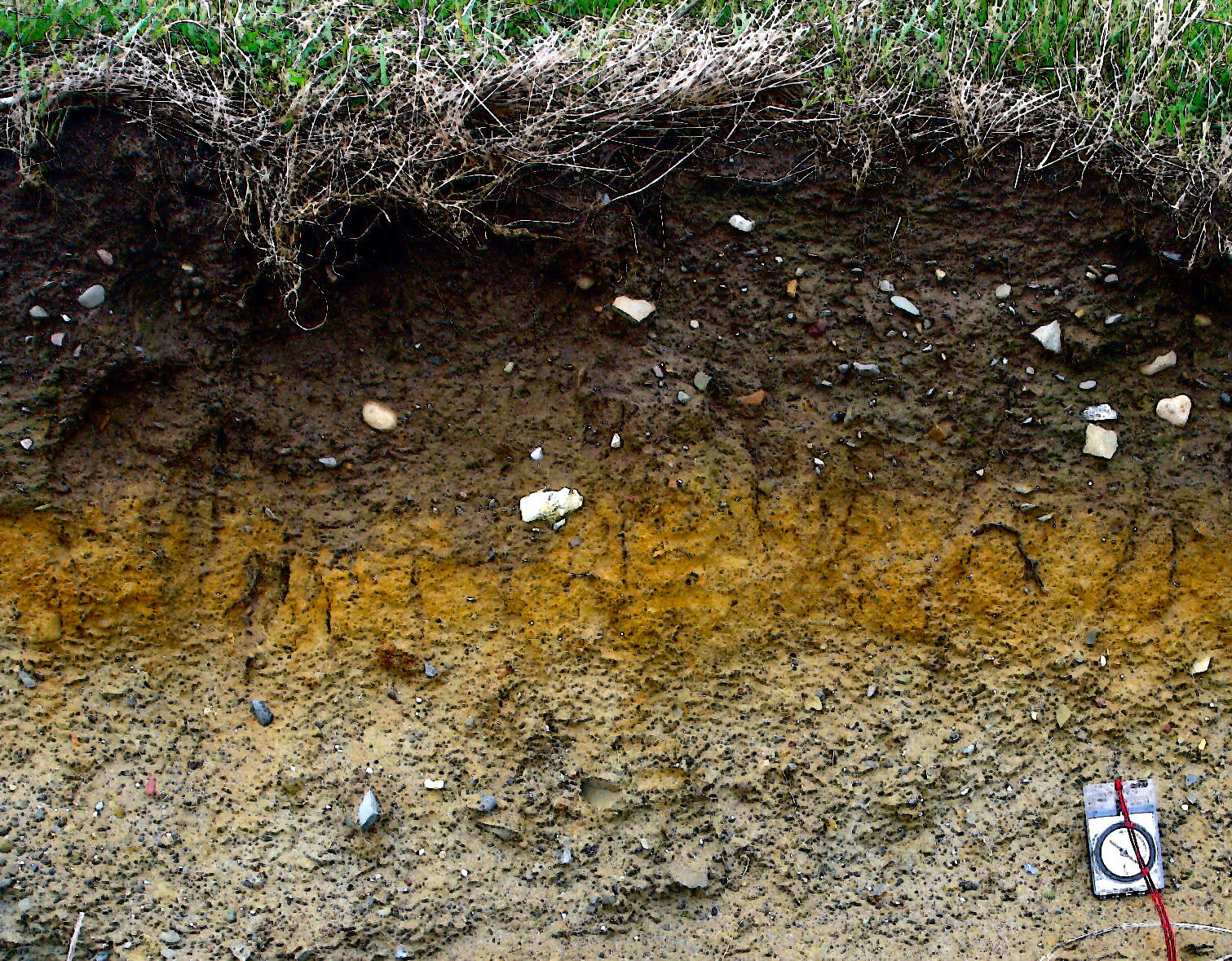
Soil density has a profound cultural resonance, particularly in agrarian societies where the "feel" and "weight" of the soil directly correlate with livelihood. The concept of "heavy" versus "light" soils, an ancient distinction, is now understood through the lens of density. In construction and civil engineering, achieving specific soil densities is critical for the stability of foundations, roads, and embankments, a practice formalized through engineering standards set by bodies like the American Society of Civil Engineers (ASCE). The visual representation of soil profiles, often depicted in textbooks and scientific journals, implicitly communicates density through texture and structure, influencing public perception of the earth's composition. The very notion of "fertile ground" is often linked to soils with optimal density, allowing for robust plant life.
⚡ Current State & Latest Developments
Current research in soil density is increasingly focused on its role in carbon sequestration and climate change mitigation. Studies published in journals like "Geoderma" and "Soil Science Society of America Journal" are exploring how soil management practices that reduce bulk density, such as no-till farming and cover cropping, can enhance the soil's capacity to store atmospheric carbon. Advances in remote sensing and geospatial technologies, including LiDAR and GPR, are also being developed to estimate soil density over large areas non-invasively. Furthermore, the development of precision agriculture techniques allows farmers to monitor and manage soil density at a field or even sub-field level, optimizing inputs and improving crop yields. The Global Soil Partnership is actively promoting research and best practices related to soil health, with density being a key indicator.
🤔 Controversies & Debates
A significant debate revolves around the precise thresholds of soil bulk density that constitute "compaction" and are detrimental to specific plant species or ecosystem functions. This can vary greatly depending on soil texture, moisture content, and the specific crop or organism in question. Another area of contention is the best methodology for measuring soil density in situ, with ongoing discussions about the accuracy and practicality of core sampling versus geophysical methods. The role of soil organic matter in influencing bulk density is also complex; while higher organic matter generally lowers bulk density, its decomposition can lead to structural changes and potential re-compaction, a dynamic that is still being fully elucidated.
🔮 Future Outlook & Predictions
The future of soil density management will likely be driven by advanced data analytics and AI-driven precision agriculture. Predictive models will forecast the impact of different land management practices on soil density and health, enabling proactive interventions. The development of more sophisticated in-field sensors, potentially integrated into autonomous farming equipment, will allow for real-time monitoring and adjustment of soil conditions. Research into bio-engineering soil structures using microbial communities or biopolymers to achieve optimal density and stability for both agricultural and environmental applications is also on the horizon. Furthermore, as climate change intensifies, understanding and manipulating soil density for enhanced water retention and carbon storage will become even more critical for global food security and environmental resilience.
💡 Practical Applications
Soil density has myriad practical applications across diverse fields. In agriculture, it's a key indicator of soil health, influencing water infiltration, aeration, and root penetration; farmers use this knowledge to adjust tillage practices and crop selection. For civil engineers, determining the maximum dry density of soil is crucial for the design and construction of stable foundations, roads, and earth dams, often using standardized tests like the Proctor compaction test. Environmental scientists use soil density to assess soil erosion potential and to understand groundwater flow dynamics. In forestry, it impacts seedling establishment and tree growth. Even in landscaping and sports turf management, achieving the correct soil density is vital for drainage, playability, and plant health.
Key Facts
- Category
- science
- Type
- topic