
Contents
Overview
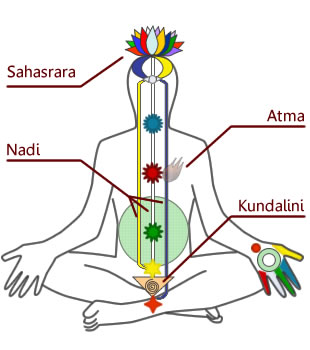
The concept of raising one's vibrational state for spiritual growth has ancient roots, appearing in various forms across global spiritual traditions. In Hinduism, the concept of Kundalini energy, often depicted as a coiled serpent at the base of the spine, represents a potent spiritual force that, when awakened through practices like meditation and pranayama, can lead to spiritual liberation. Similarly, Buddhism emphasizes cultivating mindfulness and compassion to purify the mind and attain higher states of consciousness. Early Taoist practices focused on harmonizing the body's vital energy, or 'qi,' through exercises like Qigong and internal alchemy. The Gnostic traditions spoke of awakening the 'spark of divinity' within. Modern interpretations, particularly within New Age spirituality, have synthesized these ancient ideas, often framing vibrational awakening as a process of aligning with universal energies and frequencies, influenced by figures like Esther Hicks and Abraham Hicks with their teachings on the Law of Attraction.
⚙️ How It Works
At its core, vibrational awakening operates on the principle that everything in the universe is composed of energy vibrating at different frequencies. Practices aim to consciously shift these frequencies from lower, denser states (associated with fear, anger, and limitation) to higher, lighter states (associated with love, joy, and expansion). This is often achieved through focused intention, visualization, and specific energetic techniques. Meditation can quiet the mental chatter, allowing subtler energetic currents to be perceived and amplified. Breathwork techniques, such as Holotropic Breathwork developed by Stanislav Grof, are designed to induce altered states of consciousness and release energetic blockages. Sound healing, utilizing instruments like singing bowls or tuning forks, is believed to resonate with the body's energy centers, promoting harmonic alignment. The underlying mechanism is often described as a form of biofeedback, where conscious intention influences physiological and energetic states.
📊 Key Facts & Numbers
Studies on meditation have shown measurable changes in brainwave activity, with practitioners exhibiting increased alpha and theta waves, associated with relaxation and deep meditative states. Participants in intensive breathwork retreats often report experiencing profound emotional releases. The proliferation of online courses and workshops dedicated to vibrational awakening suggests a growing market.
👥 Key People & Organizations
While no single founder can be credited with 'spiritual practices for vibrational awakening' as a unified movement, numerous individuals and organizations have significantly shaped its modern discourse. Paramahansa Yogananda, through his book Autobiography of a Yogi, introduced millions to yogic philosophy and Kriya Yoga, a path emphasizing energetic control. Esther Hicks and Abraham Hicks popularized the 'Law of Attraction,' a core tenet in many vibrational awakening teachings, through their books and seminars. Organizations like The Chopra Center, founded by Deepak Chopra, offer programs in meditation, yoga, and holistic well-being. Sounds True, a media company, has been instrumental in disseminating teachings from various spiritual teachers, including those focused on energetic transformation. More recently, figures like Joe Dispenza have gained traction with their neuroscience-based approaches to changing one's state of being through meditation and intention.
🌍 Cultural Impact & Influence
The influence of vibrational awakening practices has permeated mainstream culture, particularly within the wellness industry and popular media. Concepts like 'good vibes' and 'positive energy' have become commonplace, reflecting a broader cultural embrace of energetic principles. Instagram and TikTok are rife with influencers sharing 'vibrational hacks' and 'energy clearing' techniques, reaching millions of followers. The popularity of sound healing concerts and meditation apps like Calm and Headspace demonstrates a widespread interest in practices that promote inner harmony. This cultural resonance has also led to the commercialization of vibrational concepts, with everything from crystals to essential oils marketed for their purported energetic properties. The discourse around 'raising your vibration' has also found its way into therapeutic contexts, with some practitioners integrating energy work into psychotherapy sessions.
⚡ Current State & Latest Developments
Online platforms are offering more sophisticated courses, often incorporating biofeedback devices and virtual reality experiences to enhance meditation and energy work. The use of Artificial Intelligence in personalized wellness plans, including guided meditations tailored to individual energetic states, is also emerging. There's a noticeable shift towards more grounded and embodied practices, moving beyond purely esoteric interpretations to focus on practical applications for daily life, stress reduction, and emotional resilience. The accessibility of these practices through digital means continues to expand, reaching a global audience with unprecedented ease.
🤔 Controversies & Debates
The concept of vibrational awakening is not without its critics and debates. A primary debate centers on the lack of rigorous scientific validation for many of the claims made about 'raising vibrations.' Skeptics often point to the subjective nature of energetic experiences and the potential for placebo effects to account for reported benefits. Some critics argue that the emphasis on positive thinking can lead to 'toxic positivity,' where individuals are discouraged from acknowledging or processing difficult emotions, potentially exacerbating mental health issues. There's also concern about the commercialization of these practices, with some individuals and businesses exploiting vulnerable people seeking healing or spiritual fulfillment through expensive, unproven modalities. The term 'vibration' itself is often used loosely, lacking precise scientific definition in this context, leading to confusion and misinterpretation. The potential for spiritual bypassing, where individuals use spiritual concepts to avoid dealing with personal or interpersonal issues, is another significant point of contention.
🔮 Future Outlook & Predictions
The future of spiritual practices for vibrational awakening appears to be one of increasing integration and scientific exploration. We can anticipate further research into the neurobiology of consciousness and the effects of various energetic practices, potentially leading to more refined and effective techniques. The role of technology in facilitating these practices is likely to expand, with innovations in Artificial Intelligence and virtual reality offering new avenues for personal growth and energetic transformation. The focus may also shift towards more accessible and secular applications, integrating principles of vibrational awareness into everyday life for enhanced well-being and resilience.
💡 Practical Applications
Practical applications of vibrational awakening principles can be found in various aspects of life, including stress management, emotional regulation, and enhancing creativity. Techniques such as meditation and breathwork are widely used to cultivate inner peace and resilience. Sound healing sessions are offered in wellness centers and spas to promote relaxation and energetic balance. Many individuals incorporate daily practices like journaling, affirmations, and mindful movement to maintain a higher vibrational state. The principles are also applied in coaching and therapy settings to help individuals overcome limiting beliefs and cultivate a more positive outlook.
Key Facts
- Category
- vibes
- Type
- topic