
Contents
- 🌐 Origins & History
- 🚀 How It Works
- 📊 Key Facts & Numbers
- 👥 Key People & Organizations
- 🌍 Cultural Impact & Influence
- ⚡ Current State & Latest Developments
- 🤔 Controversies & Debates
- 🔮 Future Outlook & Predictions
- 💡 Practical Applications
- 📚 Related Topics & Deeper Reading
- Frequently Asked Questions
- References
- Related Topics
Overview
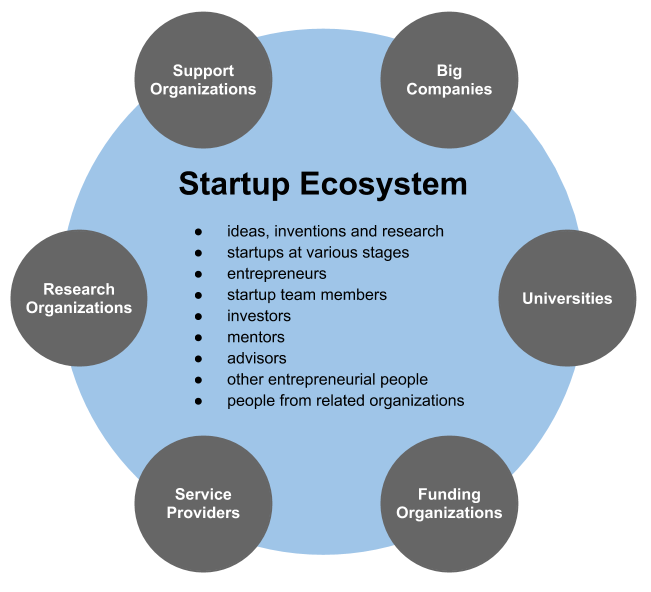
A startup ecosystem is a complex, interconnected network of individuals, organizations, and resources that collaborate to foster the creation and scaling of new startup companies. This ecosystem includes a diverse range of entities such as universities, funding organizations, incubators, accelerators, co-working spaces, research institutions, service providers, large corporations, and government agencies. Key players like Silicon Valley, New York City, Singapore, and Tel Aviv have established themselves as thriving global startup ecosystems, attracting talent, investment, and innovation. With the rise of remote work and digital communication, virtual startup ecosystems are also emerging, connecting entrepreneurs and resources across geographical boundaries. As of 2022, the global startup ecosystem has seen significant growth, with over 300 startup accelerators and 10,000 co-working spaces worldwide, and a total funding of over $150 billion in venture capital. The startup ecosystem plays a vital role in driving economic growth, job creation, and technological advancements, with notable examples including the success stories of Uber, Airbnb, and Spotify.
🌐 Origins & History
The concept of a startup ecosystem has its roots in the 1990s, when Silicon Valley began to emerge as a hub for technology innovation. The success of companies like Google, Facebook, and Apple created a ripple effect, attracting more entrepreneurs, investors, and talent to the region. Today, startup ecosystems can be found in cities around the world, with New York City, Singapore, and Tel Aviv being notable examples. These ecosystems are often driven by a combination of factors, including government support, access to funding, and a strong network of mentors and peers. For instance, Y Combinator and 500 Startups are two well-known accelerators that have played a significant role in shaping the startup ecosystem.
🚀 How It Works
A startup ecosystem is a complex system that involves the interaction of various organizations and individuals. At its core, it includes startups at different stages of development, from idea generation to scaling and growth. These startups are supported by a range of organizations, including universities like Stanford University and MIT, which provide access to talent, research, and resources. Incubators and accelerators like Techstars and Seedcamp offer funding, mentorship, and networking opportunities. Co-working spaces like WeWork and Regus provide a physical space for entrepreneurs to work and collaborate. Additionally, venture capital firms like Sequoia Capital and Andreessen Horowitz play a crucial role in providing funding to startups.
📊 Key Facts & Numbers
The startup ecosystem is characterized by a range of key facts and numbers. As of 2022, there are over 300 startup accelerators and 10,000 co-working spaces worldwide, with a total funding of over $150 billion in venture capital. The global startup ecosystem is projected to grow to $1 trillion by 2025, with the number of startups increasing by 20% annually. Notable startup ecosystems include Silicon Valley, which has produced companies like Google and Facebook, and New York City, which has given rise to companies like Uber and Airbnb. The startup ecosystem is also driven by a range of trends, including the rise of artificial intelligence, blockchain, and Internet of Things.
👥 Key People & Organizations
The startup ecosystem is driven by a range of key people and organizations. Notable entrepreneurs include Elon Musk, Mark Zuckerberg, and Jeff Bezos, who have founded companies like Tesla, Facebook, and Amazon. Organizations like Y Combinator, 500 Startups, and Techstars have played a significant role in shaping the startup ecosystem. Additionally, government agencies like the Small Business Administration and the National Science Foundation provide support and resources for entrepreneurs. For example, the Startup America initiative has provided funding and mentorship to over 1,000 startups.
🌍 Cultural Impact & Influence
The startup ecosystem has a significant cultural impact and influence. It has created a new generation of entrepreneurs who are driven by a desire to innovate and disrupt traditional industries. The startup ecosystem has also given rise to a range of new technologies and business models, including the sharing economy and the gig economy. Companies like Uber and Airbnb have changed the way we live and work, and have created new opportunities for entrepreneurship and innovation. The startup ecosystem has also had a significant impact on urban development, with many cities competing to become the next hub for startup activity. For instance, San Francisco has seen a significant increase in housing prices and cost of living due to the growth of the startup ecosystem.
⚡ Current State & Latest Developments
The current state of the startup ecosystem is one of rapid growth and evolution. New technologies like artificial intelligence and blockchain are creating new opportunities for innovation and disruption. The rise of remote work and digital communication is also changing the way startups operate and collaborate. Additionally, there is a growing trend towards social entrepreneurship and impact investing, with many startups focusing on solving social and environmental problems. For example, Patagonia and Warby Parker are two companies that have successfully integrated social and environmental responsibility into their business models.
🤔 Controversies & Debates
The startup ecosystem is not without its controversies and debates. One of the main challenges facing the ecosystem is the issue of diversity and inclusion, with many startups struggling to attract and retain diverse talent. There is also a growing concern about the impact of startups on urban development, with many cities experiencing gentrification and displacement of long-time residents. Additionally, there are debates about the role of government in supporting the startup ecosystem, with some arguing that government intervention can stifle innovation and others arguing that it is necessary to support entrepreneurship. For instance, the Startup Act has been proposed to provide tax incentives and funding for startups, but has faced opposition from some lawmakers.
🔮 Future Outlook & Predictions
The future outlook for the startup ecosystem is one of continued growth and evolution. New technologies and trends will continue to emerge, creating new opportunities for innovation and disruption. The rise of virtual and augmented reality, for example, is expected to create new opportunities for startups in the entertainment and education sectors. Additionally, there will be a growing focus on social entrepreneurship and impact investing, with many startups focusing on solving social and environmental problems. For example, Bill Gates has invested in several startups focused on sustainable energy and education.
💡 Practical Applications
The startup ecosystem has a range of practical applications, from providing funding and resources for entrepreneurs to creating new technologies and business models. Startups can also have a significant impact on urban development, creating new jobs and opportunities for economic growth. Additionally, the startup ecosystem can provide a platform for social entrepreneurship and impact investing, allowing startups to focus on solving social and environmental problems. For instance, Kickstarter and Indiegogo have enabled thousands of startups to raise funding and bring their products to market.
Key Facts
- Year
- 1990s
- Origin
- Silicon Valley
- Category
- technology
- Type
- concept
Frequently Asked Questions
What is a startup ecosystem?
A startup ecosystem is a complex network of individuals, organizations, and resources that collaborate to foster the creation and scaling of new startup companies. It includes a range of entities, such as universities, funding organizations, incubators, accelerators, co-working spaces, research institutions, service providers, large corporations, and government agencies. For example, Y Combinator and 500 Startups are two well-known accelerators that have played a significant role in shaping the startup ecosystem.
What are the key components of a startup ecosystem?
The key components of a startup ecosystem include startups at different stages of development, funding organizations, incubators, accelerators, co-working spaces, research institutions, service providers, large corporations, and government agencies. These components work together to provide support, resources, and networking opportunities for entrepreneurs. For instance, Stanford University and MIT are two universities that have strong startup ecosystems, with many successful startups emerging from their research and talent pools.
How does the startup ecosystem impact urban development?
The startup ecosystem can have a significant impact on urban development, creating new jobs and opportunities for economic growth. However, it can also lead to gentrification and displacement of long-time residents, as well as increased housing costs and cost of living. For example, San Francisco has seen a significant increase in housing prices and cost of living due to the growth of the startup ecosystem.
What are the benefits of being part of a startup ecosystem?
The benefits of being part of a startup ecosystem include access to funding, mentorship, and networking opportunities. Startups can also benefit from the expertise and resources of other organizations in the ecosystem, such as universities and research institutions. For instance, Uber and Airbnb have benefited from the resources and networking opportunities provided by the startup ecosystem in San Francisco.
How can entrepreneurs get involved in a startup ecosystem?
Entrepreneurs can get involved in a startup ecosystem by attending networking events, joining co-working spaces, and applying to incubators and accelerators. They can also connect with other entrepreneurs and organizations in the ecosystem through social media and online platforms. For example, LinkedIn and Twitter are two social media platforms that can be used to connect with other entrepreneurs and organizations in the startup ecosystem.
What are the challenges facing the startup ecosystem?
The startup ecosystem faces a range of challenges, including diversity and inclusion, gentrification and displacement of long-time residents, and the need for sustainable and responsible growth. Additionally, the ecosystem must adapt to changing technologies and trends, such as the rise of artificial intelligence and blockchain. For instance, Google and Facebook have faced challenges related to diversity and inclusion, and have implemented initiatives to address these issues.
How can the startup ecosystem be supported and developed?
The startup ecosystem can be supported and developed through a range of initiatives, including government funding and support, mentorship and networking programs, and education and training programs. Additionally, the ecosystem can benefit from the development of new technologies and trends, such as artificial intelligence and blockchain. For example, Amazon and Microsoft have invested in initiatives to support the development of the startup ecosystem, including funding and mentorship programs.
What is the future outlook for the startup ecosystem?
The future outlook for the startup ecosystem is one of continued growth and evolution. New technologies and trends will continue to emerge, creating new opportunities for innovation and disruption. The ecosystem will also face new challenges and opportunities, such as the need for sustainable and responsible growth, and the impact of emerging technologies on urban development. For instance, Tesla and SpaceX are two companies that are driving innovation and disruption in the startup ecosystem, with a focus on sustainable energy and space exploration.