
Contents
Overview
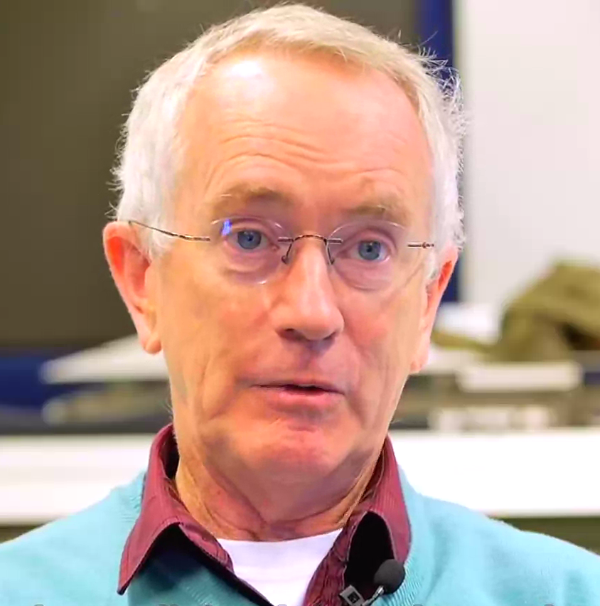
Steve Keen is an Australian economist, author, and vocal critic of mainstream economic theory, particularly neoclassical economics. He argues that dominant economic models are fundamentally flawed, unscientific, and empirically unsupported, leading to disastrous policy outcomes. Keen champions a return to more realistic accounting-based approaches, drawing inspiration from thinkers like John Maynard Keynes and Hyman Minsky, but forging his own path with concepts like his 'Theory of Financial Instability'. He gained prominence for his prescient warnings about the 2008 financial crisis, attributing it to unsustainable levels of private debt, a theme central to his work. Keen is known for his accessible yet rigorous critiques, often delivered through public lectures, books like 'Debunking Economics', and extensive online content, funded by a dedicated crowdfunding community.
🎵 Origins & History
Steve Keen's intellectual journey began at the University of Sydney. His early career was spent within the academic establishment. It was during this period that Keen began to articulate his profound dissatisfaction with the prevailing economic paradigms. He observed that standard models failed to account for crucial elements like debt, financial instability, and the physical limits of growth, leading him to label mainstream economics as ']]neoclassical economics|neoclassical economics]]' a 'dismal science' in its current form. His critical stance culminated in the publication of his seminal work, 'Debunking Economics', which laid out his case against the profession. This foundational text became a touchstone for a growing number of economists and commentators disillusioned with the status quo, setting the stage for his later independent research.
⚙️ How It Works
Keen's economic framework is built on a critique of what he terms ']]absurdity economics]]', arguing that mainstream models are internally inconsistent and empirically baseless. He emphasizes the critical role of debt in economic cycles, positing that the accumulation of private debt is the primary driver of financial instability and economic crises, a view he detailed in his book 'The New Economics: A General Theory of Employment, Debt, Currency, and the State'. Unlike many economists who treat money as a neutral medium of exchange, Keen views it as a social relation and a tool of power, central to understanding economic dynamics. His work integrates concepts from post-Keynesian economics, Marxian economics, and the theories of Hyman Minsky to construct a more realistic, accounting-based model of the economy. He advocates for a ']]Theory of Financial Instability]]' that explicitly models the impact of debt on aggregate demand and economic growth.
📊 Key Facts & Numbers
Keen's influence extends beyond academia, reaching a global audience. His book 'Debunking Economics' has sold over 100,000 copies worldwide, with translations into multiple languages. He has amassed a significant online following, with his YouTube channel boasting over 170,000 subscribers and his videos collectively garnering tens of millions of views. His crowdfunding campaign has consistently raised over $100,000 annually since its inception, demonstrating a dedicated base of supporters. Keen's critiques of mainstream economic forecasts, particularly his warnings about the 2008 financial crisis, have been cited by numerous financial publications, underscoring the impact of his contrarian views. His work has been instrumental in popularizing concepts like the debt-to-GDP ratio as a key indicator of financial risk, a metric now widely tracked by financial institutions and governments.
👥 Key People & Organizations
Beyond his own prolific output, Steve Keen is a key figure within a broader intellectual movement challenging established economic thought. He is often associated with the post-Keynesian school, though he distinguishes his own approach. Key figures who have engaged with or been influenced by his work include economists like Randall Wray, who champions Modern Monetary Theory (MMT), and Bill Mitchell, another prominent post-Keynesian economist. Keen has also collaborated with and been critically engaged by figures such as Michael Hudson, known for his work on debt jubilees. Organizations like the Institute for Strategy, Resilience & Security (ISRS) at University College London, where Keen holds a Distinguished Research Fellow position, provide a platform for his independent research. His critiques are often directed at institutions like the International Monetary Fund (IMF) and mainstream academic journals.
🌍 Cultural Impact & Influence
Steve Keen's impact on public discourse about economics is undeniable. He has shifted the conversation away from abstract models towards a more grounded, accounting-based understanding of how economies function, particularly concerning debt and financial instability. His accessible style, often employing analogies and clear explanations, has made complex economic critiques understandable to a wider audience, influencing journalists, policymakers, and the general public. His warnings about the dangers of private debt accumulation, which he articulated years before the 2008 global financial crisis, have been vindicated, lending significant weight to his subsequent analyses. Keen's work has inspired a generation of heterodox economists and activists who seek more realistic and equitable economic systems, contributing to a growing ']]post-crash economics]]' movement.
⚡ Current State & Latest Developments
Currently, Steve Keen continues his independent research, largely funded by his dedicated crowdfunding community and supported by his honorary positions at University College London. He remains a prolific commentator on global economic affairs, regularly publishing analyses and videos on his website and YouTube channel. His recent work has focused on the implications of climate change for economic systems, arguing that the physical limits of the planet necessitate a radical rethinking of economic growth paradigms. He is actively involved in developing more sophisticated economic models that integrate ecological constraints and financial realities, aiming to provide a framework for sustainable economic policy in the face of escalating environmental and financial challenges.
🤔 Controversies & Debates
The most significant controversy surrounding Steve Keen is his outright rejection of mainstream neoclassical economics, which he deems scientifically bankrupt. Critics, often from within the mainstream, accuse him of misrepresenting established economic theories, oversimplifying complex models, and exhibiting a confirmation bias in his interpretation of data. His emphasis on debt as the primary driver of crises is also debated, with some economists arguing that other factors, such as monetary policy or structural imbalances, play equally or more significant roles. Furthermore, his predictions of imminent economic collapse have, at times, not materialized as swiftly as he has forecast, leading to accusations of alarmism. However, proponents argue that his core critiques regarding debt and financial instability have been consistently validated by real-world events, particularly the 2008 crisis.
🔮 Future Outlook & Predictions
The future of economic thought, according to Keen, lies in a radical departure from current paradigms. He predicts a continued period of economic turbulence driven by unsustainable debt levels and the escalating impacts of climate change. Keen foresees a growing demand for realistic economic models that can guide societies through these challenges, models that explicitly incorporate debt dynamics, resource constraints, and ecological limits. He anticipates that his accounting-based approach, which he continues to refine, will become increasingly influential as traditional economic theories prove inadequate. The challenge, as he sees it, is to transition from a growth-obsessed global economy to one that prioritizes stability, sustainability, and genuine human well-being, a transition that will likely be fraught with political and economic resistance.
💡 Practical Applications
Keen's work offers practical insights for understanding and navigating economic crises. His emphasis on tracking private debt levels, particularly household and corporate debt relative to GDP, provides a tangible metric for assessing financial risk. His critiques of austerity measures, arguing they often exacerbate economic downturns by reducing aggregate demand, offer an alternative policy perspective for governments facing recessions. Furthermore, his integration of ecological limits into economic analysis provides a framework for developing sustainable economic policies, such as carbon pricing and investment in green technologies, that acknowledge planetary boundaries. His accessible explanations of complex financial mechanisms empower individuals to better understand the economic forces shaping their lives and advocate for more responsible economi
Key Facts
- Category
- philosophy
- Type
- topic